Three Years of Silence
Three years. That's how long I let the cabin sit. I told myself I was being practical — that there was no rush, that the property wasn't going anywhere, that I'd get to it when I was ready. But the truth is I was never ready, and I think some part of me knew that going back there meant making it real in a way that Robert's death still hadn't fully become. We bought that cabin together in our early forties, when the kids were still young enough to think a weekend without screens was an adventure. After he died, I kept paying the property taxes, kept renewing the insurance, kept telling my brother Martin and my friend Carol that I was 'figuring things out.' Three years of figuring things out. The lawn service I hired sent invoices I paid without looking at them too closely. A neighbor up the road called once to say a shutter had come loose, and I thanked him and said I'd take care of it, and then I didn't. Every time I got close to making a decision — listing it, renting it, even just driving up to check on it — something would pull me back. A busy week. A holiday. An excuse that felt reasonable enough in the moment. I kept the cabin key on a hook by my kitchen door, right where it had always been, and I walked past it every single day without touching it. The weight of everything I hadn't done yet had a way of settling into the ordinary parts of the day like that.
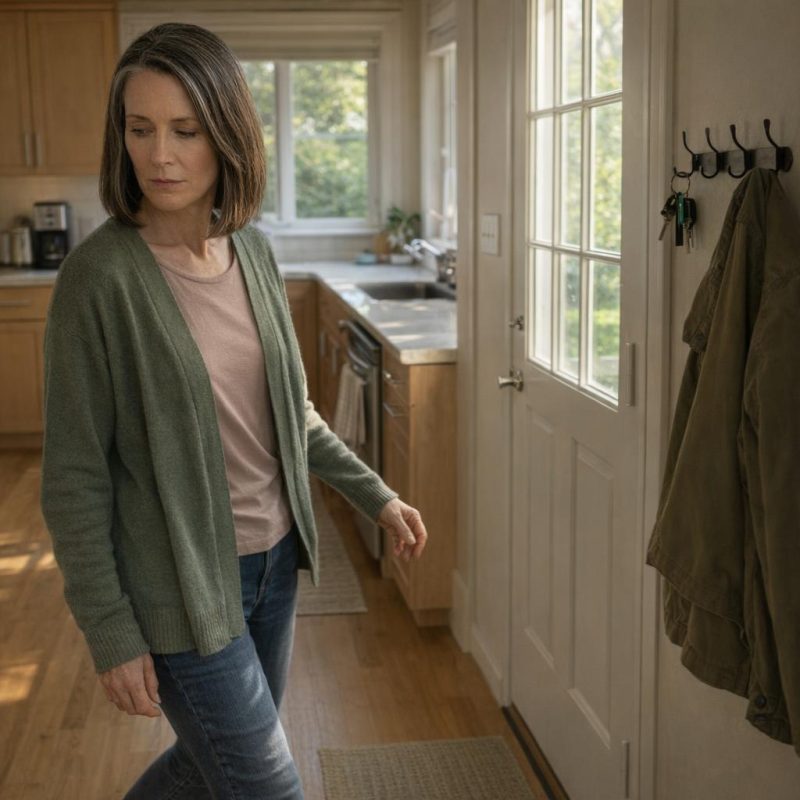 Image by RM AI
The Decision to Sell
It was a Tuesday in March when I finally admitted to myself that I couldn't keep doing this. I was sitting at the kitchen table going through bills — the cabin's insurance renewal had come in, and the number had gone up again — and I just sat there staring at it for a long time. Two properties. One person. The math had never made sense, and I'd been pretending it did for three years. Robert would have been practical about it. That was always his way. He'd have said, 'Denise, we make decisions with the information we have,' and then he'd have made a list. I didn't make a list. I just picked up the phone before I could talk myself out of it. I'd gotten the name of a real estate agent from a woman in my book club who'd sold a lake house the previous fall. Ms. Patterson, she'd said. Very professional, very efficient, gets things done. I found the number in my contacts where I'd saved it months ago — months ago, and I'd never called. I sat there for a moment with my thumb over the screen. The cabin key was still on its hook by the door. I looked at it once, then looked away. Selling felt like a kind of surrender, and I wasn't sure I was at peace with that. But I also knew that not deciding was its own kind of decision, and I was tired of making it. I pressed call.
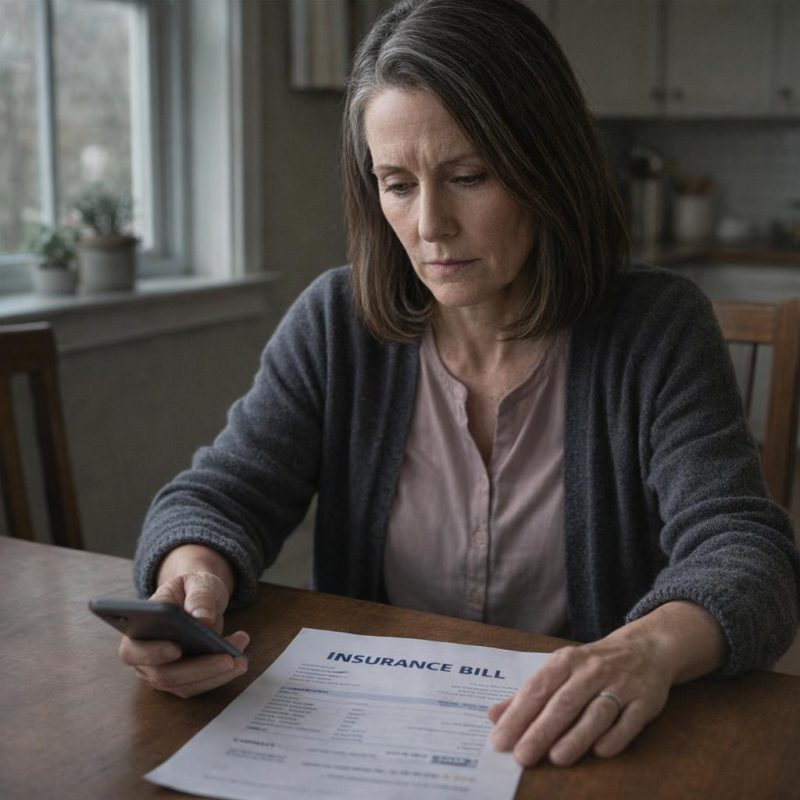 Image by RM AI
Memories Flood Back
Ms. Patterson was efficient, just like my book club friend had promised. Within a week she'd scheduled an initial walkthrough, sent over a preliminary market analysis, and started talking about staging and listing timelines. I tried to keep up with her energy, but the moment I pulled into the cabin's gravel driveway for the first time in three years, the paperwork and the timelines stopped mattering. The place looked smaller than I remembered, or maybe I just felt larger in my grief now, more aware of how much space it took up inside me. The porch railing had weathered to a pale gray. The garden Robert had planted along the south side had gone completely wild. I stood there for a moment before going in, and the summers came back all at once — the kids running down to the water before breakfast, the smell of coffee and pine through the screen door, Robert arriving on Friday evenings still in his work clothes, loosening his tie in the driveway because he couldn't wait to be done with the week. He used to say the cabin was where he could finally breathe. I used to tease him about it. I walked through the rooms slowly while Ms. Patterson took notes and measurements, and I kept touching things — the back of a chair, the edge of the kitchen counter — the way you do when you're trying to hold onto something that's already leaving. The ache of it didn't announce itself loudly. It just sat there, quiet and familiar, the way old grief does.
 Image by RM AI
Routine Inspection
The listing went live on a Thursday, and by the following Monday Ms. Patterson had already scheduled three showings. I hadn't expected it to move that quickly. She called to tell me, and I remember standing in my kitchen nodding along, saying 'that's great' in the right places, while some part of me was still catching up to the fact that strangers were about to walk through the cabin and decide whether it was worth their money. One of the prospective buyers requested a full inspection before making an offer, which Ms. Patterson said was completely standard. She handled the scheduling, found an inspector with availability that week, and sent me the confirmation by email. I read it over twice, looking for something to worry about, and couldn't find anything. The cabin was old but solid. Robert had always kept up with maintenance — he was meticulous about that kind of thing, always fixing small problems before they became large ones. I had no reason to expect complications. I wrote the inspection date in my calendar and went about my week. I paid a bill, called my brother Martin about Sunday dinner, watched a documentary I barely followed. The days had a pleasant, unremarkable quality to them, the kind you don't appreciate until later. I remember thinking that the hard part — the decision — was already behind me, and that everything from here would just be process. I had no idea how wrong that was, but I didn't know that yet, and the not-knowing had its own kind of peace.
 Image by RM AI
The Day of the Inspection
The morning of the inspection I drove up to the cabin alone. Ms. Patterson had offered to meet me there, and I'd taken her up on it — I wasn't sure I wanted to be in that driveway by myself again, not for something this official. She was already there when I arrived, standing near the front steps with her tablet and a travel mug, looking composed in the way that people who do this every day manage to look. The inspector was inside, she said. He'd started early. We walked through together while he worked, and it was strange being in the cabin in this new context — not as a place I belonged to, but as a property being evaluated. He checked the roof, the plumbing, the electrical panel. He knocked on walls and shone a flashlight into corners. I answered his questions when he had them and tried to stay out of his way. Ms. Patterson made notes on her tablet and occasionally said things like 'that's typical for a structure this age' in a reassuring tone. It all felt very orderly. Very routine. We were standing in the main room when the inspector came back from the far bedroom, and Ms. Patterson glanced up from her tablet and said something to him about the timeline for the report. Then she turned to me, almost as an afterthought, and asked what I planned to do about the collection.
 Image by RM AI
What Collection?
I looked at her. 'The collection?' I said. I genuinely didn't know what she was talking about. Ms. Patterson's expression shifted — just slightly, the way someone's does when they realize the conversation has taken an unexpected turn. She said one of the prospective buyers who'd come through earlier in the week had noticed a loose panel on the built-in bookshelf in the back bedroom. He'd mentioned it to her afterward, said it looked like there might be a storage space behind it. She'd assumed I knew about it. I told her I didn't. She looked at me for a moment, then looked at her tablet, then back at me. She said the buyer had described what he'd seen as 'a collection of some kind — personal items, it looked like.' I told her again that I had no idea what she was referring to, that as far as I knew there was nothing behind that bookshelf. She nodded slowly, the way people do when they're recalibrating. Then she reached for her phone. She said the buyer had taken a photograph before he left, and that he'd sent it to her in case it was relevant to the sale. She turned the screen toward me, and I looked at the image — a dark rectangular space behind a panel, objects arranged inside it with what looked like deliberate care. The photograph on her screen showed the compartment's contents clearly.
 Image by RM AI
The Photograph
I took the phone from her and held it closer. The compartment wasn't large — maybe two feet wide, a foot and a half deep — but it was packed carefully, the way someone would pack something they intended to keep safe. The objects were arranged in rows, each one resting on what looked like a piece of dark felt. There were small items mostly, things you could hold in one hand. I tilted the screen to get a better angle on the image. Some of it was hard to make out in the photograph — the lighting wasn't great, and the buyer had taken the shot at an angle. But I could see a folded piece of paper, what looked like a small framed photograph, something wrapped in cloth. Ms. Patterson was watching me, quiet, giving me space to look. I kept moving through the image slowly, the way you do when you're trying to understand something that doesn't quite make sense yet. And then I stopped. In the lower right corner of the compartment, resting on its own small square of felt, was a fishing lure. Antique, hand-painted, with a distinctive red-and-white pattern on the body and a small chip on the tail end that I would have known anywhere. My younger brother Martin had carried that lure in his tackle box for thirty years. He'd been devastated when he lost it on a fishing trip years ago and never found it. I was staring at it on Ms. Patterson's phone screen, inside a hidden compartment in my late husband's cabin.
 Image by RM AI
More Familiar Objects
I kept looking. I didn't hand the phone back. Ms. Patterson didn't ask for it. I think she could tell from my face that something had shifted, though I wouldn't have been able to explain what or why. I moved through the image again more slowly this time, trying to take in each object individually. Near the center of the compartment there was a silver lighter, flat and rectangular, with an engraved pattern on the face that I recognized immediately. Thomas — my longtime family friend, the one who'd been coming to holiday dinners since before my kids were born — had carried a lighter exactly like that for years. He'd mentioned losing it once, offhandedly, the way people mention small losses they've mostly made peace with. I'd forgotten about it until right now. I kept looking. Toward the upper left corner of the photograph, partially tucked beneath the folded paper, was what looked like a ticket stub. The color and format of it caught my eye — a deep burgundy, the kind they used at the old Meridian Theater downtown. My cousin Stephanie and I had gone to a production there years ago, a night I remembered clearly because we'd laughed so hard during intermission that an usher had given us a look. I remembered her holding onto her ticket stub afterward, saying she wanted to keep it. Each object in that photograph was connected to someone I knew, and I had no explanation for any of it.
 Image by RM AI
Piecing Together the Pattern
I handed the phone back to Ms. Patterson without saying anything. She took it and slipped it into her bag, and I stood there in the middle of the cabin trying to count what I'd seen. The fishing lure — that was Martin's, my younger brother, who'd mentioned losing his favorite one years ago and never quite gotten over it. The lighter was Thomas's, I was almost certain. The ticket stub from the Meridian, burgundy and faded — that had to be Stephanie's. And there were other things in the photograph I hadn't fully processed yet, smaller items tucked toward the edges that I hadn't been able to identify clearly. But the ones I could identify all pointed the same direction: people I knew, people who had been in my life for decades. None of the objects were valuable in any obvious way. A lure, a lighter, a ticket stub — the kind of things you notice losing and then eventually stop thinking about. What unsettled me wasn't any single item. It was the fact that they were all there together, in the same hidden space, behind a wall in a cabin that had belonged to my husband and me. Ms. Patterson said something about scheduling a follow-up, and I nodded, but I wasn't really listening. I kept coming back to the same quiet, uncomfortable thought: someone had gathered these things, one by one, and put them somewhere no one was supposed to find.
 Image by RM AI
The Impossible Bracelet
I asked Ms. Patterson if I could see the photograph one more time before she left. She didn't hesitate — just pulled out her phone and handed it over again, and I zoomed in slowly, working my way across the image from left to right. I'd already accounted for most of what I could make out. The lure, the lighter, the ticket stub, a folded piece of paper I still couldn't identify. But there was something in the lower right corner I'd glossed over the first time, something I'd registered without really seeing. I brought the image closer. It was a bracelet. Gold, with small charms hanging from the links — a tiny shoe, what looked like a star, and one I couldn't quite make out. My chest went tight. Carol, my best friend since we were girls, had owned a bracelet exactly like that. She'd worn it for years, never took it off. I remembered the charms because she'd told me the story behind each one. She'd lost it in a house fire more than twenty years ago — lost almost everything in that fire — and she'd grieved that bracelet specifically, the way you grieve something that can't be replaced. She'd told me it was gone. I'd believed her. I stood there holding Ms. Patterson's phone, staring at the image, and the bracelet in the photograph looked exactly like the one Carol had described as destroyed.
 Image by RM AI
Opening the Wall
Ms. Patterson left around two in the afternoon. I walked her to her car, said the right things, and waited until her taillights disappeared around the bend in the road. Then I went back inside. I hadn't planned what I did next so much as I just did it — moved to the built-in bookshelf along the north wall, the one Robert had always called his reading corner, and started pressing along the lower panels the way I'd seen described in Ms. Patterson's notes. The third panel from the left gave slightly under my hand, a soft give that didn't belong to solid wall. I worked my fingers along the edge until I found the seam, and then I pulled. It came open more easily than I expected. The compartment was shallow, maybe eight inches deep, and it ran the width of two panels. The objects were arranged on a piece of dark felt — not thrown in, not stacked carelessly, but laid out with a kind of deliberateness that made my breath catch. The lure. The lighter. The ticket stub. The bracelet. A few other things I hadn't been able to make out in the photograph. Each one sitting in its own small space, as though someone had thought carefully about where it should go. I crouched there on the cabin floor for a long time, not touching anything, just looking. The late afternoon light came through the window at a low angle and fell across the felt, and the whole thing felt more real and more impossible at the same time.
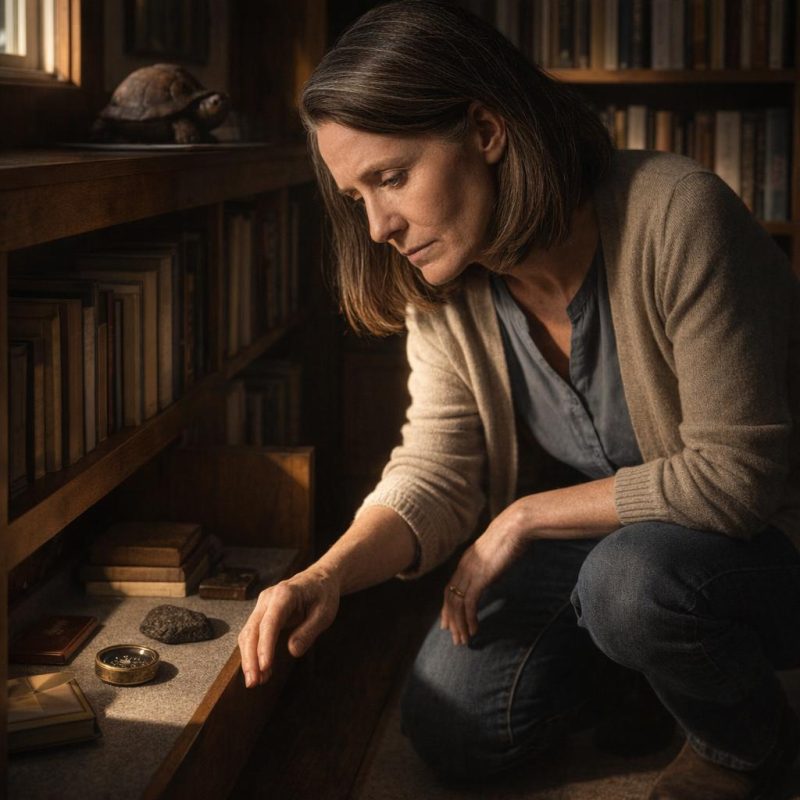 Image by RM AI
Dates and Locations
I finally let myself touch one of the objects — the fishing lure, because it was closest and because I needed to know if any of this was as deliberate as it looked. I lifted it carefully, and that's when I saw the card. It was small, maybe two inches by three, cut from what looked like plain index card stock. Someone had written on it in a neat, careful hand — a date, a location, and nothing else. The date was from fifteen years ago. The location was a town about forty minutes from where Martin had been living at the time. I set the lure down and checked the lighter. Same thing — a small card tucked beneath it, different date, different location, same handwriting. The ticket stub had one too, though that card was slightly larger, and the date on it matched the year Stephanie and I had gone to the Meridian. I went through every object in the compartment. Each one had a card. Each card had a date and a place. None of them said why. There was no explanation, no note that pulled it together, nothing that told me what I was supposed to understand from any of it. I sat back on my heels and looked at the row of small cards lined up in front of me, each one written in the same careful hand, and I had no idea what they meant — or whose hand had written them.
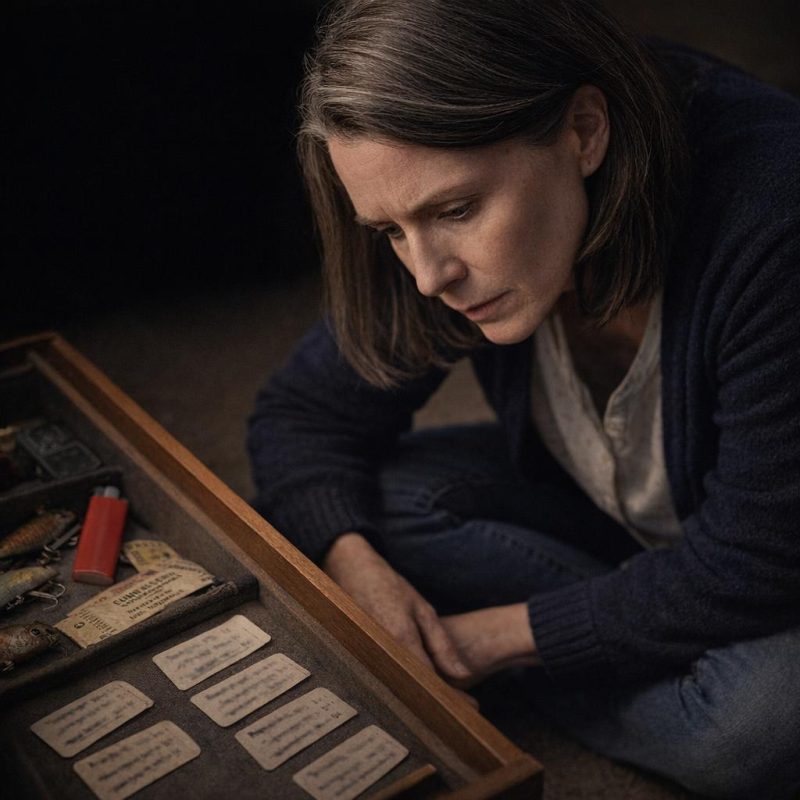 Image by RM AI
The Decision to Reach Out
I sat on the cabin floor for a long time after that, long enough for the light to shift and the room to go dim around me. At some point I got up and turned on the lamp by the reading chair, and then I stood in the middle of the room and looked at the open compartment and tried to think clearly. I took photographs — careful ones, the whole compartment first, then each object individually, then each card. I wanted a record of exactly what was there and exactly how it had been arranged before I disturbed anything further. Then I sat down at the small table by the window and made a list. Martin. Thomas. Stephanie. Carol. And two or three other items I still hadn't fully identified, which meant there might be more people I hadn't accounted for yet. The list felt strange to write. These were people I'd known for most of my life, and I was writing their names down like evidence. I didn't know what I was going to say to any of them. I didn't know how to explain what I'd found without sounding like I'd lost my mind. But I knew I couldn't sit on this. Whatever this collection was — whatever it meant — these people deserved to know their things were here. The apprehension sat in my chest like something heavy and unmoving, but underneath it was something steadier: I was going to make these calls.
 Image by RM AI
Martin's Fishing Lure
I called Martin the next morning. He picked up on the second ring, the way he always does, and we did the usual thirty seconds of small talk before I told him I needed to ask him something specific. I described the fishing lure — the color, the make, the small nick along the tail end that I remembered him pointing out once when we were kids. There was a pause on his end that went on long enough that I thought the call had dropped. Then he said, quietly, "Where did you find that?" I told him it was at the cabin. I didn't explain more than that yet. He was quiet again, and then he said he'd had that lure since he was nineteen, that it had been his father-in-law's before it was his, and that he'd turned the house upside down looking for it when it went missing during a move about fifteen years back. He'd assumed it got packed into the wrong box and thrown out. He'd never stopped being a little sad about it, he said, which was a very Martin thing to admit — practical man, not given to sentiment, but honest about it when it caught him off guard. I told him it was safe, that it was in good condition, that I'd get it back to him. He didn't ask how it had ended up in Robert's cabin. I think he was still too surprised to get that far. The silence that followed his last "I don't understand" settled over the phone line like something neither of us knew how to lift.
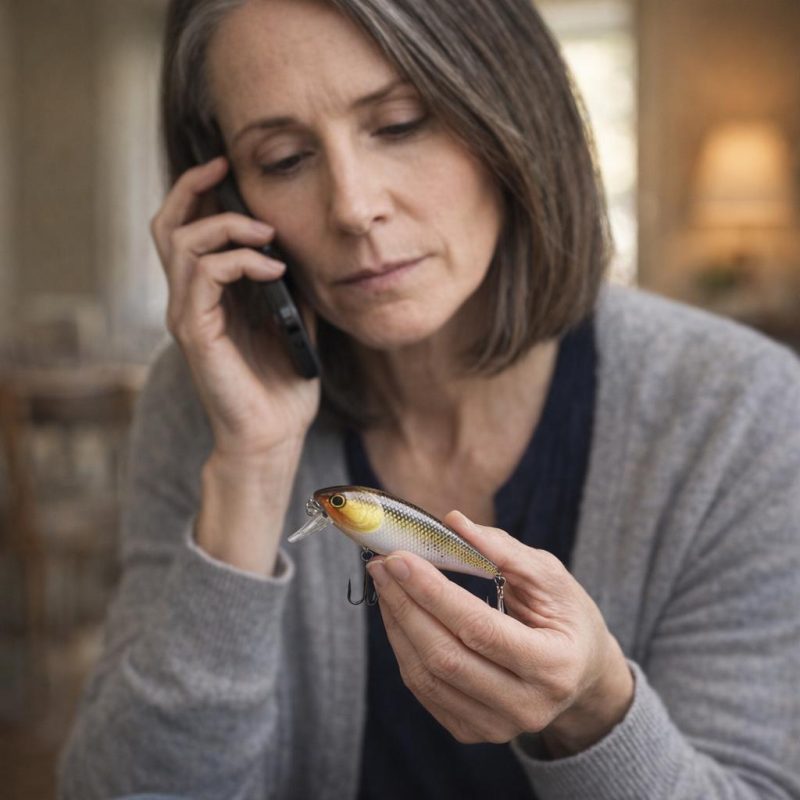 Image by RM AI
Thomas's Silver Lighter
I gave myself a day before I called Thomas. I needed the time, honestly — not to prepare what I'd say, but to settle myself enough to say it without my voice giving too much away. Thomas answered with his usual warmth, asked about the cabin, asked how I was holding up, and I let him talk for a minute before I steered us toward the reason I'd called. I described the lighter — the flat rectangular shape, the engraved pattern on the face, the particular weight of it that he'd always said made it feel substantial in your hand. He went quiet in a way that was different from Martin's quiet. More immediate. "That lighter," he said slowly, like he was pulling something up from a long way down. He told me he'd had it for years, a gift from someone he'd cared about, and that he'd lost it at a restaurant — a place called Harlan's, he said, that used to be on the east side of town, back in the mid-eighties. He'd left it on the table when he went to pay the bill and it was gone when he came back. He'd asked the staff, checked the lost and found twice, and eventually filed a report because the sentimental value made him want some kind of record. I asked him to repeat that last part. "I reported it stolen," he said.
 Image by RM AI
Stephanie's Theater Ticket
I waited two days before I called my cousin Stephanie. Partly because I needed to think, and partly because Stephanie remembers everything — details, sequences, the exact words people used in conversations twenty years ago — and I knew that if anyone was going to give me a clear account of what had happened to that ticket stub, it was her. She answered on the third ring and immediately asked if everything was all right, because apparently I don't call in the middle of a Tuesday without a reason. I told her I was fine, that I just had a question about something old. I mentioned the Meridian Theater, and she made a small sound of recognition before I'd even finished the sentence. She remembered the show — the date, the seats, the fact that we'd laughed too loud during intermission and gotten a look from an usher. She said she'd held onto her ticket stub afterward because she wanted to keep it, that she'd tucked it into the front pocket of her coat on the way out. And then, a few weeks later, she'd gone looking for it and it was gone. She'd checked the coat, checked her bag, retraced everywhere she'd been. She'd been genuinely upset about it, she said, because it was the kind of small thing that shouldn't matter but does. "I never figured out where it went," she said. "I always assumed it just fell out somewhere."
 Image by RM AI
No Connection to the Cabin
After I got off the phone with Stephanie, I sat at the kitchen table with a notepad and wrote out everything I'd learned. Martin lost his fishing lure during a move — boxes packed up in another state, hundreds of miles from the cabin. Thomas lost his lighter at a restaurant, a place Robert and I had never even been to together. Stephanie lost her ticket stub in her own city, in her own coat pocket, weeks after the show. And Carol's bracelet — that had disappeared in a house fire, in a neighborhood I'd only visited a handful of times. I drew a rough map in the margin of the notepad, marking where each loss had happened. None of them overlapped. None of them pointed anywhere near the cabin. I'd half-expected to find some thread connecting them — a trip Robert and I had taken together, a gathering at the property, some occasion where all these people had been in the same place at the same time. But there was nothing like that. The losses had happened in different cities, different years, different circumstances. The cabin wasn't part of any of it. I stared at the map for a long time, tapping my pen against the paper. If none of these things had gone missing anywhere near the cabin, then how in the world had they ended up inside its walls?
 Image by RM AI
Calling Carol
I'd been putting off calling Carol. Partly because I didn't know how to start the conversation, and partly because Carol feels things deeply and I knew this wasn't going to be a quick call. We've been friends since we were nine years old. I know exactly how her voice sounds when something hits her hard. I poured myself a glass of water, sat down at the kitchen table, and dialed her number. She picked up on the second ring, cheerful and unsuspecting, asking if I wanted to meet for lunch that week. I told her I needed to talk to her about something first. Something I'd found at the cabin. I described the hidden compartment, the velvet-lined box, the rows of small objects. And then I told her about the bracelet — gold chain, small charms, the kind with a heart and a key. I heard her go quiet. Not the polite quiet of someone listening, but the sudden, held-breath quiet of someone who has just heard something they weren't prepared for. I asked if she remembered a bracelet like that. She didn't answer right away. When she did speak, her voice had changed completely — lower, slower, like she was choosing each word carefully. She said yes. She said she remembered it. And then, before I could say anything else, her voice broke on the other end of the line, and I just held the phone and let her have a moment.
 Image by RM AI
Carol Arrives
Carol said she needed to see it. Not the bracelet itself — I'd explained it was still at the cabin — but the photograph on my phone. She said she'd be at my house within the hour, and she meant it. Fifty-three minutes later, her car was in my driveway. I met her at the door and she came in without taking off her coat, which told me everything about her state of mind. I made tea while she sat at the kitchen table, still in her jacket, hands folded in front of her. I brought my phone over and pulled up the photograph — the close-up I'd taken of the bracelet laid out on the velvet lining. I set the phone down in front of her and didn't say anything. She looked at it for a long moment without touching the screen. Then her hand came up to her mouth. I watched her shoulders drop, and then her whole face changed — the careful composure she'd held together on the drive over just gave way all at once. She started crying quietly, the kind of crying that doesn't make much noise but takes up the whole room. She said, through tears, that she'd had that bracelet since she was nineteen. That her mother had given it to her. That she'd spent years telling herself it was just a thing, just metal and enamel, that it didn't matter. The weight of twenty years of telling herself that sat in the room between us.
 Image by RM AI
Twenty Years of Blame
Once Carol had steadied herself a little, she told me the whole story. There had been a fire at her house about twenty years ago — a small one, contained to the back bedroom, but enough to do real damage before it was out. She'd grabbed what she could and gotten out, and in the chaos she'd left the bracelet behind on the dresser. By the time anyone could go back in, that part of the room was gone. She'd always assumed the bracelet had burned with everything else. She said she'd replayed that morning so many times over the years — the things she'd picked up, the things she'd left, the split-second decisions you make when you're frightened and moving fast. She'd blamed herself for not grabbing it. Not in a dramatic way, she said, but in that quiet, persistent way that small losses tend to work on you. Every now and then something would remind her of it — a charm bracelet in a shop window, a photograph from before the fire — and she'd feel it again, that low-grade guilt of having left something irreplaceable behind. And now here it was, apparently intact, sitting in a velvet-lined box inside a wall at the cabin. She looked at me across the table and said she didn't understand how that was possible. I didn't either. But what stayed with me was what she said next — that she'd carried the guilt of losing it for twenty years.
 Image by RM AI
More People Come Forward
Word got around faster than I expected. I'd mentioned the collection to a few people while trying to identify the objects, and apparently those people mentioned it to others. Within a few days, my phone was ringing with calls from people I hadn't spoken to in years. A woman from Robert's old neighborhood described a pocket watch that had belonged to her father — she'd lost it during a move and never found it despite going through every box twice. A man I knew vaguely through a church group said he had a pressed flower from his late wife's funeral bouquet that had gone missing from a frame on his wall, and he'd always wondered if it had fallen behind the furniture and been thrown out by accident. A woman named Ruth, who I knew through Stephanie, said she'd lost a small photograph — just a wallet-sized print, nothing fancy — of her parents on their wedding day, and she'd been heartbroken about it for years. Each call followed the same shape: something small, something personal, something that couldn't be replaced. None of the items were worth anything in the way that antiques or jewelry might be. Every single one of them mattered because of what it represented to the person who'd lost it. By the end of the week I had a list of eleven items, eleven stories, eleven people who'd spent years quietly grieving something they thought was simply gone. I sat with that list in my lap long after the last call ended, the house quiet around me.
 Image by RM AI
Sentimental, Not Valuable
Carol came back the next afternoon and we spread everything out on the dining room table — my notepad, the photographs I'd taken at the cabin, the list of names and items I'd compiled from all the calls. We went through it methodically, the way you do when you're trying to find something you've missed. Carol read each item aloud while I checked it against my notes. A fishing lure. A cigarette lighter. A theater ticket stub. A gold charm bracelet. A pocket watch. A pressed flower. A small photograph. A few other things I was still trying to match to their owners. Carol kept pausing and looking up at me. At one point she said, "None of these are worth anything, are they? Not in the way someone would steal something." She was right. A pawnshop wouldn't give you five dollars for most of them. They weren't rare, they weren't antique, they weren't made of anything precious. What they were was personal. Each one was the kind of object that only matters if you know the story behind it — the fishing trip it came from, the occasion it marked, the person who gave it. Someone had gone to the trouble of collecting these things, storing them carefully, labeling them, preserving them. And money had nothing to do with it. Carol set down the last page and looked at me quietly across the table, and neither of us said anything for a moment, because we'd both arrived at the same place: this was never about money.
 Image by RM AI
Someone Chose These
We turned our attention back to the handwritten cards. I'd brought photographs of all of them, and I spread the prints across the table so we could look at them side by side. The handwriting was the same on every single one — the same slant, the same way of forming the letter g, the same careful spacing between words. Whoever had written these cards had written all of them. Each card listed an object, a date, and a location. The locations were specific — not just city names, but street-level details. A restaurant on Elm. A moving truck on Caldwell Avenue. A back bedroom on Sycamore. Carol traced her finger along one of the cards without touching it, like she was reading something fragile. She said it felt like someone had been keeping records. I didn't disagree. The care in the handwriting, the consistency of the format — it didn't look like casual notes. It looked like documentation. We went through each card slowly, and most of the locations matched what the owners had told me about where they'd lost their items. Most of them. Near the bottom of the stack, I found one card that stopped me. The date and the object were there, same as the others. But the location written beneath them was an address I didn't recognize — not a street I knew, not a neighborhood I could place, not anywhere I could connect to any of the people on my list.
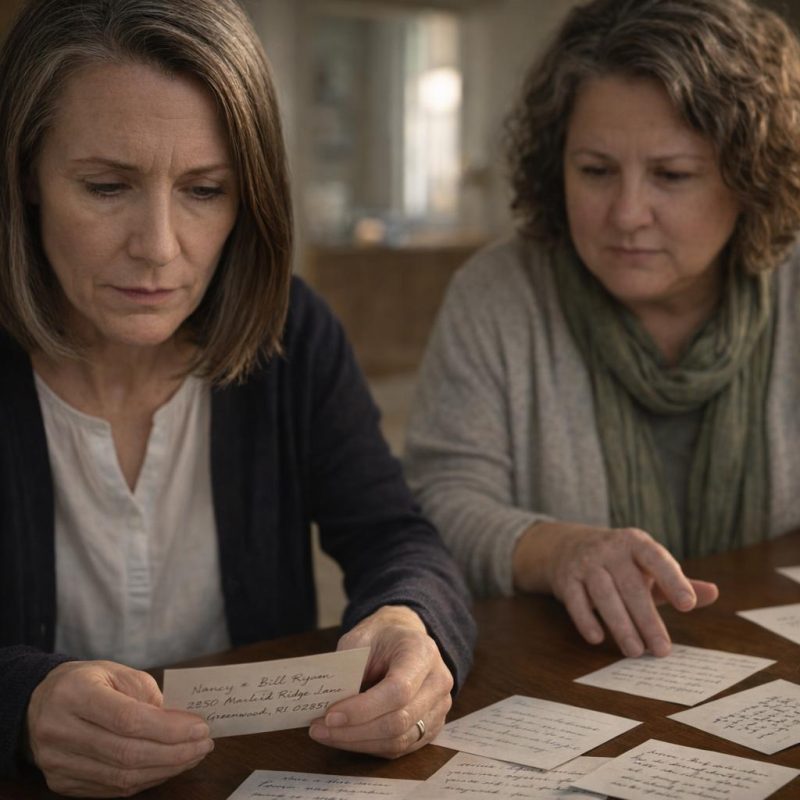 Image by RM AI
The Dates Match Milestones
Carol picked up the card with the unfamiliar address and set it aside, saying we'd come back to it. Then she started going through the others again, more slowly this time, reading the dates out loud one by one. I wasn't sure what she was looking for until she stopped at Martin's card and looked up at me. She asked me what day Martin's daughter was born. I had to think for a second — it was the kind of date I knew but didn't keep at the front of my mind. When I said it, Carol turned the card around and held it out to me. The date on Martin's card was the same day. Not the same year — the card was dated years later — but the same month, the same day. Carol said, quietly, that she didn't think that was a coincidence. We pulled out the other cards and started checking them against what I knew — Thomas's birthday, the anniversary of Stephanie's parents' marriage, the year the woman from the church group had lost her husband. I had to make two phone calls to confirm dates I wasn't certain of. Every card we checked matched something. Not random dates, not approximate ones. The date on Martin's card was the exact day his daughter was born.
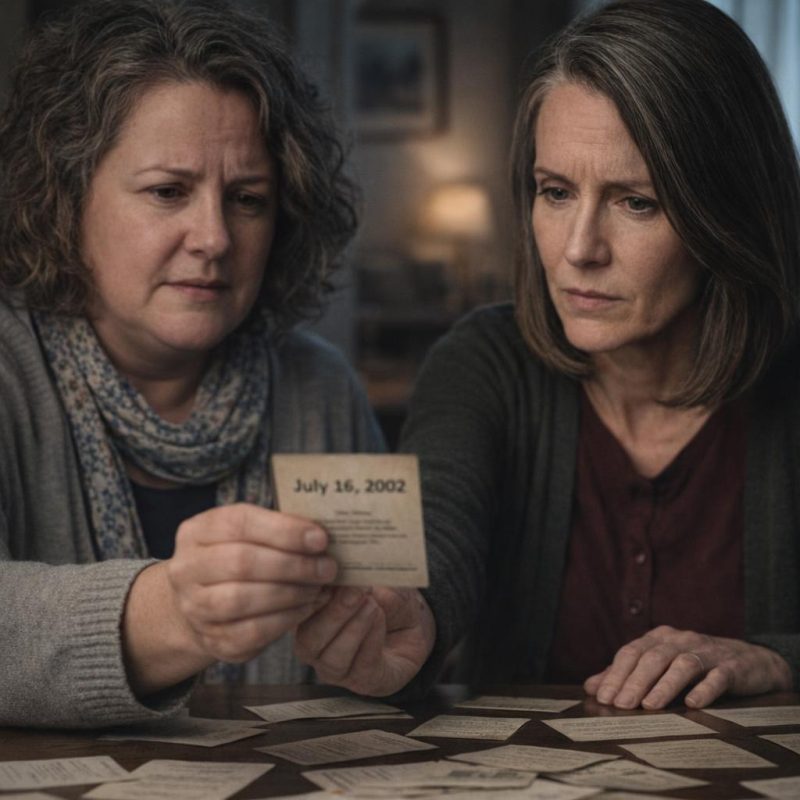 Image by RM AI
Not Random at All
By the time we'd checked the last card, neither of us was talking much. Every date matched something — not approximately, not close enough to shrug off, but exactly. Thomas's lighter was dated the week he retired from the plant, the same week he'd told us he finally felt like himself again. Stephanie's theater ticket matched the opening night of the production her daughter had a small part in — a detail I'd almost forgotten until I said it out loud and felt the air go out of me. Carol's bracelet, the one she'd lost and grieved over, was dated the same month her mother passed. I sat there with the cards spread across the kitchen table and tried to think of another explanation. Maybe the dates were coincidences. Maybe I was reading meaning into numbers the way you do when you're already unsettled. But Carol was quiet in a way she almost never is, and that told me more than the cards did. She said, very carefully, that whoever put this together knew these people. Not just their names — their stories. Their hard years and their good ones. Someone had been paying attention to the people in our lives for a very long time, and they'd kept a record of it, item by item, date by date, tucked behind a wall where no one was supposed to find it.
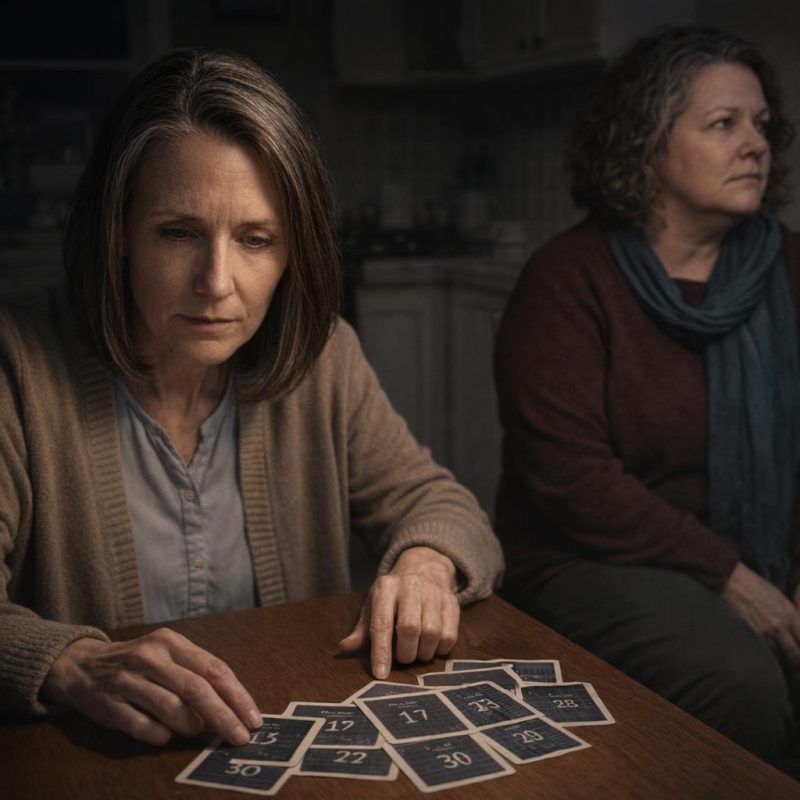 Image by RM AI
The Envelope Beneath
I went back to the cabin alone two days later. I told myself I just needed to measure the compartment for the contractor, but that wasn't really it. I needed to look at it again without Carol's voice in the room, without anyone else's reaction shaping mine. I brought a flashlight and a flat-head screwdriver and I crouched down in front of the open panel the way I had the first time. The compartment looked the same — empty now, the items all bagged and labeled and sitting in a box at home. But something about the bottom panel caught my eye. It sat just slightly higher than it should have, a thin gap along one edge that I hadn't noticed before. I worked the screwdriver along the seam carefully, not wanting to force it. The panel lifted cleanly, like it had been designed to. Beneath it was an envelope. Plain, white, sealed. No name on the front, no return address, nothing written on it at all. I sat back on my heels and looked at it for a long moment. The cabin was very quiet around me — just the sound of wind moving through the pines outside and the occasional creak of the old walls settling. I picked the envelope up and held it, feeling the slight weight of whatever was inside. I set it on my knee and didn't open it. Not yet. The quiet pressed in around me, and I just sat there with it in my hands.
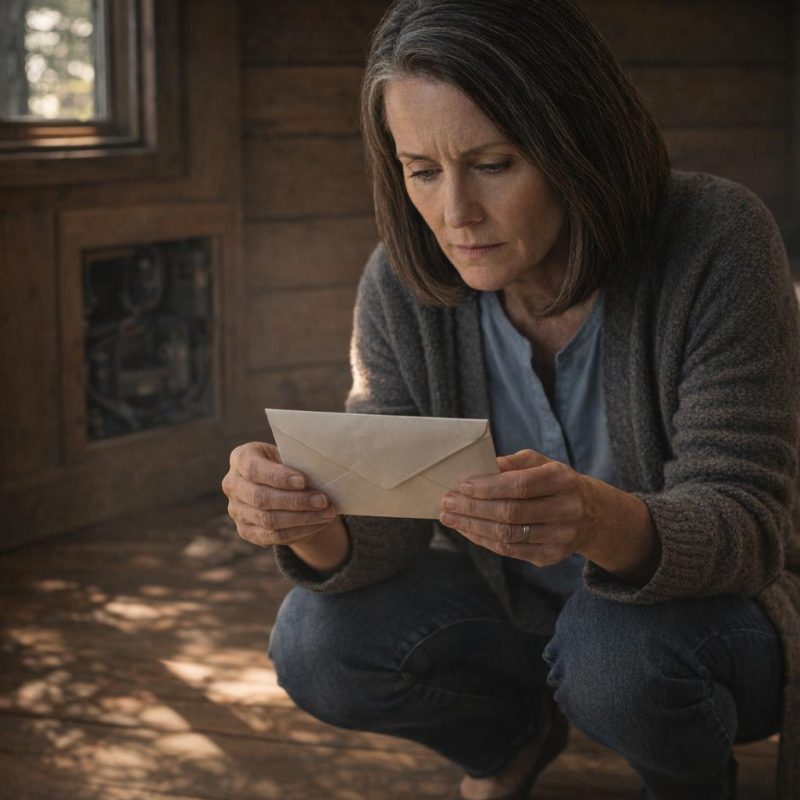 Image by RM AI
Robert's Handwriting
I sat with the envelope for probably ten minutes before I opened it. I kept telling myself I was just catching my breath, but the truth is I was afraid of what might be inside. When I finally worked my finger under the flap and pulled it open, what I found wasn't what I'd expected. It wasn't a letter. It wasn't a deed or a legal document or anything that explained the compartment. It was a notebook — small, leather-bound, the cover worn soft at the corners the way something gets when it's been handled for years. I turned it over in my hands. The leather was dark brown, almost black at the spine. I opened the front cover slowly, and the first thing I saw was a list of names written in two neat columns down the page. I didn't need to read more than a line to know whose handwriting it was. I had seen that particular slant, those careful, slightly compressed letters, on birthday cards and grocery lists and notes left on the kitchen counter for thirty-eight years. My hands went very still on the page.
 Image by RM AI
Cryptic Observations
I don't know how long I sat on the cabin floor reading. The light through the windows shifted from afternoon to early evening and I barely noticed. Robert's entries weren't long — most were just a few sentences, sometimes only one or two — but they were precise in a way that made them hard to put down. He'd written about Thomas the way you'd write about someone you'd watched carefully for years: the afternoon Thomas mentioned, almost in passing, that his father had never once told him he was proud of him. He'd written about a conversation at a neighborhood barbecue where Carol had said something funny about her mother that made everyone laugh, but Robert had noted that her eyes hadn't. There were entries about people I knew well and a few about people I barely remembered — a neighbor from our old street, a woman from the church group, a man who had worked with Robert briefly in the early nineties. Each entry had a date. Each one had a name. And each one held something small and specific — a detail, a moment, a thing someone had said or done or lost. Reading it felt like standing in a room I thought I knew and finding a door I'd never seen before. The handwriting was so familiar it hurt, and something about what he'd recorded sat heavy in a way I couldn't quite name.
 Image by RM AI
Forty Years of Documentation
I flipped back to the beginning of the notebook and found the earliest entry. It was dated 1983. I had to read the date twice. We'd been married three years by then, living in the small house on Calloway Street, still figuring out what kind of people we were going to be together. The entry was about a conversation Robert had with our next-door neighbor at the time — a quiet man named Gerald who had mentioned, while they were both raking leaves, that his wife had just been told she was in remission. Robert had written it down. Just that. Gerald's wife. Remission. The relief in his voice. I turned the pages slowly after that, watching the years move forward in his handwriting. There were entries from the late eighties about Martin — things Martin had said during fishing trips, small worries he'd shared about money and about whether he was doing right by his family. There were entries from the nineties about our children's early years, moments I remembered and moments I'd completely forgotten. A sentence about the way our youngest had cried at her first school play, not from sadness but from being overwhelmed by the applause. I hadn't thought about that in decades. Robert had written it down and kept it. The notebook stretched back forty years, and I was only now seeing any of it.
 Image by RM AI
Everyone Around Him
The further I read, the wider the circle got. It wasn't just family. It wasn't just close friends. Robert had written about the couple down the road whose names I could barely place now, about a woman from his office who had mentioned once that she was putting her mother in memory care, about a young man who had helped us move furniture one summer and told Robert, apparently, that he was the first adult who had ever asked him what he wanted to do with his life. Entry after entry, name after name, decade after decade. I started to feel something I couldn't quite call anger and couldn't quite call grief — something in between, something with an edge to it. Then I turned to an entry near the middle of the notebook and stopped. It was dated a Tuesday in October, maybe fifteen years ago. Robert had written about a conversation between me and Carol — a long one, he noted, on the back porch after dinner. He described what we'd talked about. I stood there reading it and I could not place that evening at all. Not the dinner, not the conversation, not a single detail he'd recorded. The words were in my husband's handwriting, describing my own life, and none of it came back to me.
 Image by RM AI
No Explanation for the Objects
I went through the rest of the notebook looking for some kind of explanation. I kept thinking there had to be a page where Robert laid it out — where he said why he'd been doing this, what he meant to do with it, what the collection behind the wall had to do with any of it. I read slowly, checking every entry, looking for a note to himself or a summary or even a single sentence that pointed toward a purpose. There wasn't one. He wrote about people with the same quiet attention on every page, but he never wrote about himself. He never explained his reasons. He never mentioned the compartment or the objects or what he'd been building toward. The notebook was full of other people's lives and completely empty of his own. I closed it and set it on the floor beside me and sat there in the fading light. I had more information than I'd started with — names, dates, decades of careful observation — and somehow I understood less than I had before I found it. The answers I'd been looking for had only opened into more questions, and the questions didn't have the decency to arrange themselves into anything I could hold.
 Image by RM AI
The Name Eleanor
I picked the notebook back up and started going through it again, more slowly this time, looking for anything I might have skimmed past. That's when I started noticing the name. Eleanor. It appeared in an entry from what looked like the mid-nineties, just briefly — Robert mentioned consulting with someone named Eleanor about a detail he wanted to get right. I almost moved past it. But then I found it again, a few pages later, in a different year. And again after that. The name showed up across different entries, different years, always in the same quiet way — not explained, not introduced, just present, the way you'd write about someone whose context you didn't need to establish because you already knew it. I went back and flagged every entry where the name appeared. There were at least six, maybe more. In one of them, near the back of the notebook, Robert had written that Eleanor felt the same way he did about it — that memory had a way of slipping away before anyone thought to hold onto it.
 Image by RM AI
Shared Interest
I spread the notebook open on the kitchen table and went through every page again, this time with a pen and a notepad beside me. Every time Eleanor's name appeared, I marked it. Six entries, maybe seven — I lost count somewhere in the middle because I kept stopping to read the surrounding context more carefully. What struck me wasn't just how often the name appeared, but how Robert wrote it. No last name, no explanation, no 'my colleague Eleanor' or 'a woman I know named Eleanor.' Just Eleanor, the way you'd write about someone who was already part of the story. In one entry from what looked like the late eighties, he wrote that Eleanor had pushed him to think differently about what preservation really meant — that it wasn't just about keeping things intact, it was about keeping the feeling attached to them. In another, he mentioned that she understood something most people didn't, that objects weren't just objects. They were placeholders for moments that would otherwise disappear. I sat with that for a long time. Robert had never mentioned anyone named Eleanor to me. Not once in all our years together. And yet here she was, woven through his private writing like someone who had mattered to him in a way he'd never thought to share. I didn't know who she was or where she was or whether she was even still alive. But I knew I needed to find her.
 Image by RM AI
Tracking Eleanor Down
I started with what I had, which wasn't much. A first name, a rough timeframe — the late eighties into the nineties — and the sense from Robert's entries that the two of them had been involved in some kind of organized effort, not just a private conversation. One entry mentioned a project with elderly residents. Another referenced a community organization, though Robert hadn't written the name out fully, just an abbreviation I couldn't immediately place. I spent the better part of a morning on the phone, working through a list of local historical societies in the county where the cabin was located. Most of them were kind but unhelpful. A few had records that only went back so far. One woman told me their archives from that period were mostly in boxes that hadn't been sorted yet. I thanked her and moved on. Then I tried a regional preservation group two counties over, explaining that I was looking for records of a volunteer project from the eighties involving oral history or community documentation. The woman on the other end put me on hold for several minutes. When she came back, she said they did have records from a project like that, and that a volunteer named Eleanor was listed among the participants. She couldn't give me contact information, but she confirmed the name was there. I wrote it down on my notepad and sat back in my chair, the pen still in my hand, something in my chest loosening just slightly at finally having something real to follow.
 Image by RM AI
The Retirement Community
The preservation group gave me just enough to keep going. A few more calls, a conversation with someone who remembered the project vaguely and thought one of the volunteers had moved to a retirement community somewhere east of the city — they weren't certain, but it was a place to start. It took me another day and a half to narrow it down. When I finally had a name and an address, I sat with it for a while before I did anything else. Then I packed a small bag, told Carol where I was going, and got in the car. The drive was just over three hours. I spent most of it rehearsing what I would say, which mostly meant talking to myself in the quiet of the car and then deciding none of it sounded right. How do you introduce yourself to a stranger and explain that you found their name in your dead husband's private notebook? I tried a dozen versions and abandoned all of them. By the time I pulled into the parking lot, I had nothing prepared. The building was low and well-kept, surrounded by trimmed hedges and a few late-season flowers still holding on in the beds along the front walk. It was quiet in the way that places like that often are — not empty, just unhurried. I sat in the car for a moment longer than I needed to. Then I got out, walked through the front doors, and asked the woman at the desk if they had a resident named Eleanor.
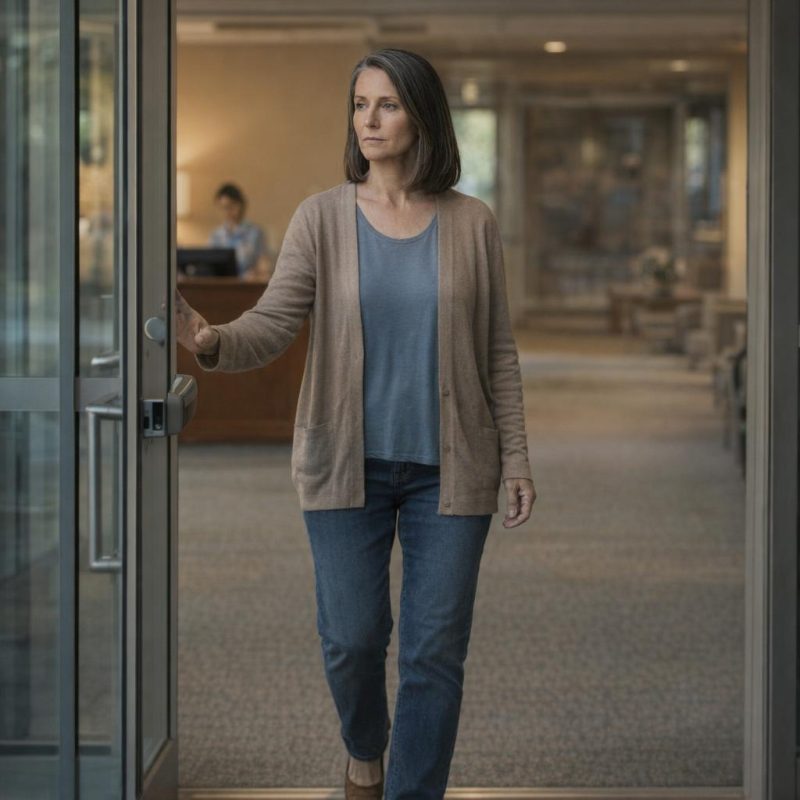 Image by RM AI
Eleanor Recognizes the Name
A staff member walked me down a carpeted hallway and knocked twice on a door near the end of the corridor. A voice from inside said to come in, clear and steady, not the voice I'd been half-expecting from someone in her early eighties. The room was small but arranged with care — books on a shelf, a few framed photographs, a window that let in the afternoon light. The woman sitting in the chair by the window had silver hair pulled back neatly and eyes that were sharp in a way that made me feel immediately that she didn't miss much. I introduced myself. I said my name, and then I said that I was the widow of a man named Robert, and that I'd found some of his notebooks and come across her name. I was still working out what to say next when her expression changed. It wasn't dramatic — no sharp intake of breath, no hand to the mouth. It was quieter than that, more like something settling into place behind her eyes. She looked at me steadily, and the careful composure she'd held since I walked in shifted, just slightly, into something that looked almost like recognition — not of me, but of the moment itself, as though she had been waiting for it.
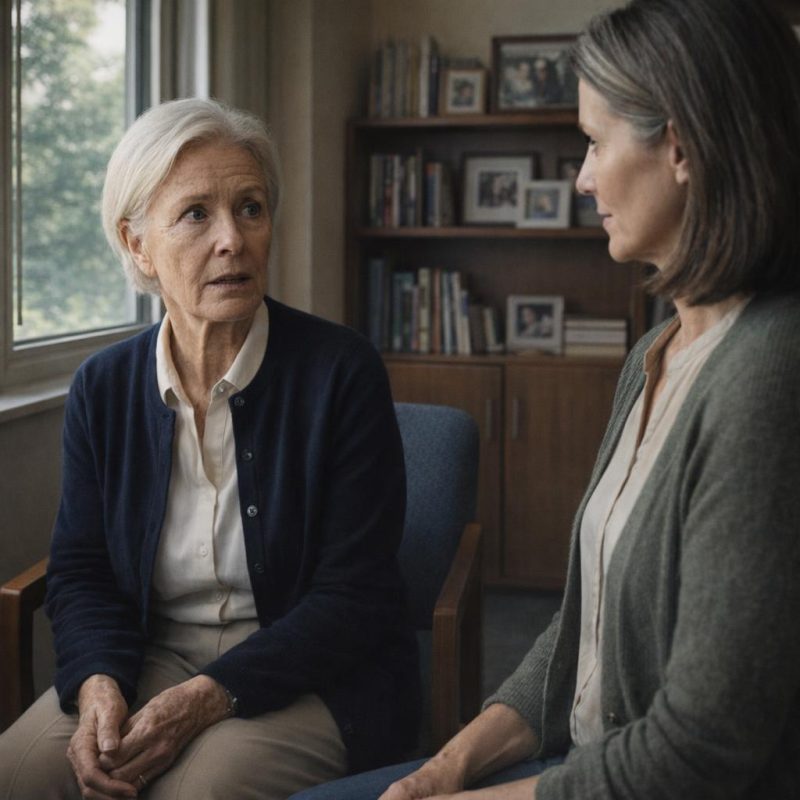 Image by RM AI
She Expected This
She gestured toward the chair across from her and asked me to sit down. I did. For a moment neither of us said anything. Then she asked, quietly, how I had found her. I told her about the notebook, about the name appearing across different entries, about the preservation group and the volunteer records. She listened without interrupting, her hands folded in her lap, her expression attentive. When I finished, she nodded slowly, as though the path I'd taken made sense to her. I asked her how long she had known Robert, and she said a long time — long enough that she'd thought about this conversation more than once over the years. I asked her what she meant by that. She looked at me for a moment before she answered, and when she did, her voice was measured, careful. She said that after Robert passed, she had wondered whether anyone would come looking — whether the things he'd cared about would find their way to someone who wanted to understand them. She said she hadn't known if it would be weeks or years. Then she looked at me directly and said she had known this day would come.
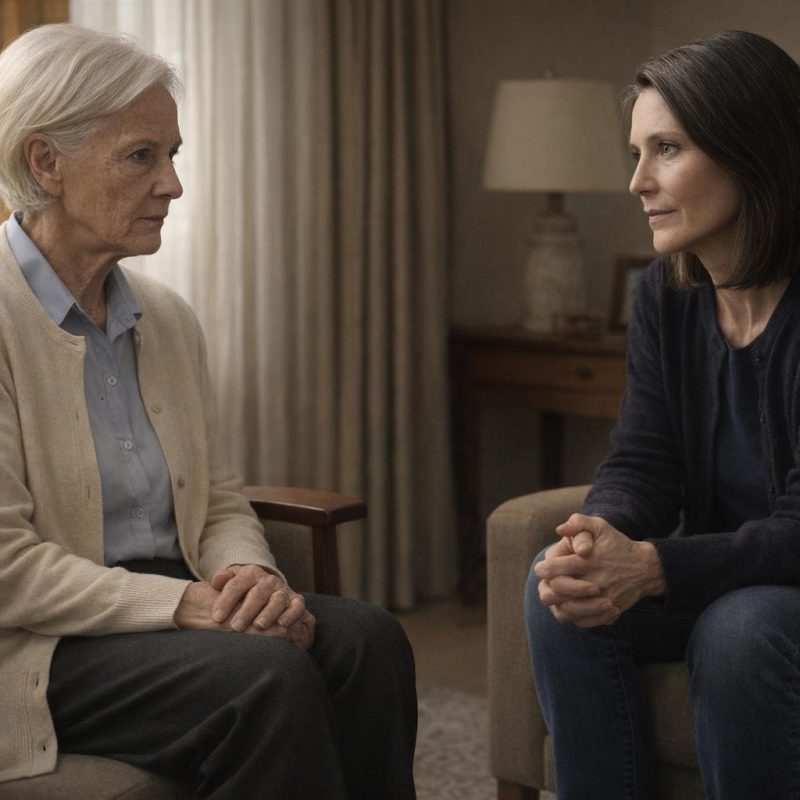 Image by RM AI
The History Project
She didn't make me ask twice. She settled back in her chair and began to talk, and I sat very still and listened. She and Robert had met in the mid-eighties through a county volunteer program — she said it almost matter-of-factly, like she was recounting something she'd told before, though I had the sense she hadn't told it in a long time. The program paired volunteers with elderly residents in the area, people in their seventies and eighties who had lived through things no one had thought to write down. The idea was simple: sit with them, ask questions, record what they remembered. Local history, family stories, the kind of detail that disappears when a person does. Eleanor said she and Robert had been assigned to the same group of residents for nearly two years. They'd spent Saturday mornings in living rooms and kitchen tables, listening to people talk about things they'd never been asked about before. She said Robert had taken to it immediately, that he had a way of asking questions that made people feel their memories were worth keeping. I sat with that image for a moment — Robert at someone's kitchen table, leaning forward, listening the way he used to listen to me. Eleanor's voice was steady as she spoke, and the afternoon light came through the window at a low angle, and something in me that had been pulled tight for weeks finally, quietly, eased.
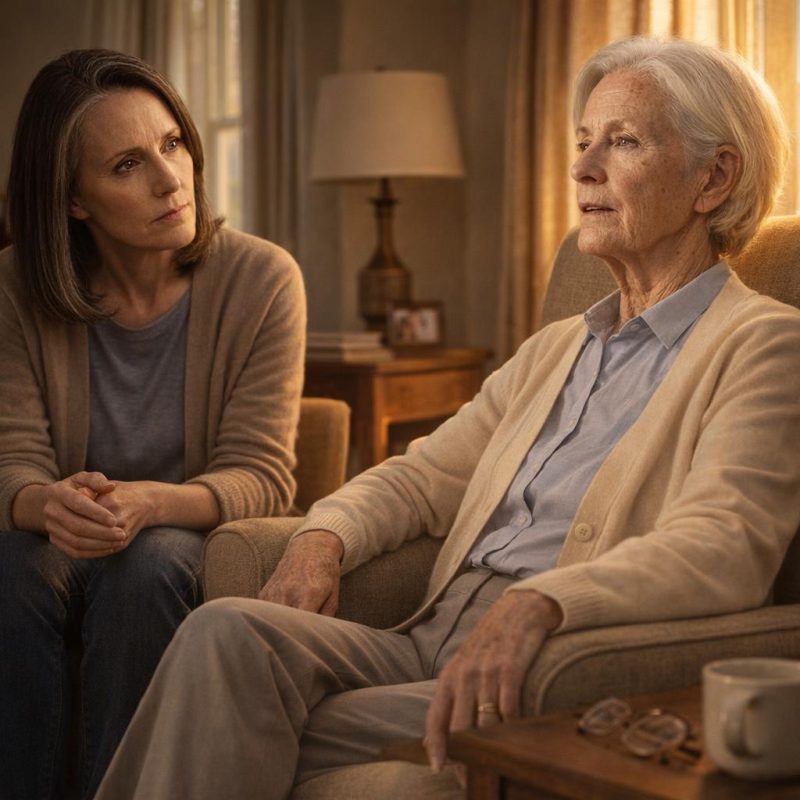 Image by RM AI
Fascination with Objects
Eleanor paused for a moment, then said that the volunteer work had changed the way both of them thought about memory — not just the stories people carried, but the things they kept. She said they'd noticed, over and over, that the residents they visited would reach for an object when they were trying to explain something. A button from a coat. A photograph with a cracked corner. A small tool that had belonged to a father or a brother. The object wasn't the memory, she said, but it was the way in. It gave the memory somewhere to live outside the person who held it. She and Robert had talked about that idea for years after the project ended — what it meant that a thing could carry a feeling, that holding something in your hand could bring back a moment more completely than any description could. I understood what she was describing. I'd felt it myself, going through the items in that hidden compartment, the way each one seemed to carry a weight that had nothing to do with its size. But even as Eleanor spoke, something kept pulling at the edge of my attention. The philosophy made sense. The history made sense. What it didn't explain was the wall. It didn't explain why Robert had sealed those objects away in a hidden space rather than simply keeping them, or returning them, or doing anything else with them. The explanation felt true as far as it went, and I sat with the uneasy sense that it didn't go far enough.
 Image by RM AI
Still Missing Something
I waited until Eleanor had finished before I said anything. I thanked her — genuinely, because what she'd shared had filled in something real, had given Robert's interest a shape and a history I hadn't known existed. But then I told her, as carefully as I could, that I was still having trouble with one part of it. I said that I understood the fascination with objects and stories, that I could see how the volunteer work had planted something in him that stayed. What I couldn't account for was the compartment itself. The hidden space behind the wall. The fact that the items inside belonged to people I knew — my best friend, my younger brother, my cousin, a longtime family friend — people who had believed those things were simply gone. I said that didn't sound like someone preserving history in the abstract. It sounded like something more specific than that, something with a purpose I still couldn't see. Eleanor's expression shifted as I spoke. The careful composure she'd held through the whole conversation moved into something more considered, like she was weighing how much ground she was standing on. I let the silence sit for a moment. Then I asked her directly why Robert had hidden the objects rather than simply keeping them somewhere anyone could find them.
 Image by RM AI
The Bracelet Mystery Remains
Eleanor didn't answer right away, and I took that as my opening. I told her there was one item I couldn't move past — one piece that didn't fit any explanation I'd been able to construct on my own. I described Carol's bracelet. Gold chain, small charms — a tiny ballet slipper, a four-leaf clover, a little heart with a date engraved on the back. Carol had worn it every day for years. It had been a gift from her mother, and when Carol's house caught fire in the late nineties, that bracelet was one of the things she grieved most. She'd told me once that losing it felt like losing her mother all over again. I watched Eleanor's face as I spoke. She was listening carefully, the way she did everything — with that measured attention that made you feel heard even when nothing was being resolved. But I could see something shift behind her eyes. Not recognition exactly. More like the particular stillness of someone encountering a detail they hadn't expected. I told Eleanor that bracelet should not exist anymore. It should have melted in that fire along with everything else Carol lost. And yet there it was, sitting in a hidden compartment in my late husband's cabin, wrapped in tissue paper like something precious. I asked her how that was possible. She didn't answer. The question sat between us in the quiet room, and neither of us had anywhere to put it.
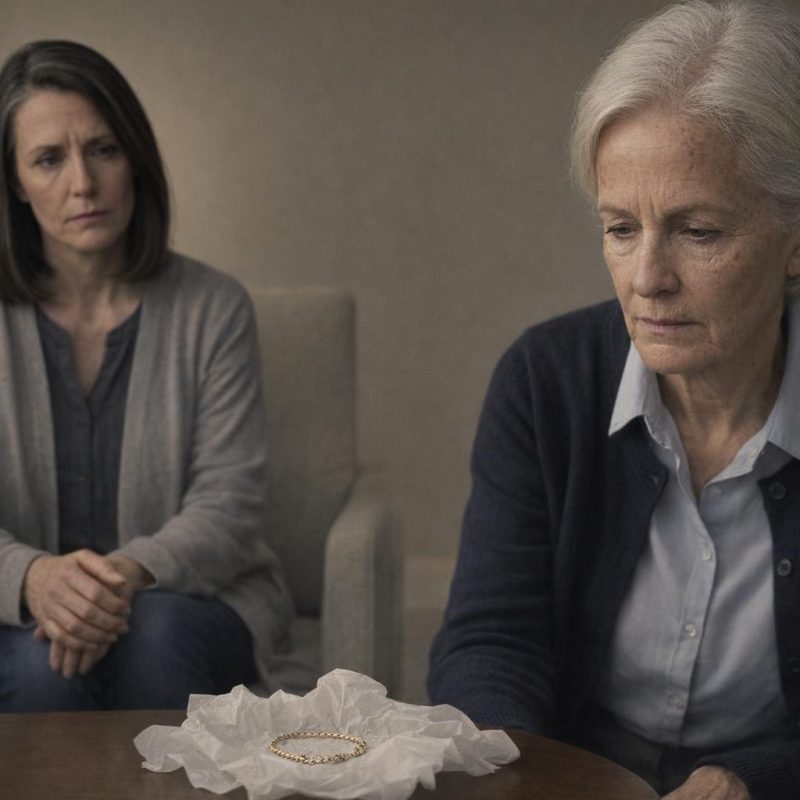 Image by RM AI
Eleanor Needs Time
Eleanor was quiet for a long moment after I finished. Then she set her hands flat on her knees and said something I hadn't expected — she said she didn't know. Not the way people say it when they're deflecting. She said it plainly, with the kind of honesty that costs something. She told me the bracelet detail was new to her. She hadn't known about it, hadn't been part of whatever process brought it into the collection, and she couldn't account for it without going back through the old records. I felt a flicker of frustration move through me — not at her, exactly, but at the situation, at the way every answer seemed to open into another question. I'd come here hoping to leave with something solid, and instead I was sitting with a mystery that had just gotten more complicated. But Eleanor was already pushing herself up from her chair. She said she had boxes in the back room — files from the project, notes, correspondence, logs of what had been collected and how. She said if the answer was anywhere, it was in there. She asked me to give her a few minutes. I told her to take whatever time she needed. She disappeared down the hallway, and I sat alone in her living room, listening to the faint sound of boxes being moved. I didn't know what she'd find. But for the first time since I'd walked through her door, I felt something that wasn't quite dread — something quieter, and a little more like hope.
 Image by RM AI
The Project Files
She was gone longer than a few minutes. I sat in her living room and tried not to watch the clock on the mantle, but I watched it anyway. When Eleanor finally came back, she was carrying a cardboard box — the kind with the folded-in lid, the sort that offices use for archiving. It was dusty along the top edge, and she set it on the coffee table between us with the careful deliberateness of someone handling something that mattered. She said she hadn't opened these in years. She said that after the project ended, she'd packed everything away and hadn't had much reason to go back through it. She lifted the lid and I could see the contents — manila folders, loose papers, what looked like handwritten logs, a few photographs tucked along one side. She began sorting through them slowly, reading the tabs on the folders, setting some aside and pulling others closer. I didn't rush her. I sat with my hands in my lap and let her work. The room was very quiet. Outside, a car passed on the street, and somewhere in the house a clock ticked. Eleanor moved through the folders with the patience of someone who had organized things this way once and still remembered the system. Then she slowed. Her fingers stopped on one folder near the bottom of the stack, and she drew it out carefully and set it on top of the others — a plain manila folder with a name written on the tab in faded ink.
 Image by RM AI
Before the Revelation
I could see Robert's name from where I was sitting. His handwriting — or someone else's, I couldn't be certain from that distance — in faded blue ink on the tab of the folder. Eleanor held it for a moment without opening it, and I had the strange sensation of watching something that felt both inevitable and impossible at the same time. She looked up at me briefly, and I gave her a small nod. I wasn't sure what I was nodding at exactly — permission, maybe, or just acknowledgment that I was ready, or as ready as I was going to be. My hands were still in my lap. I made myself keep them there. Eleanor set the folder flat on the coffee table and smoothed the cover with her palm, the way you might smooth a page before reading something important. She scanned the first page without speaking, her eyes moving steadily across whatever was written there. I watched her face for some sign of what she was finding — a flinch, a softening, anything — but she kept her expression composed and careful. Then she drew a slow breath, the kind that comes before something that needs to be said properly, and she opened the folder wider and began to read.
 Image by RM AI
The Living Memory Archive
What Eleanor read me from those pages took about ten minutes, but it rearranged everything I thought I understood about the last years of Robert's life. The project had a name — she called it a living memory archive. The idea, as Robert and the other volunteers had conceived it, was to recover lost sentimental objects. Not antiques, not valuables — things that mattered to specific people. Items that had been misplaced, sold off in estate sales, donated by mistake, lost in moves or fires or the ordinary chaos of life. The volunteers would track them down, purchase them when necessary, document their histories, and then return them to the people they belonged to. Not quietly, not by mail. The plan was a community celebration — a gathering where people would be reunited with things they'd given up for gone. Robert had apparently been one of the most dedicated volunteers. He'd spent years on it. He'd kept meticulous records. And the items in that hidden compartment — Carol's bracelet, Martin's fishing lure, Stephanie's theater ticket, Thomas's lighter — those weren't trophies or curiosities. They were meant to go home. I sat very still while Eleanor finished reading. I didn't trust myself to speak yet. The man I'd been trying to understand for weeks — the one who'd built a secret compartment and filled it with other people's memories — had been trying to give those memories back. That was the whole of it. That was what I hadn't been able to see.
 Image by RM AI
The Planned Celebration
Eleanor set the page down and let me sit with that for a moment before she continued. Then she described the celebration Robert had envisioned, and the more she talked, the more I could picture it — because it sounded exactly like something he would have planned. A community hall, she said. Tables set up with small labeled envelopes. People invited by name, told only that they were being recognized for something, given no other details in advance. The moment of reunion was supposed to be the surprise. Dozens of people, she said. The project had grown larger than anyone had initially expected. There were items from families across three counties, objects that had traveled through estate sales and thrift stores and storage auctions before the volunteers tracked them down. Robert had drafted the invitation language himself — she'd seen early versions of it in the files. He'd wanted the wording to feel warm, not formal. He'd wanted people to feel welcomed, not summoned. I kept thinking about Carol, about how she would have walked into that room not knowing, and then seen her mother's bracelet sitting in a labeled envelope with her name on it. I kept thinking about Martin, about Thomas, about Stephanie. Eleanor paused, and something in her expression told me the next part was harder. She looked down at the folder again and said the celebration had been scheduled. The date was in the file. It was set for the summer — the same summer Robert first got sick.
 Image by RM AI
The Project Collapsed
Eleanor told me the project didn't collapse because of Robert's illness. It collapsed before that — just weeks before the celebration was supposed to happen. She said it started with a disagreement over one of the recovered items. Someone raised a question about ownership — whether the volunteers had the legal right to hold objects that had passed through legitimate sales, even if the original owners hadn't meant to let them go. That question opened a door, and once it was open, other concerns came through it. Privacy issues around the documentation. Liability questions about what happened if someone disputed a return. One of the organizers consulted a lawyer and came back with a list of concerns that nobody had answers for. Eleanor said the arguments got heated. People who had worked together for years stopped speaking. There were accusations about who had made decisions without consulting the group, about whose name was on what paperwork. Robert had tried to hold things together, she said — she could see it in the correspondence in the files, the careful measured tone he used even when others were not being careful or measured. But it hadn't been enough. The project was formally canceled about three weeks before the celebration date. The invitations that had been drafted were never sent. The hall was never booked. All that work, all those years of tracking and recovering and documenting — it just stopped. Eleanor folded her hands in her lap when she finished, and I sat with the weight of what had been so close to happening and hadn't.
 Image by RM AI
Stored While Deciding
After the cancellation, Eleanor said, Robert had taken the items home. Not to keep — she was clear about that. He hadn't known what else to do with them while things were still unsettled, while there was still some possibility that the disputes might be resolved and the project might resume in some form. He'd stored them at the cabin, she thought, because it felt temporary. A holding place, not a final one. He'd told her at the time that he planned to reach out to people individually if the group couldn't find a way forward together. He'd said he wasn't willing to let the objects just disappear into a box somewhere. But then his diagnosis came, and it came faster and harder than any of them had expected, and the window for doing things the right way kept narrowing. Eleanor said she'd lost touch with him in those final months. She hadn't known the collection was still there. She hadn't known it was still waiting. I thought about Robert in that cabin, knowing what was hidden behind that wall, knowing what he'd meant to do with it, and running out of time before he could. He'd had every intention of finishing what he started. He just never got the chance. The bracelet was still the piece I couldn't fully account for — that part of the story wasn't in Eleanor's files — but everything else had settled into a shape I recognized now, quiet and unfinished and entirely like him.
 Image by RM AI
The Bracelet Question
There was one piece that still didn't fit, and I wasn't going to leave Eleanor's kitchen without asking about it directly. I described the bracelet — the thin gold chain, the small heart charm, the way Carol had worn it every day until the fire took it. I told Eleanor that according to everything Carol had ever said, the bracelet had been in the house when it burned. It wasn't something she'd taken with her. It was gone, she'd always believed, along with everything else. So I needed to understand how it had ended up behind a wall in Robert's cabin. Eleanor listened carefully, her hands folded on the table. She said she didn't remember a bracelet specifically — the project had involved so many items over so many years that the individual pieces had blurred together in her memory. She wasn't dismissing me. She was being honest. She pulled the folder closer and began working through the pages, running her finger down each column of handwritten entries, turning pages slowly, pausing when something caught her eye. I sat across from her and watched her search.
 Image by RM AI
The Salvage Box
Eleanor worked through the records methodically, turning pages without rushing, and I tried to be patient. Carol kept drifting into my thoughts — the way she'd talked about that bracelet over the years, always in the past tense, always with that particular kind of grief that comes from losing something you can never replace. Then Eleanor stopped. She smoothed the page flat with her palm and leaned in closer. She said there was an entry here she hadn't thought about in years. A volunteer — she read the name quietly, someone I didn't recognize — had purchased a box of salvage items from a contractor hired to clean up after a residential fire. The contractor had been selling off recovered materials, and the volunteer had bought a mixed lot, not knowing exactly what was inside. When she'd gone through it later, she'd found several small personal items, including a gold bracelet with a heart charm. She'd logged it for future identification, assuming the owner could be traced once the project had proper resources. Eleanor turned the folder toward me so I could read the entry myself, and there it was in faded ink: salvage purchase, one gold bracelet, heart charm, owner unknown, logged for identification.
 Image by RM AI
It Survived All Along
I had to read the entry twice before it fully landed. The bracelet hadn't burned. It had been sitting in a salvage box, then in a volunteer's log, then in Robert's collection behind a wall in the cabin — waiting, all this time, to be returned to someone who had spent twenty years believing it was ash. Carol had grieved that bracelet the way you grieve something that's simply gone. She'd never looked for it because there was nothing to look for. She'd made her peace with it, or tried to, the way you try to make peace with any loss that has no resolution. And the whole time, it had survived. I thought about all the conversations we'd had over the years where she'd mentioned it — offhand, the way old losses surface sometimes — and I felt something tighten in my chest that I couldn't quite name. It wasn't quite sadness and it wasn't quite joy. It was something in between, the particular ache of knowing that a grief was unnecessary, that the thing she'd mourned was never really gone. Eleanor said something quiet from across the table, but I didn't hear it. I was still sitting with the weight of twenty years that didn't have to be.
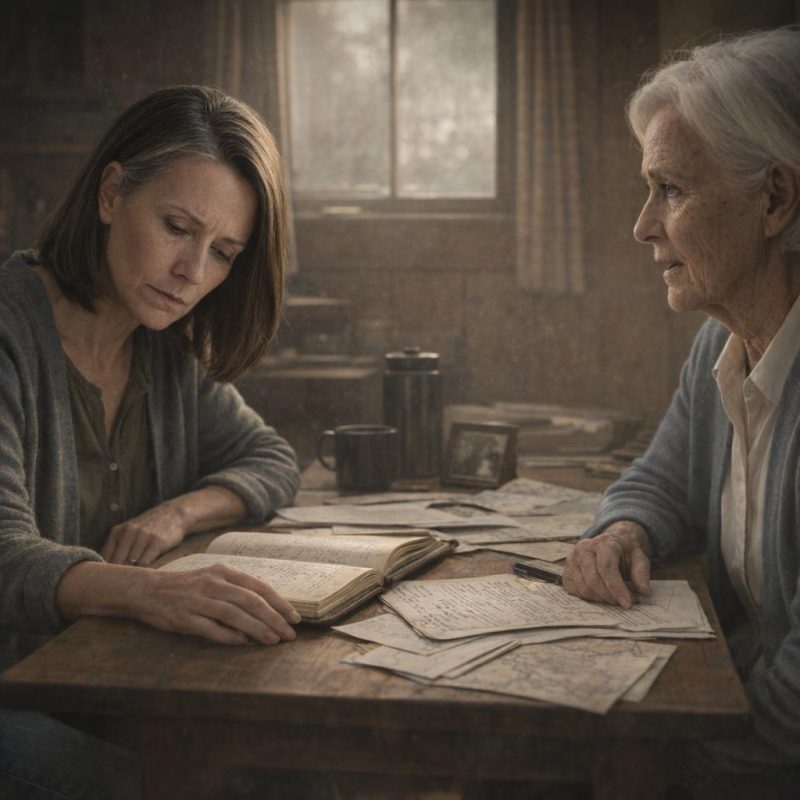 Image by RM AI
One Final Document
Eleanor gave me a moment before she said anything else. When she spoke, her voice was careful, the way it got when she was choosing her words. She said there was something else in the back of the folder — she'd almost missed it when she was searching for the bracelet entry. She reached in and drew out a plain white envelope, slightly yellowed at the edges, sealed. Robert's handwriting was on the front. I recognized it immediately, that particular slant he had, the way he pressed a little harder on the capital letters. The envelope wasn't addressed to anyone by name. It just said, in his hand: To be opened only after my death. Eleanor set it on the table between us and looked at me. She asked, quietly, if I wanted to be the one to open it. I didn't answer right away. I just looked at the envelope sitting there, his handwriting facing up, and the room felt very still around it.
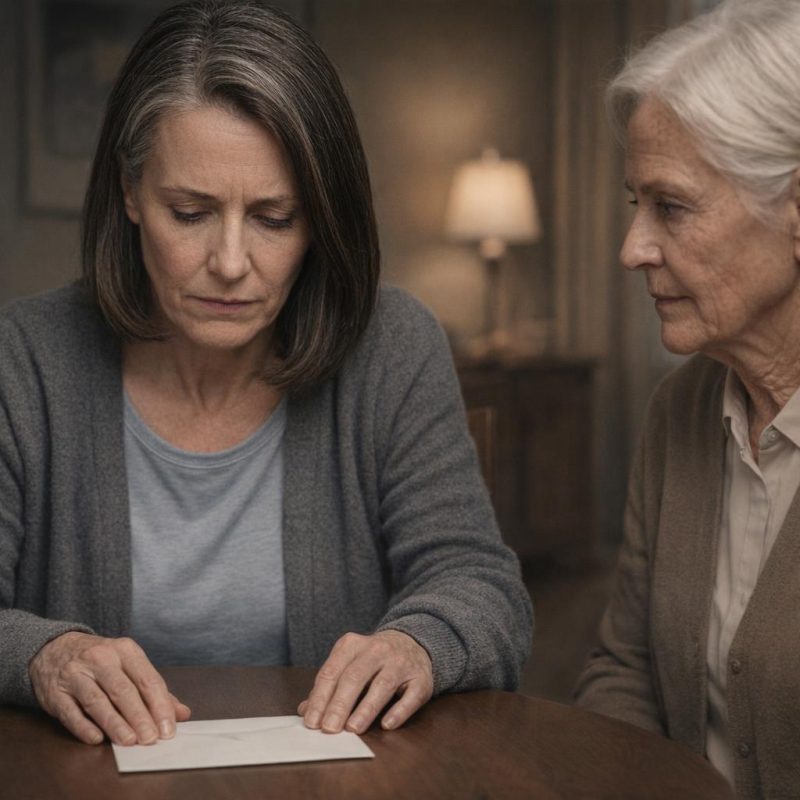 Image by RM AI
Robert's Final Instructions
My hands weren't entirely steady when I picked it up. I worked the flap open carefully, the way you do when you're not sure you're ready for what's inside. The letter was two pages, written in Robert's hand on plain lined paper, and I recognized the date — it was from about eight months before he died, when he'd still been well enough to write but must have already known what was coming. He explained that his illness had moved faster than he'd expected and that he hadn't been able to finish what he'd started. He wrote about the collection — each item, each person, each story — and how much it had mattered to him to get it right. He said he was sorry he hadn't managed to complete it himself. Then, near the bottom of the second page, he wrote that if someone found this letter, it meant the collection was still waiting. He asked whoever found it to please finish the work. He said the items deserved to go home. He said the people deserved to know their things had survived. I set the letter down on the table when I finished reading and didn't move for a long moment, the full weight of what he'd asked settling quietly over me.
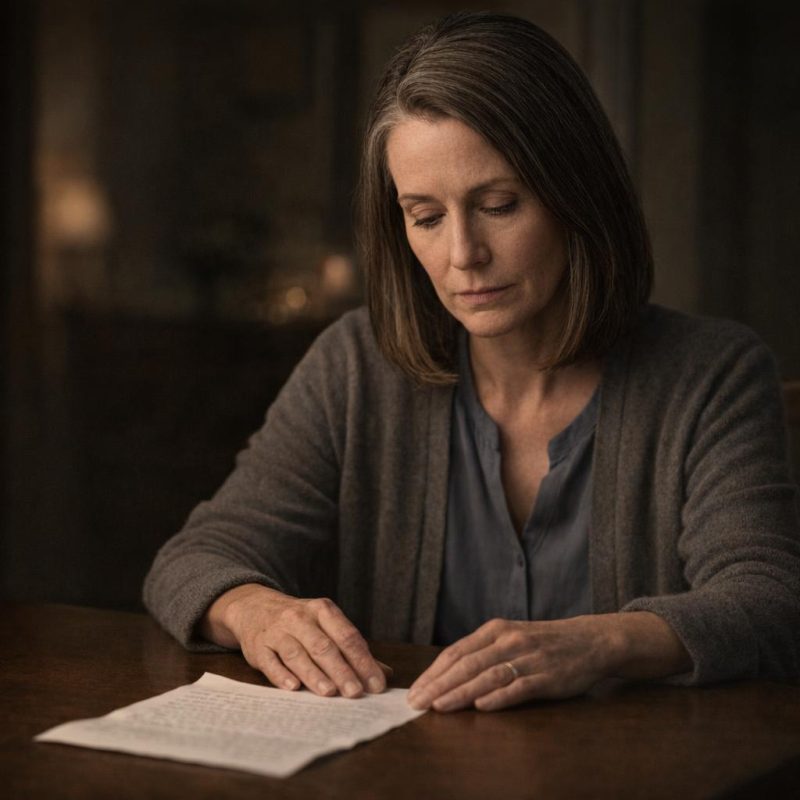 Image by RM AI
The Mission Becomes Hers
I read the letter a second time, slower. Some of it I had to stop and sit with — the part where he wrote about running out of time, the part where he said he was sorry. That was so like him, to apologize for something that wasn't his fault, to feel responsible for an unfinished kindness. I thought about him in that cabin, putting this letter together, sealing it, tucking it into the back of a folder where someone might eventually find it. He hadn't known it would be me. He'd written it for whoever came. But it had found me anyway, the way things sometimes do. Eleanor was watching me from across the table, patient and quiet. I folded the letter carefully and set it back in the envelope. Then I looked up at her and told her I would finish it. I said it plainly, without drama, because that was the only way it felt right to say it. I was going to return every item on that list.
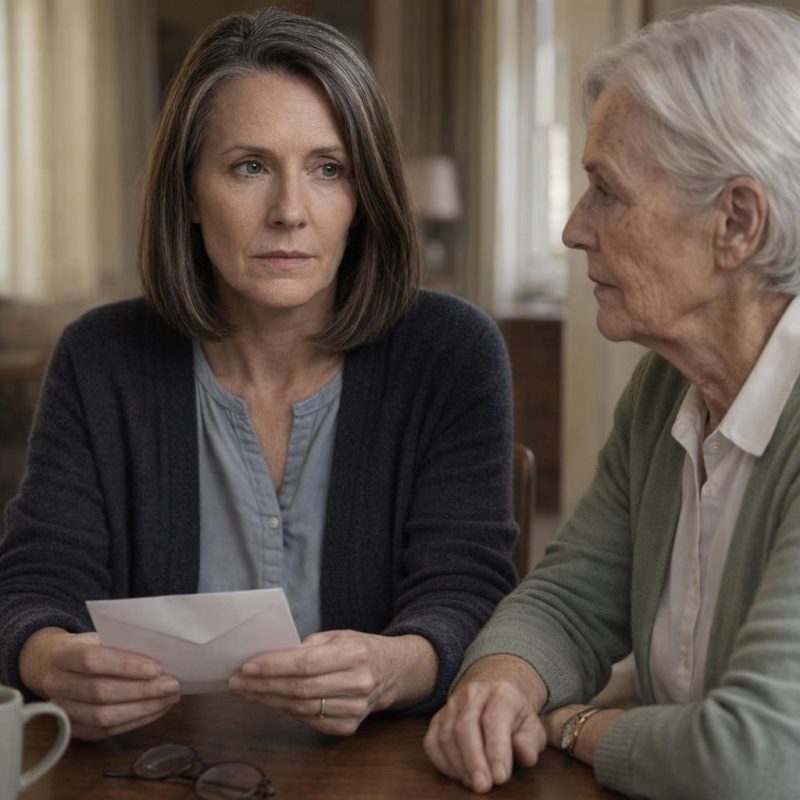 Image by RM AI
Accepting the Responsibility
Eleanor nodded like she'd been expecting me to say exactly that. She didn't make a fuss about it, which I appreciated. She just said she was glad, and that Robert would have been glad too, and then she got up and went back to the folder. She pulled out a separate sheet from the very back — a master list, typed and then annotated by hand in several different inks, as though it had been added to over years. Dozens of entries. Names, item descriptions, last known addresses, some of them crossed out and updated, some of them with question marks beside them. She set it on the table in front of me and said this was everything they'd documented. She told me some of the contact information would be out of date by now, that I'd likely have to do some searching, and that a few of the people on the list might be difficult to find after all this time. I looked down the columns of names and felt the full scope of it settle in. It was going to take months. Maybe longer. I picked up the list anyway and held it in both hands, and Eleanor watched me take it.
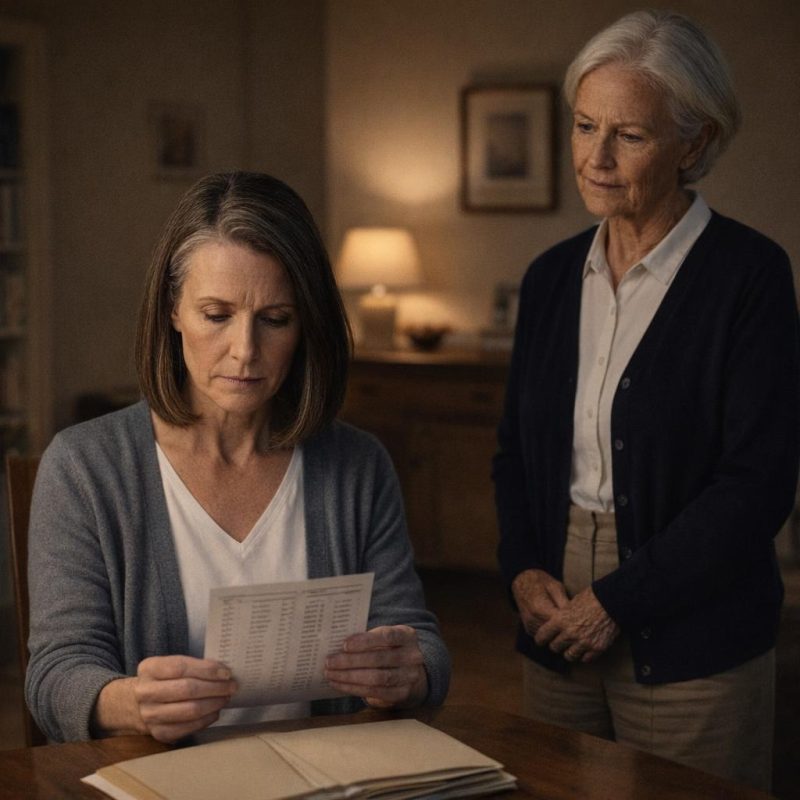 Image by RM AI
Beginning the Work
I drove home with the files on the passenger seat and the collection carefully packed in the back, and I kept thinking about Robert's letter the whole way. By the time I got inside, I knew what I needed to do first. I cleared the dining room table and spread everything out — the master list, Eleanor's folder, the notes I'd taken — and I started building a system. A column for each item, a column for the name, a column for the last known contact, a column for current status. Some entries were straightforward. Others had addresses from twenty years ago and nothing more. I spent the first evening just going through the list and marking what I had and what I'd need to find. Over the following days I worked through it steadily, cross-referencing names against old phone directories, searching online, making notes. The bracelet I set aside for last, because I already knew exactly where that one was going. When I'd tracked down the first name on the list well enough to feel confident, I sat down at the kitchen table, picked up the phone, and dialed.
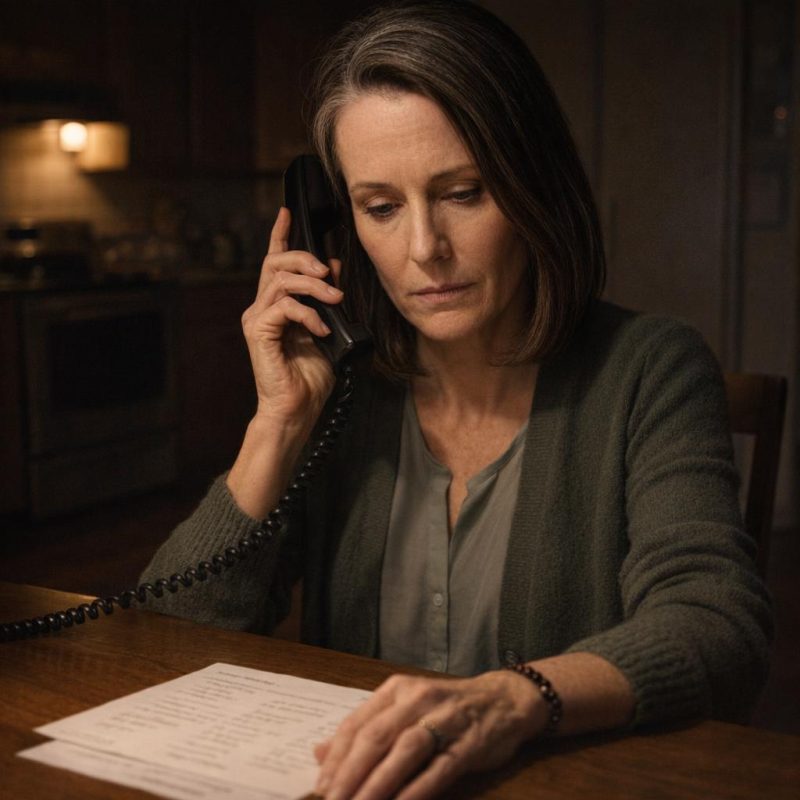 Image by RM AI
Months of Reunions
The months that followed were unlike anything I had expected. I worked through the list name by name, address by address, phone call by phone call. Some people I reached on the first try. Others took weeks of searching — old addresses, disconnected numbers, family members who passed along messages. But nearly every one of them called back. A woman in her seventies wept so hard she couldn't speak for a full minute when I described the locket I was holding. A retired schoolteacher laughed until he had to sit down, because he'd spent thirty years convinced he'd left his father's pocket watch on a bus. I drove to Martin's house on a Tuesday afternoon and watched my younger brother turn a small fishing lure over in his palm like he was handling something fragile. He said he'd lost it the summer our father died, and he'd never stopped thinking about it. Thomas came to meet me at a diner halfway between our towns, and when I slid the lighter across the table, he went very quiet and pressed it flat against his chest. Stephanie drove three hours to pick up her theater ticket in person, and she cried in my driveway for ten minutes before she could even come inside. Each reunion carried its own weight, its own particular shape of grief and relief. I saved the hardest ones for when I felt steadiest. The last name on the list was an elderly man I'd never met, and when I placed the object in his hands, his fingers closed around it slowly and he didn't say a word for a long time.
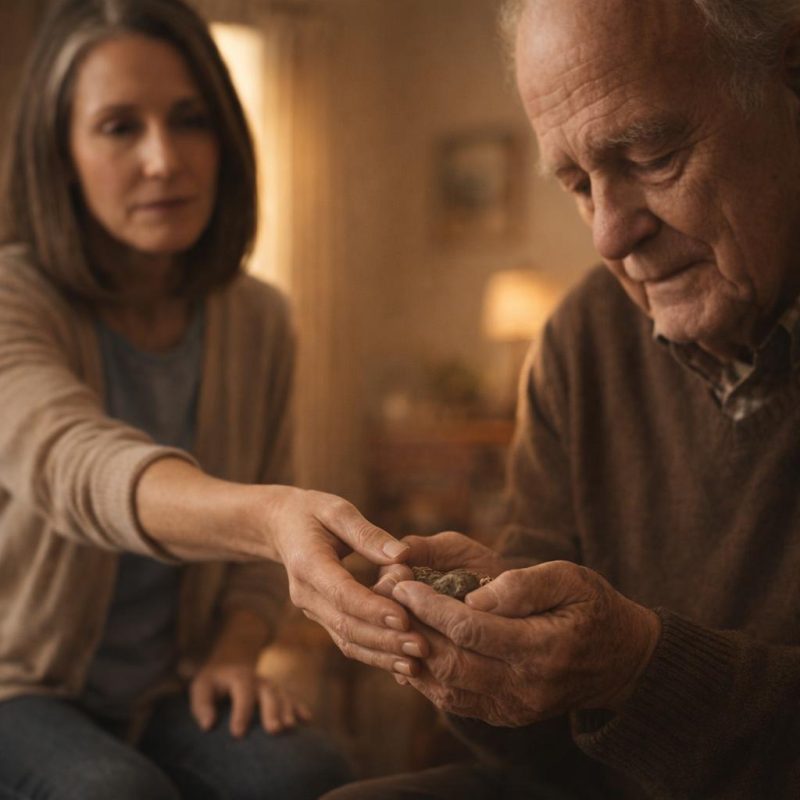 Image by RM AI
Witnessing Joy and Tears
By the time the list was nearly finished, I had stopped counting the number of times I'd sat across from a stranger and watched something shift in their face. It happened differently each time — sometimes a sharp intake of breath, sometimes a slow crumpling around the eyes, sometimes a laugh that came out sounding more like a sob. One woman told me the ring I returned had belonged to her mother, and she'd spent years believing she'd been careless with something irreplaceable. A man in his eighties shook my hand for so long I thought he might not let go. What I hadn't expected was how much of it came back to Robert. People asked about him — who he was, how he'd found the objects, why he'd kept them so carefully all those years. I told them what I knew, which was still only part of the picture, but it was enough. He had believed that lost things deserved to find their way home. He had believed that the small objects people carry hold something real — not just sentiment, but proof that a life was lived, that moments mattered. I hadn't fully understood that when I first opened that wall. I understood it now. Sitting in my car after the last of those visits, the empty box on the passenger seat beside me, I felt something I hadn't felt in a long time — not happiness exactly, but a deep and settled quiet, the kind that comes when something has been done right.
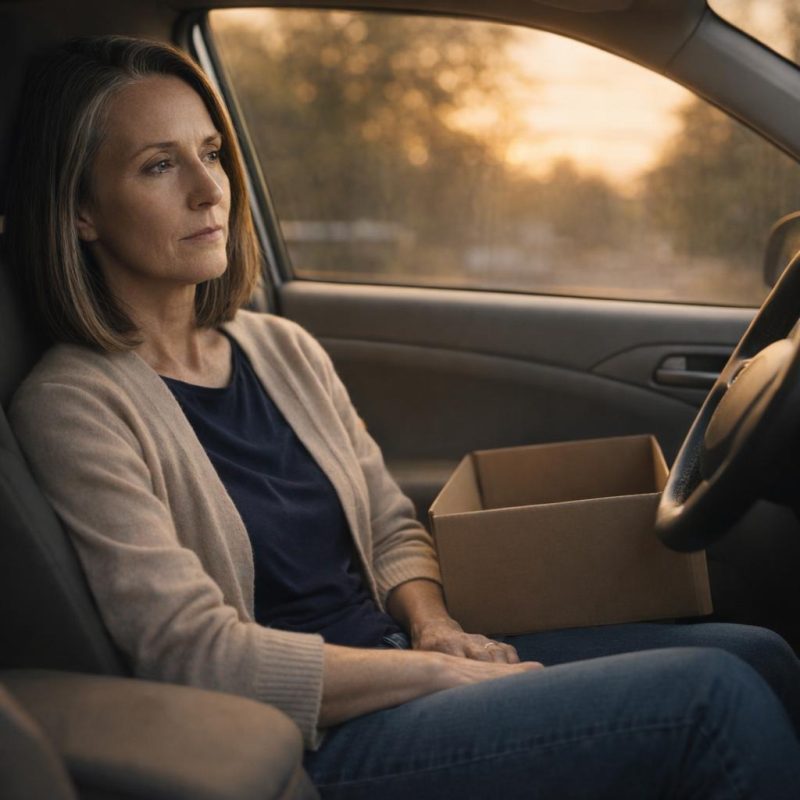 Image by RM AI
Carol's Bracelet Comes Home
I had been saving Carol for last on purpose. She was my best friend, and the bracelet was the one item on the list I had never been uncertain about. I knew exactly where it was going. I called her and asked if she could come over on a Saturday, just the two of us, and she said yes without asking why. When she arrived I had the bracelet sitting in a small dish on the kitchen table, the gold catching the afternoon light. She didn't see it right away. She came in talking, setting her bag down, asking if I wanted coffee. Then she turned toward the table and stopped. She went completely still. I watched her face move through something I didn't have a name for — recognition, disbelief, and then a grief so old it seemed to surface from somewhere she'd stopped expecting to reach. She said, very quietly, "That's my bracelet." I said, "I know." She picked it up with both hands and held it against her mouth, and then she was crying in a way I hadn't seen from her since we were young. She kept saying she'd thought it was gone, that she'd made her peace with it being gone. I told her Robert had found it, that he'd kept it safe, that he'd meant for it to come back to her. She sat down at my kitchen table and held that bracelet for a long time, and the room around us felt full of something neither of us needed to name.
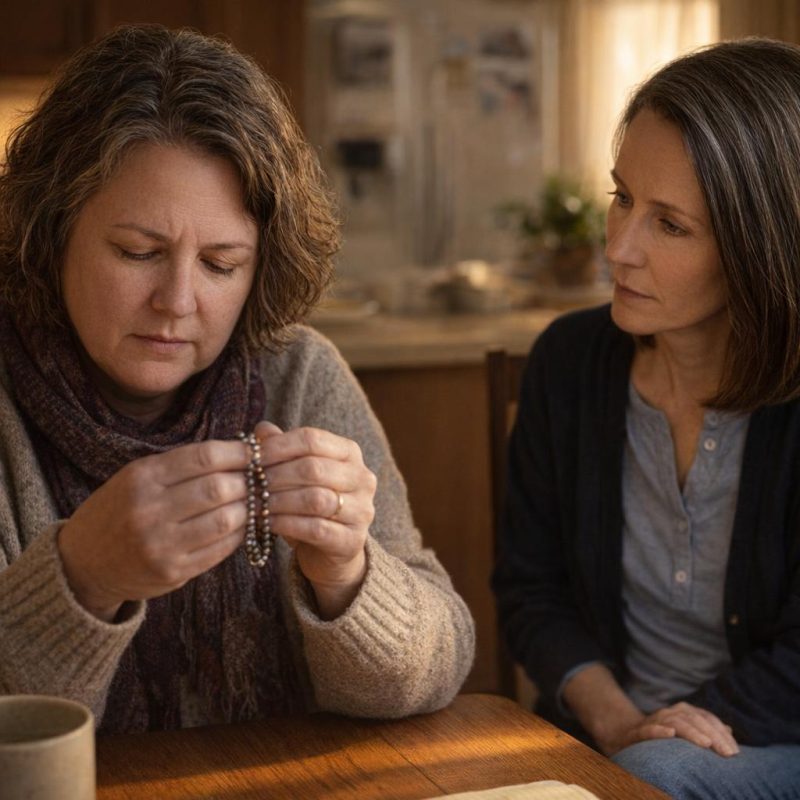 Image by RM AI
Memories Restored
The cabin sold in the spring. Ms. Patterson handled everything efficiently, just as she'd promised, and the closing paperwork was straightforward. I signed where I was told to sign, and that was that. I had expected to feel more about it — the loss of the place, the finality of it — but by then the cabin had already given me everything it had to give. What Robert left behind wasn't the building or the land. It was the work he'd started and never finished, and the trust that I would find it and understand what it meant. I thought about him differently now than I had in those first weeks after the discovery, when I'd felt so unsettled by how much I hadn't known. The secret room, the careful records, the decades of quiet searching — none of it had been about keeping things from me. It had been about keeping faith with something he believed in deeply, something he hadn't quite found the words for. He believed that memory was worth protecting. That the small things people lose carry more weight than anyone admits. That it was worth the effort to try to give them back. I had spent months living inside that belief, and I understood it now in a way I couldn't have before I opened that wall. The cabin was someone else's now. But what Robert had built — the archive, the mission, the long chain of reunions that had followed — that was still mine to carry, and I intended to.
 Image by RM AI