My Daughter Insisted I Attend A Distant Relative’s Wedding—Then A Stranger Accidentally Revealed Why
My Daughter Insisted I Attend A Distant Relative’s Wedding—Then A Stranger Accidentally Revealed Why
The Invitation I Never Wanted
I want to be honest with you — when Lisa first called about the wedding, my immediate reaction was to say no. A destination wedding for a cousin I'd barely spoken to in twenty years? I was sixty-eight years old, my knees weren't what they used to be, and I had a perfectly good garden that needed tending. But Lisa has a way of making things sound like moral obligations. She said the family needed a good turnout, that there had been too many years of branches not speaking to each other, too many holidays spent on opposite sides of a grudge nobody could fully explain anymore. 'Mom,' she said, 'just come. It'll be good for everyone.' I pointed out that I didn't even know the bride well enough to pick her out of a lineup, and Lisa laughed and said that was exactly why I should go — to fix that. She wasn't wrong that the family had fractured over the years. There'd been disagreements, the kind that start over something small and calcify into something nobody wants to touch. I didn't have strong feelings about any of it, honestly. I'd just quietly stepped back from the whole thing a long time ago. But Lisa kept at it, patient and earnest the way she's always been, and eventually I heard myself say fine, I'd go. I hung up the phone and sat with the quiet of my kitchen for a long moment, already half-regretting it.
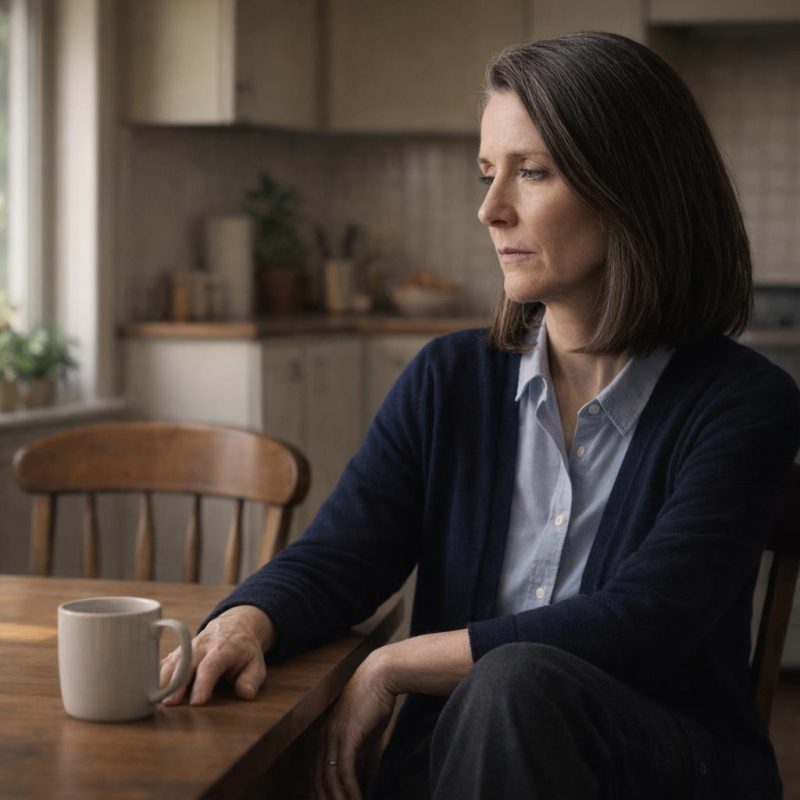 Image by RM AI
The Journey to the Coast
The flight was three hours, which gave me plenty of time to question my decision. I had a window seat and spent most of it watching clouds and trying to remember the last time I'd traveled anywhere just for a family event. It had been a while. I knew almost nothing about the bride beyond her name and the fact that she was connected to us through a branch of the family I'd lost track of somewhere around the time my kids were in elementary school. That's the thing about distant relatives — the distance isn't always geographic. Sometimes it's just years of not quite keeping up, and then one day you realize you're strangers who share a last name. The cab from the airport wound along a coastal road, and I'll admit the scenery helped my mood. The water was that particular shade of blue-green you only get near the ocean, and the air coming through the cracked window smelled like salt and something floral I couldn't identify. I told myself at least I'd get a decent view out of this. The resort appeared around a bend in the road — white buildings set against the water, palm trees lining a circular drive, the kind of place that looks like it belongs on a travel magazine cover. The cab pulled up to the entrance, and I stepped out with my single rolling bag onto a stone path flanked by flowering hedges. I stood there for a moment, taking it in.
 Image by RM AI
Faces from the Past
The check-in process was smooth, and my room turned out to be nicer than I'd expected — a small balcony with an ocean view, crisp white linens, the whole thing. I freshened up, changed into something presentable, and headed back downstairs with no particular plan except to find a glass of water and get my bearings. The lobby was already filling up with people, and it took me about thirty seconds to realize I recognized some of them. There was a man near the concierge desk who had the same jaw as my father's side of the family — that strong, square jaw that showed up in old photographs. A woman by the window turned and I placed her immediately as someone I'd met at a funeral maybe fifteen years ago, though I couldn't pull her name. People kept doing that thing where they'd look at me, tilt their heads, and then their faces would open up with recognition. 'Is that — ?' Yes, it was. We'd shake hands or hug briefly and exchange the usual pleasantries: how long has it been, you look wonderful, can you believe it. I didn't mind it as much as I thought I would. There's something oddly comforting about being around people who share your history even when you don't share your daily life. I was standing near a potted fern when a woman across the lobby turned and caught my eye — and I felt the years collapse, because I knew that face from somewhere much further back than I could quickly place.
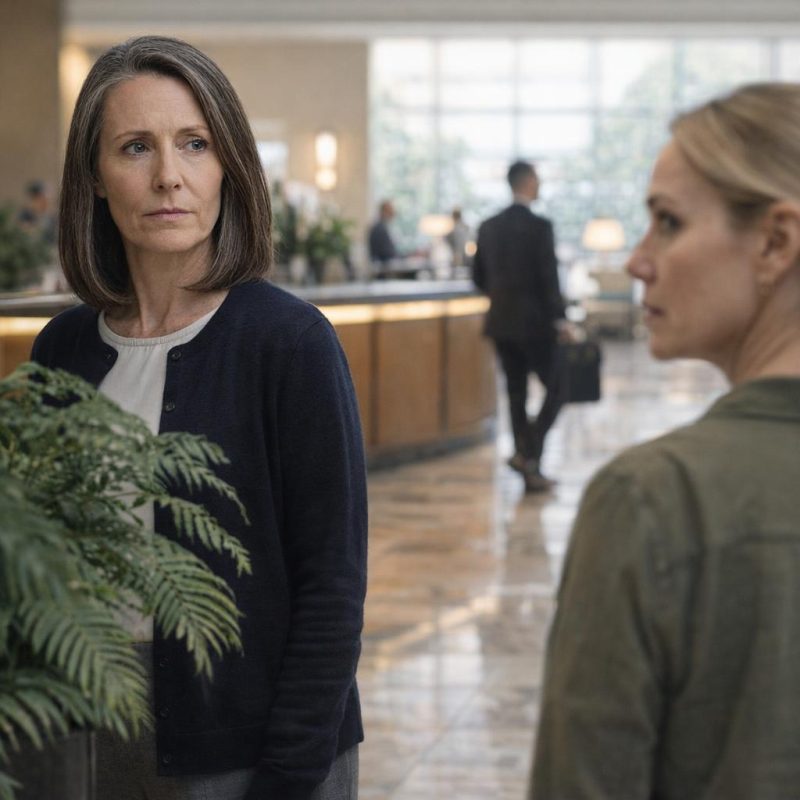 Image by RM AI
Small Talk and Champagne
The welcome cocktail reception was held on a terrace overlooking the water, and whoever had planned it had done a good job. There were little passed appetizers, a decent champagne, and enough round tables that you could sit if your feet needed a rest, which mine did. Lisa found me near the bar and steered me around like a gentle tugboat, introducing me to people whose names I immediately forgot and then felt guilty about. We talked about grandchildren — several people had new ones — and about travel, and about jobs that were winding down or had already wound down. Someone told a story about a family reunion from the early nineties that apparently involved a lost dog and a rented pontoon boat, and the whole table laughed. I laughed too, even though I hadn't been there. That's the thing about family stories — they belong to everyone eventually. Lisa looked relaxed in a way I hadn't seen in a while, her shoulders down, her laugh easy. I was glad she'd come, even if I was still reserving judgment on whether I was glad I'd come. The champagne was good, I'll give it that. I found myself refilling my glass and not minding the noise the way I usually do at large gatherings. The sun was dropping toward the water and turning everything gold, and from somewhere across the terrace came a burst of laughter from a group I didn't recognize, warm and unguarded, rolling out over the sound of the waves.
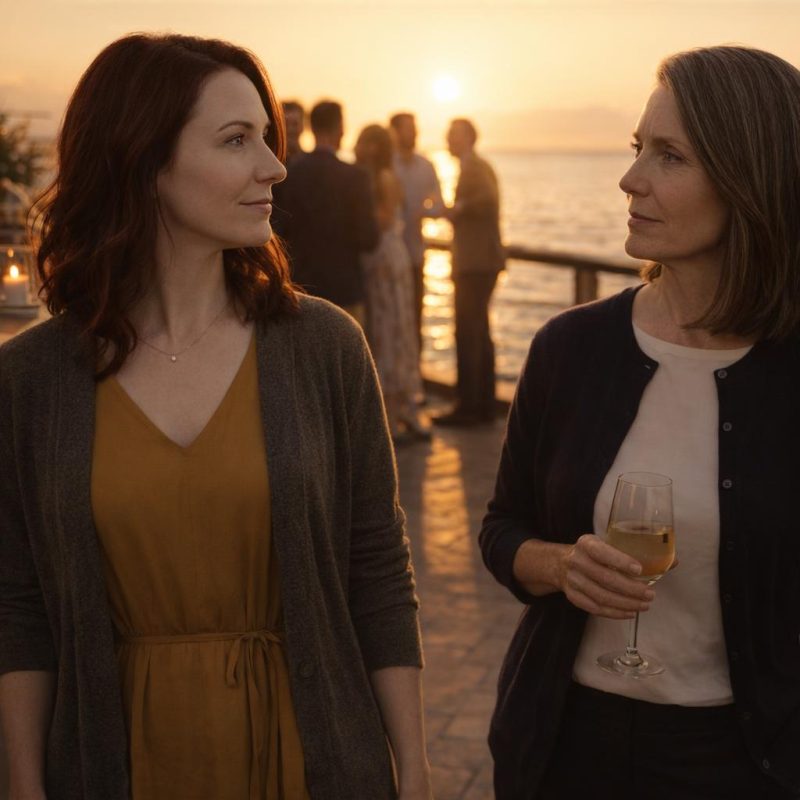 Image by RM AI
The Ceremony
The ceremony was held on a wide stone terrace at the edge of the property, with the ocean spread out behind the altar like something from a painting. Lisa and I found seats together on the family side, and I settled in with the quiet expectation you get at weddings — that particular hush before things begin. Emily, the bride, was genuinely radiant. I don't use that word lightly; it gets overused at weddings. But she came down the aisle with this wide, unself-conscious smile, like she'd forgotten there were two hundred people watching her, and I found myself smiling back even though I barely knew her. The vows were traditional, the kind with actual weight to them, and the groom's voice cracked a little on the word 'always,' which made the woman next to me press her hand to her chest. It was a good ceremony. I was glad I'd come, at least for those twenty minutes. I was watching a flower girl carefully navigate the aisle in shoes that were clearly too big for her when something made me look up — that particular feeling of being watched, the kind that prickles at the back of your neck. I scanned the rows across the aisle without being obvious about it. Most people were focused on the couple at the altar. But there was one woman, elderly, white-haired, sitting very still in the third row, and she was looking directly at me.
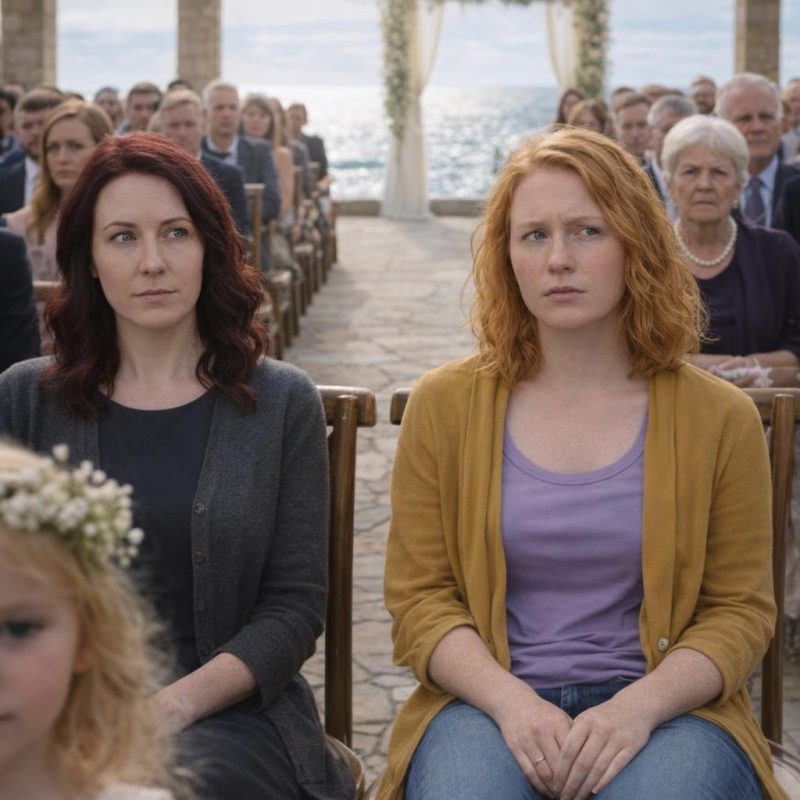 Image by RM AI
The Reception Begins
The reception moved inside to a ballroom that had been done up beautifully — soft lighting, round tables with low floral centerpieces, a band setting up in the corner. I'd half-expected the ceremony unease to follow me in, but it didn't. The room had a warmth to it that was hard to resist. I watched cousins who I knew hadn't spoken in years standing together near the bar, laughing about something, and it struck me how a wedding can do that — dissolve old grievances, at least for an evening. Lisa was nearby, chatting with a group I didn't know, and she caught my eye and gave me a small nod that meant she was fine, go mingle. So I did. I found a seat at one of the tables, accepted a glass of wine from a passing server, and let myself settle into the evening. The band started with something low and easy, and the food, when it came, was genuinely good — the kind of meal that makes you stop talking mid-sentence to pay attention to what you're eating. I was doing exactly that, fork halfway to my mouth, when I noticed movement at the edge of my vision. I looked up. The elderly woman from the ceremony — white hair, careful posture, moving with the deliberate steadiness of someone who didn't rush — was making her way across the room, and she was headed in my direction.
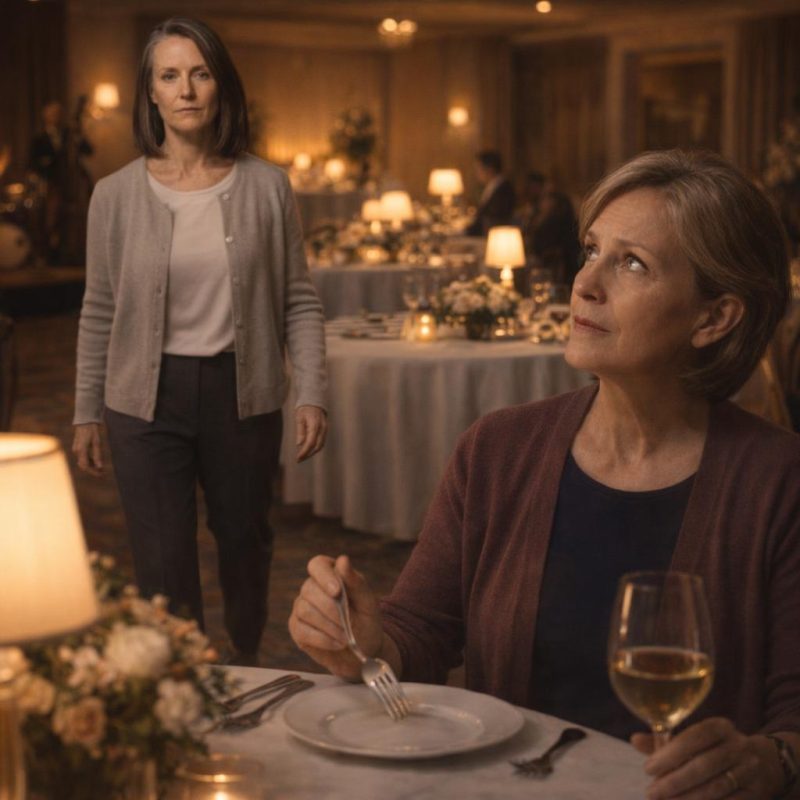 Image by RM AI
A Question About My Share
She introduced herself as Margaret, and she had the kind of direct manner that made small talk feel beside the point. She sat down across from me without asking, which I respected, and looked at me with sharp eyes that didn't match the careful way she moved. 'I'm glad you made it,' she said, like she'd been expecting me specifically. I thanked her and said something polite about the wedding. Then she leaned forward slightly and asked, in a perfectly conversational tone, whether I had finally decided to claim my share. I blinked. I looked around briefly, half-expecting to find that she was speaking to someone behind me. 'I'm sorry?' I said. She repeated it, patient and unhurried, watching my face. I laughed — a short, genuine laugh — because my first thought was that she had me confused with someone else entirely. It happens at large family gatherings; people see a face that resembles someone they know and fill in the rest. I told her I thought she might have the wrong person, that I wasn't sure what share she was referring to. Margaret's expression shifted then. The pleasant, expectant look she'd come in with began to change into something I couldn't quite read — not confusion exactly, but something more careful, more searching. She studied my face for a moment, and the easy warmth of the evening seemed to pull back just slightly, like a tide going out.
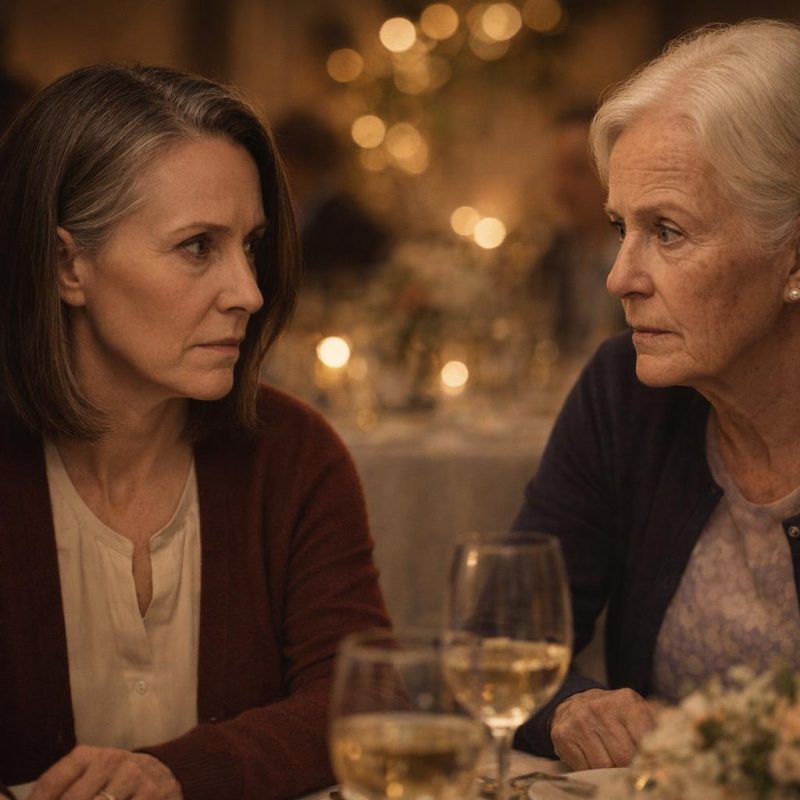 Image by RM AI
Nobody Told You
Margaret leaned in a little closer and asked, quietly, whether nobody had told me. The way she said it — not as a rhetorical question, but as a real one, with something close to alarm behind it — made me set down my wine glass. I told her honestly that I had no idea what she was talking about, that I'd come to the wedding because my daughter Lisa had asked me to, and that was the full extent of what I knew about any of it. Something moved across Margaret's face then. Her eyes went wide for just a moment, and she opened her mouth as if she was about to say something substantial, something that required a breath first. I leaned forward slightly. But before she could get a word out, a man I didn't recognize appeared at her elbow — fifties, maybe, with the look of someone who'd been watching the room. He put a hand on Margaret's arm and said something low near her ear. Margaret closed her mouth. She looked at me once more, and there was something in that look I couldn't name — apology, maybe, or warning, or both at once. Then the man was steering her gently but firmly away from the table, guiding her toward the far side of the room, and I watched them go until they disappeared into the crowd.
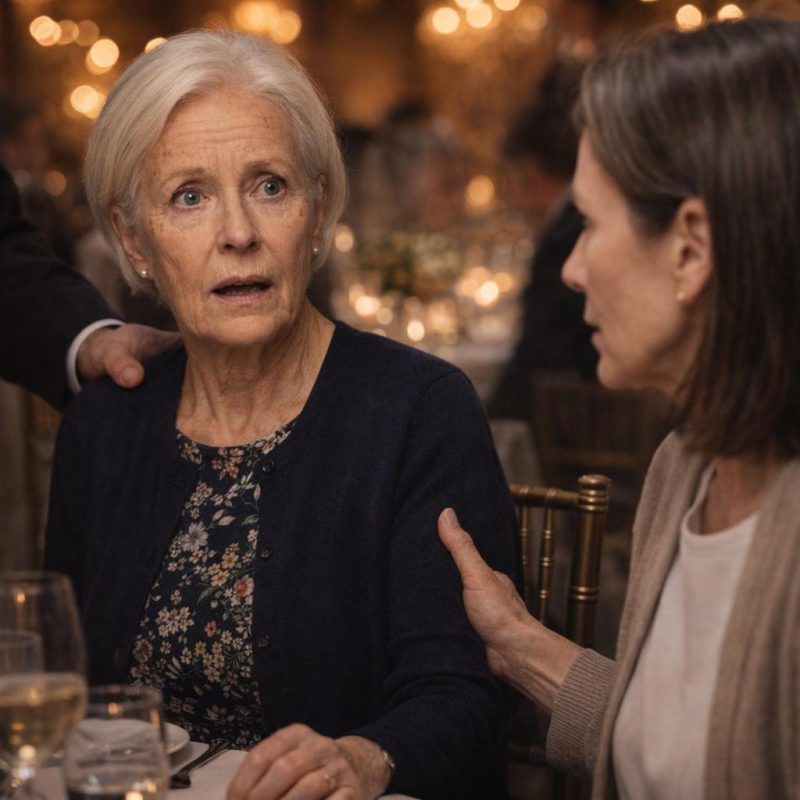 Image by RM AI
The Rest of the Evening
I spent the rest of the reception going through the motions. I smiled when someone made a toast. I clapped when the couple had their first dance. I even managed a few minutes of small talk with a great-uncle I hadn't seen in years. But the whole time, some part of my attention was still back at that table with Margaret, replaying the way she'd said it — nobody told you — like it was something that should have happened a long time ago. Lisa found me near the dessert table around nine and looped her arm through mine, cheerful and oblivious, telling me about the centerpieces and how the bride had done her own flowers. I nodded along. I didn't say anything about Margaret. I wasn't sure what I'd even say — I barely knew what had happened myself. I watched a few of the older relatives across the room, people I recognized only vaguely from old photographs, and I found myself wondering whether any of them knew something I didn't. Whether any of them had been watching me the same way that man had been watching Margaret. I couldn't tell. They all looked like people at a wedding — relaxed, a little tired, full of cake. By the time I got back to my hotel room, I'd convinced myself I was probably reading too much into it. Then I lay down, stared at the ceiling, and the question started up again.
 Image by RM AI
A Sleepless Night
I didn't sleep much. I'd close my eyes and the whole thing would start over — Margaret's face, the way she'd leaned in, the careful way she'd said the word claim, like it meant something specific. Then the man appearing out of nowhere, his hand on her arm, steering her away before she could finish. I kept turning it over, trying to find an innocent explanation. Maybe Margaret was confused. Maybe she had me mixed up with someone else. Maybe there was some old family dispute I'd never been told about because it had nothing to do with me. That last one almost worked, for a few minutes. But then I'd think about the look on her face when she was led away — that mix of apology and something else I still couldn't name — and the innocent explanations started feeling thin. I tried to remember if my parents had ever mentioned family property, anything that might explain what a share could mean in this context. My father had been a quiet man who kept his own counsel. My mother had passed when I was in my thirties. Neither of them had ever said anything to me about shared assets or family holdings, at least not that I could recall. By the time the room started going gray with early light, I'd made up my mind about one thing: I wasn't going to leave this wedding weekend without at least trying to ask some questions.
 Image by RM AI
Morning Questions
I was down in the hotel restaurant before seven, which put me ahead of most of the family. I got coffee and a table near the window and sat there watching the room fill up slowly. Lisa came down around seven-thirty, still bright-eyed despite the late night, and joined me with a plate of fruit and a lot of enthusiasm about the brunch plans. I let her talk. I wasn't ready to bring her into whatever this was yet, partly because I didn't know what this was, and partly because I didn't want to spend the morning being told I was overreacting. When she went to refill her coffee, I spotted a cousin — my father's side, older than me by a few years, someone I'd exchanged maybe a dozen words with over the decades — sitting two tables over. I went and sat across from him and made a little small talk first, the way you do. Then I mentioned, as casually as I could manage, that I'd had an interesting conversation with Margaret the night before. His expression shifted. Not dramatically — just a small tightening around the eyes, a slight adjustment in how he was holding himself. He said he didn't know Margaret well and reached for his orange juice. I mentioned what she'd asked me, about claiming my share. He set the glass down and said he wasn't sure what that was about, and then he asked me if I'd tried the eggs, and that was more or less the end of that. I sat with the coffee going cold in my hands, the morning light flat and unhelpful through the window.
 Image by RM AI
Evasive Answers
I tried three more people before noon. A second cousin who'd driven up from out of state gave me a blank look and said she'd always been out of the loop on family business matters, which might have been true, but the way she said it — a little too quickly, eyes sliding sideways — didn't feel like someone who was simply uninformed. An older man, a relative of my father's I'd met once or twice at funerals, went very still when I mentioned Margaret's name and then told me he had to go check on his wife. Just like that. Gone. The third was a woman about my age who I'd actually had a decent conversation with the night before. When I brought up the question, she smiled in a way that didn't reach her eyes and said family gatherings always stirred up old stories, and wasn't it a beautiful wedding, and had I seen the photos from the ceremony yet. I hadn't. I didn't particularly care at that moment. By early afternoon I was sitting alone on a bench near the hotel garden, going over the morning in my head. Nobody had been rude. Nobody had told me to mind my own business. They'd all been perfectly pleasant about it, which somehow made it worse. I was about to go back inside when I passed two older men near the side entrance, deep in conversation, and caught just a few words before they noticed me — something about old property matters, and a name I didn't catch.
 Image by RM AI
A Rehearsed Explanation
I almost let it go. I almost walked past and told myself I'd misheard. But I stopped and turned, and one of the men — heavyset, maybe late sixties, someone I vaguely placed as a cousin on my father's side — looked up and went quiet. The other one found somewhere else to be almost immediately. I asked the one who remained if he had a minute. He said sure, of course, in the tone of someone who very much wished he didn't. I told him what Margaret had asked me, and I told him what I'd been hearing all morning, which was essentially nothing. I asked him directly if there was something about family property I should know about. He was quiet for a moment, looking at the garden like it might offer him an exit. Then he said yes, there had been some discussions, years back, about certain family holdings. He said it the way you'd describe a minor administrative matter — something dull and procedural. He told me it had all been sorted out a long time ago, that these things had a way of getting complicated and then getting resolved, and that there really wasn't anything to worry about now. He said it smoothly enough. But when I thanked him and he turned to go, I noticed his hands where they hung at his sides, and they were trembling slightly.
 Image by RM AI
Nervous Reactions
The rest of that afternoon had a strange quality to it. I kept moving through the post-wedding gathering — the casual lunch, the goodbyes being said in the lobby, the small clusters of relatives catching up in the garden — and I started paying attention in a different way than I had the night before. Not looking for anything specific, just watching. And what I kept seeing was this: whenever I got close to a group, something changed. A conversation would wrap up faster than it seemed like it should. Someone would remember they needed to freshen up or check on a child. Eye contact would get brief and careful. Lisa drifted alongside me for part of the afternoon, cheerful and easy, chatting with cousins she'd met only a handful of times, completely at home in a way I wasn't. She didn't seem to notice anything off. I didn't say a word to her about it. I wasn't ready to, and honestly, I wasn't sure what I'd say. By late afternoon I had stopped trying to start conversations and was just observing. I walked toward a pair of older women near the garden wall who had been talking steadily for several minutes. They saw me coming from about ten feet away. By the time I reached them, the conversation had stopped, and they were both looking at the flower beds with the focused attention of people who had suddenly become very interested in horticulture.
 Image by RM AI
A Resolution to Investigate
I checked out of the hotel the next morning knowing I wasn't going to get anything useful from anyone there. Whatever was being kept quiet, it had been kept quiet long enough that people were comfortable keeping it. Nobody was going to slip up over a buffet breakfast. The only person who had actually tried to tell me something was Margaret, and she'd been walked away before she could finish the thought. That kept coming back to me on the drive to the airport — Margaret's face, the alarm behind her eyes, the fact that she'd asked her question like she genuinely expected me to already know the answer. She hadn't been trying to start trouble. She'd been surprised I was in the dark. That distinction felt important, though I couldn't have explained exactly why. I found her in an old family directory I'd kept in a box of my parents' things — one of those photocopied booklets someone had put together for a reunion years ago, full of addresses and phone numbers that were probably half out of date. Her name was there, with a phone number and a town about two hours from where I lived. I sat with that directory open on my kitchen table for a long time after I got home, running my thumb along the edge of the page. Then I pulled out a notepad and wrote down her number, and I wrote down the word Monday next to it, and I underlined it once.
 Image by RM AI
The Journey Home
I gave myself the weekend to settle back in. I unpacked, did laundry, watered the plants that had gotten droopy while I was gone, and tried to get back into the rhythm of ordinary life. It didn't entirely work. I'd be washing dishes or folding a shirt and my mind would drift back to that reception room, to Margaret leaning in, to the cousin's shaking hands, to the two women who'd gone suddenly quiet when they saw me coming. Monday morning I made coffee, sat down at the kitchen table with my notepad, and looked at the number I'd written down. I'd been over the reasons to call and the reasons to wait, and I'd run out of patience with the waiting. The directory was old enough that I half expected the number to be disconnected. I dialed anyway. It rang twice. Then the line clicked open, and a woman's voice came through — clear and steady, the kind of voice that belongs to someone who picks up the phone and means it.
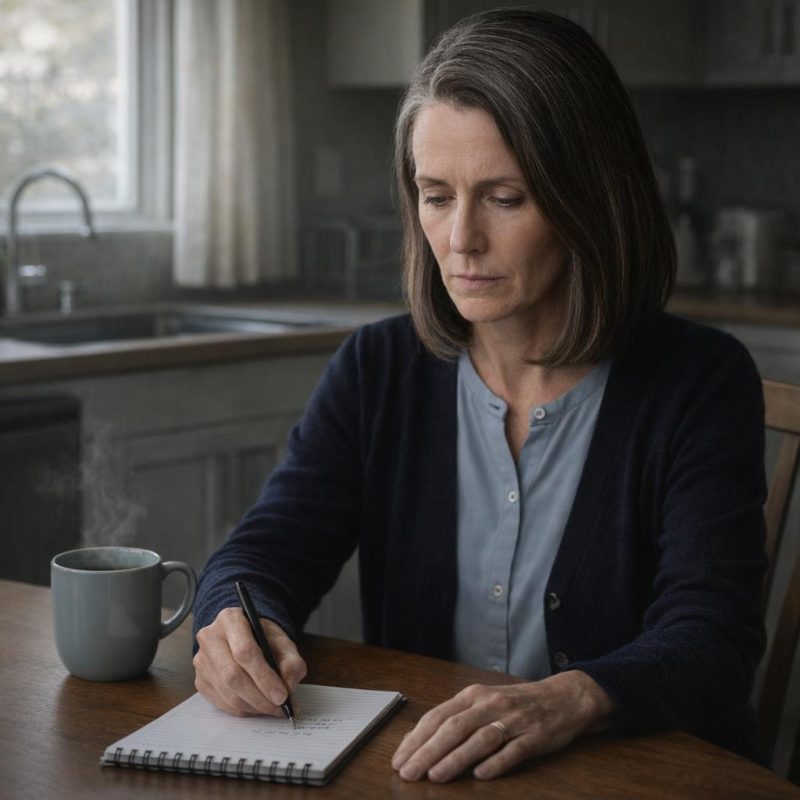 Image by RM AI
Margaret Agrees to Explain
She picked up on the second ring, and I recognized the voice immediately — the same clear, steady one from the reception. I introduced myself, reminded her where we'd met, and waited. There was a pause, and then she said my name back to me slowly, like she was placing it somewhere. I told her I was calling because of what she'd asked me at the wedding — that question about claiming my share — and that I had no idea what she'd meant by it. Another pause, longer this time. 'You were never told,' she said. It wasn't a question. I said no, I hadn't been told anything, and that I was hoping she could help me understand. She went quiet for a moment, and when she spoke again her voice had shifted — something between surprise and something I couldn't quite name. She said she needed a few minutes to think about how to explain it properly, and then she asked if I had time for a long conversation. I told her I had all the time she needed. She took a breath, and then she said there was a family partnership — one that had been set up decades ago — and that it involved more than I probably expected.
 Image by RM AI
The Private Partnership
Margaret's voice settled into a careful, measured pace, like someone who had carried a story for a long time and was finally deciding to set it down. She told me that her side of the family had always referred to it simply as the partnership — a private arrangement created by my great-uncle, along with two other family members, sometime in the late 1950s. The purpose, she said, was to hold land together rather than let it get divided and sold off piecemeal the way so many family properties did. At the time, the parcels weren't worth much — rural land, mostly, the kind that sat quiet for years without anyone paying it much attention. But the area had changed. Roads came through, then development, then the kind of growth that turns overlooked acreage into something people argue about in county meetings. Margaret said the land had appreciated in ways nobody could have predicted when the partnership was first drawn up. She described the structure carefully — how the partnership held title to the parcels collectively, how decisions required agreement among the interest holders, how it had been maintained through the years with periodic filings and renewals. I sat at my kitchen table with my notepad and wrote down what I could, though some of it was hard to follow without knowing the full picture. The weight of what she was describing settled over me slowly, the way cold air moves into a room.
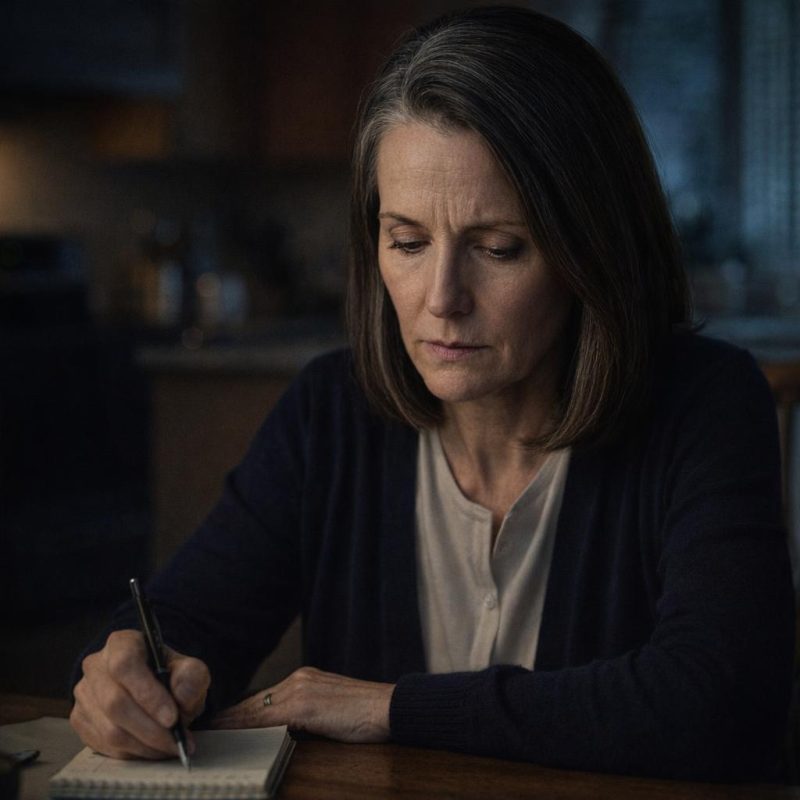 Image by RM AI
The Distribution Formula
Margaret kept going, and the more she explained, the more complicated it got. The original partners hadn't divided the land equally among themselves — they'd set up a formula, she said, based on contribution and family branch, so that different descendants would inherit different percentage interests depending on which partner they descended from. Over the years, as people died and left their shares to children and grandchildren, tracking who owned what had become genuinely difficult. Some branches had sold their interests to other family members. Some had transferred shares through estates. A few had done nothing at all, which meant their interests had simply passed down by default. Margaret said there had been attempts over the years to get everyone to agree on a clean accounting, but family partnerships are hard to untangle when people are scattered and not everyone is cooperative. I asked her which branch my family came from, and she told me — my grandfather had been one of the original partners' sons, which put my father's line in a specific tier of the formula. She didn't give me exact numbers, but she said the interest wasn't trivial. I wrote that down and underlined it. I didn't know yet what it meant for me specifically, but I sat there turning it over, trying to fit the shape of it against everything I thought I'd known about my family.
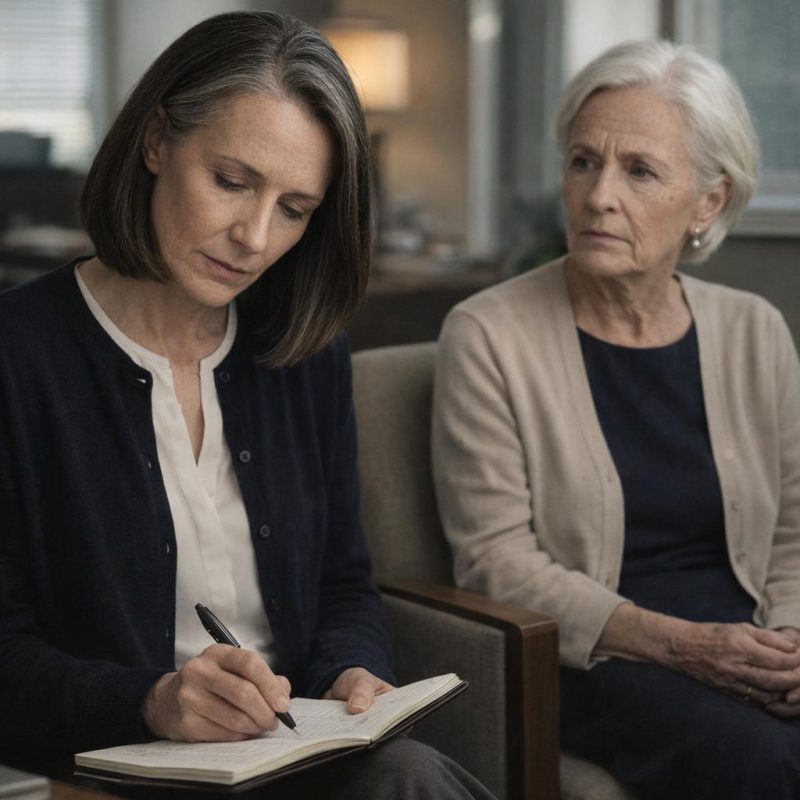 Image by RM AI
The Assumption
Then Margaret said something that stopped me mid-sentence. She told me that for as long as she could remember, the general understanding among the family members who knew about the partnership was that my branch had sold its interest years ago. She said it wasn't something anyone had formally announced — it was more like an assumption that had hardened into accepted fact over time. People stopped including my father's line in conversations about the partnership because they believed there was nothing left to include. I asked her when this supposed sale had happened, and she said she wasn't sure — sometime in the seventies or eighties, she thought, but she'd never seen any paperwork herself. She'd just heard it repeated often enough that she'd never questioned it. I told her that I had never heard my parents mention selling anything, not once, and that my father had never said a word to me about any partnership at all. Margaret went quiet again. Then she said that was exactly why she'd been so startled when she saw me walk into that reception — and why she'd asked me what she did.
 Image by RM AI
The Assumption That Never Made Sense
I asked her to back up. If everyone believed my branch had sold its interest, why had no one ever asked for proof? Margaret said she honestly didn't know — that was just how these things went in families, she supposed. Someone said it, someone else repeated it, and eventually it became the version everyone carried. I told her that my parents weren't people who forgot things like that. My father especially — he was careful, methodical, the kind of man who kept records of everything. If he had sold a partnership interest, there would have been paperwork, and he would have known exactly where it was. My mother would have known too. Neither of them had ever mentioned it, not in passing, not in any conversation I could remember. Margaret said she understood, and that she wasn't saying the sale had definitely happened — only that it was what people had assumed. She admitted she had no idea where the assumption had come from originally or whether anyone had ever actually verified it. I asked her if she thought it was possible the assumption was simply wrong. She paused for a long moment before she answered, and when she did, she said she thought it was very possible. The silence that came after that sat between us on the line, and I didn't rush to fill it.
 Image by RM AI
What Margaret Believed
After a moment, Margaret spoke again, more carefully this time. She said she owed me an explanation for what she'd asked me at the reception — that question about claiming my share. She told me that when she saw me walk in, her first thought was that I had found out about the partnership and had come to the wedding specifically because I'd decided to do something about it. She said the family members who were still involved in the partnership had been talking more actively about it in recent months, and my appearance at a family event felt, to her, like it might be connected. She thought I knew. She thought I had come with a purpose. I told her I had come because my daughter Lisa had talked me into it, and that I hadn't known anything about any partnership until she leaned over and asked me that question. Margaret said she was sorry — that she had clearly misread the situation entirely. But then she added that she was glad she'd asked, because if I truly hadn't been told, then something had gone wrong somewhere along the way, and she thought I deserved to know. I thanked her and told her I needed some time to think. After we hung up, I sat with the phone in my lap and turned her words over slowly, trying to find the edges of what I still didn't understand.
 Image by RM AI
Finding an Attorney
I gave myself two days. I made lists, crossed things out, made new lists. I went back through what I knew: a family partnership, land that had become valuable, an assumption that my branch had sold its interest, and a question from an elderly woman who thought I already knew the answer. None of it added up to anything I could act on by myself. I wasn't a lawyer. I didn't know how to search property records or partnership filings or whatever else might tell me whether my family's interest had ever actually been transferred. What I needed was someone who did. I spent an evening searching for attorneys who handled estate and property matters, reading through reviews and bar association listings until I had a short list of names. I wanted someone thorough, someone who wouldn't dismiss the whole thing as a family misunderstanding and send me home. One name kept coming up in the reviews — people described him as persistent and detail-oriented, the kind of attorney who didn't let things drop. His office handled estate disputes and real property law, which seemed like exactly the right combination. I called the next morning. The receptionist was polite and took down my name and a brief description of what I was looking for. I left a message explaining that I had questions about a possible family partnership interest and that I needed someone who could help me find out whether it still existed.
 Image by RM AI
The First Consultation
He called back the same afternoon. His voice was measured and unhurried, the kind that made you feel like he was actually listening rather than waiting for you to finish. I went through the whole thing — Margaret, the reception, the partnership, the assumption about the sale, the fact that my father had never mentioned any of it. Attorney Hernandez asked questions as I talked, specific ones: what county the land was in, approximately when the partnership had been formed, whether I had any documents from my father's estate. I told him I had some boxes I hadn't fully gone through yet, and he said that was worth doing before anything else. He was quiet for a moment after I finished, and then he said the situation was unusual but not unheard of — family partnerships from that era were often poorly documented on the transfer side, and assumptions about sales sometimes turned out to be exactly that. He said it sounded worth looking into. I asked him what that would involve, and he said he would start with public records — county property filings, partnership registrations, any recorded transfers — and see what the paper trail actually showed.
 Image by RM AI
The Partnership Exists
He called on a Thursday morning, earlier than I expected. I had my coffee in hand and almost let it go to voicemail, but something made me pick up. Attorney Hernandez got straight to it — he said he'd pulled the county property filings and the partnership registration records, and the family partnership was real. Not a rumor, not a misunderstanding, not something Margaret had half-remembered from forty years ago. It was documented. He said it had been established by my great-uncle decades back, structured to hold multiple parcels of land under a single private family entity. The paperwork was there in the county records, clear as anything. I set my coffee mug down on the counter because my hand had started to feel unsteady. All those weeks of telling myself I was probably chasing something that didn't exist — and here it was, on paper. He said he hadn't gotten to the ownership breakdown yet, that would take more digging, but the foundation of what Margaret had told me at that reception was confirmed. I asked him to say it plainly, just so I could hear it out loud. He said the partnership exists, Barbara — it was never dissolved.
 Image by RM AI
Waiting for Answers
After I hung up, the house felt very quiet. I stood in the kitchen for a while, not really doing anything, just letting it settle. The partnership was real. That was something. That was more than I'd had a month ago. But Attorney Hernandez had also been clear that confirming the partnership existed was only the first step — the ownership records were still being traced, and there was no telling yet what they would show. So I waited. I tried to keep to my routine. I went to the grocery store. I did a load of laundry. I called Lisa once, just to hear her voice, but I didn't tell her what the attorney had found — I wasn't ready to open that door until I had something more solid to share. Every time my phone rang, my stomach tightened before I even looked at the screen. I kept thinking about the boxes in the spare room, the ones with my father's papers that I still hadn't fully gone through. I pulled them out one evening and sat on the floor sorting through old envelopes and folders, looking for anything that mentioned the partnership or the land. I didn't find much — a few letters, some old receipts, nothing that answered the questions I was carrying. The not-knowing had a weight to it that I couldn't quite put down.
 Image by RM AI
The Ownership Trail
He called again four days later. I picked up on the first ring. Attorney Hernandez said he was still working through the ownership records, but that they were more layered than he'd initially expected — there were multiple amendments to the original partnership documents, filings spread across different years, and some of the transfer notations were incomplete or ambiguous. He said that wasn't unusual for partnerships of that age, but it meant he needed to be careful about drawing conclusions before he had the full picture. Then he paused, and I noticed the pause. He said he'd found something he wanted to verify before he said more about it. I asked him what kind of something. He said he didn't want to characterize it until he was sure he was reading it correctly — he'd seen clerical errors in old records before and didn't want to send me in the wrong direction. He asked me a few more questions about my father: whether Andrew had ever mentioned receiving any formal correspondence related to the partnership, whether I'd found anything in those boxes that looked like partnership notices or annual statements. I told him I hadn't found anything like that. He said that was worth noting, and that he'd call me back within a day or two once he'd confirmed what he was looking at. After we hung up, the careful steadiness in his voice stayed with me.
 Image by RM AI
The Ownership Was Never Transferred
He called back the next afternoon, and this time his voice had a different quality to it — still measured, but with something underneath it that made me sit down before he'd even gotten to the point. Attorney Hernandez said he'd verified what he'd found, and he wanted to walk me through it carefully. He said that in the partnership records, there was no formal documentation of any transfer, sale, or reassignment of the ownership interest connected to my family's branch. Not a deed of transfer, not a buyout agreement, not a recorded sale. Nothing. He said that based on what the records showed, the interest had simply remained — sitting there, unaddressed, for decades. I asked him what that meant in practical terms. He said it meant that on paper, the ownership connected to my branch of the family had never legally changed hands. I asked him to say that again, because I wasn't sure I'd heard it right. He said it again, slower. Then he explained that the questions still ahead — how the partnership had been administered in the intervening years, and who had been acting on it — were exactly what he intended to find out next, and that I should understand what the records were already showing: I might still be a legal owner.
 Image by RM AI
The Mailing Address
He said the partnership records listed a mailing address for correspondence related to my family's branch. Annual notices, administrative filings, any formal communications — they had all been directed to a single address for as far back as the records showed. I asked him whose address it was. He said he'd cross-referenced it and it came back to a residential property. He read it out to me — a street I didn't recognize at first, a town about two hours from where I'd grown up. I asked him to read it again. He did. And then it clicked. I knew that town. I'd been there once, years ago, for a family gathering at someone's house. I asked Attorney Hernandez if he had a name associated with the address. He said the property records listed it under a Steven Patterson.
 Image by RM AI
The Trusted Historian
I sat with that name for a long time after I hung up. Steven. My cousin Steven, the one who had always been the family's unofficial record-keeper. He was the one who maintained the genealogy files, who sent out the group emails before every reunion, who knew which relatives had moved and kept the contact list updated. If you needed to know when a great-aunt had been born or where a piece of family land had originally come from, you called Steven. Nobody questioned it — he was organized, he was thorough, and he seemed to genuinely enjoy that role. I'd always thought of it as a harmless hobby, the kind of thing some people just take on in a family. I tried to think back to the wedding reception — the one Lisa had talked me into attending. I hadn't paid much attention to who else was there beyond Margaret and a handful of faces I half-recognized. But now that I was trying to place him, I could see it: Steven had been there, standing near the back of the room during the reception, holding a glass of something and talking to a man I didn't know. I hadn't thought anything of it at the time. He was a distant cousin — it made sense he'd be at a family wedding. I just hadn't connected it to any of this until now.
 Image by RM AI
Preparing to Confront
When I spoke to Attorney Hernandez the following morning, I told him I knew Steven — that he was my cousin, that he'd always been the one the family trusted with records and correspondence. The attorney listened without interrupting. When I finished, he said that given what the records showed, he thought the right next step was a formal written inquiry to Steven, asking him to explain his role in receiving partnership correspondence and to provide any documentation he had related to the administration of the partnership. He said a letter from his office would carry more weight than a phone call from me, and that it would also create a paper trail. I told him to go ahead. I gave him what contact information I had for Steven and said I'd look for more in my father's old address book if he needed it. Hernandez said he'd draft the letter that day and send it by certified mail. After we finished talking, I went and sat in the living room and didn't turn on the television. I thought about what it would feel like when Steven opened that envelope — whether he'd be surprised, or whether he'd been expecting something like this for a long time. I didn't have an answer to that. The house was very still, the way it gets in the hour before something changes.
 Image by RM AI
Steven's Response
Attorney Hernandez called about ten days later. Steven had responded — through his own attorney, which I hadn't expected but probably should have. The response was formal and brief. Steven's position, as relayed through his counsel, was that he had been acting as an informal administrative contact for older relatives who were no longer able to manage their own correspondence. He said he'd been forwarding paperwork on their behalf, keeping records organized, and that he'd had permission to serve in that capacity. He described it as a family arrangement, nothing more. Attorney Hernandez read me the key language twice. I listened both times without saying anything. When he finished, he said the explanation raised as many questions as it answered — specifically, who had given Steven permission, when, and whether any of that was documented. He said he'd be requesting those details in a follow-up. I thanked him and hung up. I sat at the kitchen table and turned the explanation over in my mind, looking for the part that made it make sense. Steven had been receiving correspondence connected to my family's branch for decades. He said he was helping. Maybe that was true. But if it was, I couldn't figure out why no one had ever thought to mention it to me, and the silence around that question felt like its own kind of answer.
 Image by RM AI
The Records Tell a Different Story
Attorney Hernandez called again about two weeks after Steven's attorney sent the formal response. He said he'd gone back through the partnership correspondence more carefully — not just the recent letters, but the older files the partnership had provided. What he found didn't match Steven's explanation. Steven hadn't just been forwarding paperwork. His name appeared on signed documents going back years. Not as a witness, not as a courier — as a signatory. He'd signed acknowledgment forms, responded to partnership notices in writing, and in at least two instances had made representations to the partnership on behalf of my family's branch. Attorney Hernandez read me the dates and document types slowly, and I wrote them down on the notepad I'd started keeping by the phone. When he finished, I asked him whether any of those documents showed authorization — a letter, a note, anything indicating someone had asked Steven to sign on their behalf. He said he hadn't found anything like that yet. I sat with that for a moment. Steven's explanation had been that he was helping older relatives manage their correspondence. But the documents didn't describe a man passing along envelopes. They described someone who had been acting as a representative for years, putting his name on things that carried weight. I didn't know yet what all of it added up to, but the pattern in those pages sat with me long after I hung up the phone.
 Image by RM AI
Representing Without Authority
Attorney Hernandez scheduled a call a few days later and said he wanted to walk me through specific documents rather than just summarize them. He'd organized the records chronologically and flagged the ones where Steven's role was clearest. In the partnership's own files, Steven was listed as the primary contact for my family's branch — not as a courtesy, but in the formal contact records the partnership maintained. When notices went out about meetings, distributions, or changes to the agreement, they went to Steven. When the partnership needed a response from our branch, Steven provided it. Attorney Hernandez said there was no record of the partnership ever being told that Steven's role was informal or temporary. As far as their files showed, he was the representative. I asked whether there was any document — anything at all — showing that my father or anyone else in my family had formally designated him. Attorney Hernandez said no. He said he'd looked carefully and found nothing that would constitute legal authorization. No power of attorney, no written agreement, no letter of designation. I asked him to send me copies of what he had. They arrived in my email that evening, and I printed them out and spread them across the kitchen table. Most of it was dense and hard to follow without context. But one page stopped me cold — a distribution form from several years back, signed with Steven's name in the space marked for the branch representative.
 Image by RM AI
The Question of Authority
I called Attorney Hernandez the next morning. I'd been up earlier than usual, sitting with the printed pages, and I had questions I needed answered before I could think straight about any of it. He picked up on the second ring and said he'd been expecting to hear from me. I asked him directly: what did it mean, legally, that Steven had been signing those documents without any authorization on record? He was quiet for a moment, then he laid it out plainly. He said that without a power of attorney or some documented grant of authority, Steven had no legal standing to act as a representative for my branch of the family. The partnership should have been contacting me directly — or, before my father passed, contacting him. By accepting Steven's representations without verifying his authority, the partnership had a problem too, but Steven's exposure was more significant. Attorney Hernandez said that signing documents on behalf of someone else without authorization wasn't a gray area. It had consequences. I asked what he recommended. He said the first step was to send a formal demand to both Steven and the partnership requiring full disclosure — every document, every communication, every decision that had been made in connection with my family's interest. He said I had grounds to make that demand, and that if either party failed to respond fully, we had options. His voice was even and matter-of-fact when he said it: I had legal standing, and it was time to use it.
 Image by RM AI
Searching for Earlier Evidence
After we agreed on the demand letter, Attorney Hernandez said there was something else he wanted to pursue. He said the documents he'd reviewed so far covered roughly the past decade, but he wanted to go further back. He said the more useful question wasn't just what Steven had been doing recently — it was when this arrangement had started and what the circumstances were at the beginning. He thought the older records might tell a different story than the ones we'd already seen. I told him my father had passed about twenty-two years ago. He wrote down the year without comment, and I heard him typing on the other end of the line. He said the partnership would have archived correspondence going back that far, and that he intended to request it. I asked him what he expected to find. He said he didn't want to speculate — he'd rather see what was actually there. That was a reasonable answer, and I appreciated that he didn't try to fill the silence with guesses. But I found myself thinking about that period anyway. My father's death had been hard and fast, and the months after it were a blur I'd never fully sorted through. I hadn't thought about partnership paperwork then. I hadn't known there was any. Attorney Hernandez said he'd file the records request that week, specifically targeting correspondence from the year of my father's death and the two years that followed.
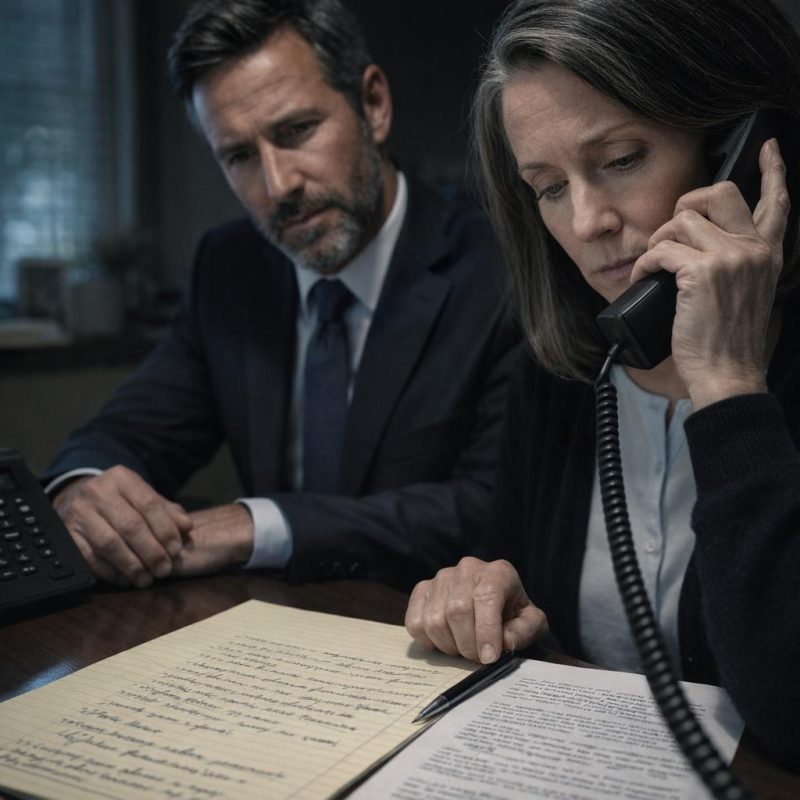 Image by RM AI
The Post-Death Discussions
The archived records took about three weeks to arrive. Attorney Hernandez called me on a Tuesday afternoon and said he'd received them and had spent the morning going through them. His voice was measured, the way it got when he had something significant to tell me and was choosing his words carefully. He said he'd found correspondence from shortly after my father's death — emails and letters exchanged among several relatives, some of which had been copied to the partnership. The correspondence showed a discussion taking place. He said the people involved were aware that my father had held an interest in the partnership, and they were aware that his death raised questions about what happened to that interest. And they were discussing what to do about me. He read me a few lines from one of the earlier messages — nothing verbatim, just the general shape of it — and I had to ask him to stop for a moment. I set the phone down on the table and looked out the window at nothing in particular. The idea that people had sat down and written letters about whether to tell me something that affected my own legal interests — that they'd treated it as a question open for debate — was hard to absorb all at once. I picked the phone back up and told him to keep going. He did. The weight of what had been kept from me, and for how long, settled over me slowly, the way cold does when you've been outside too long without noticing.
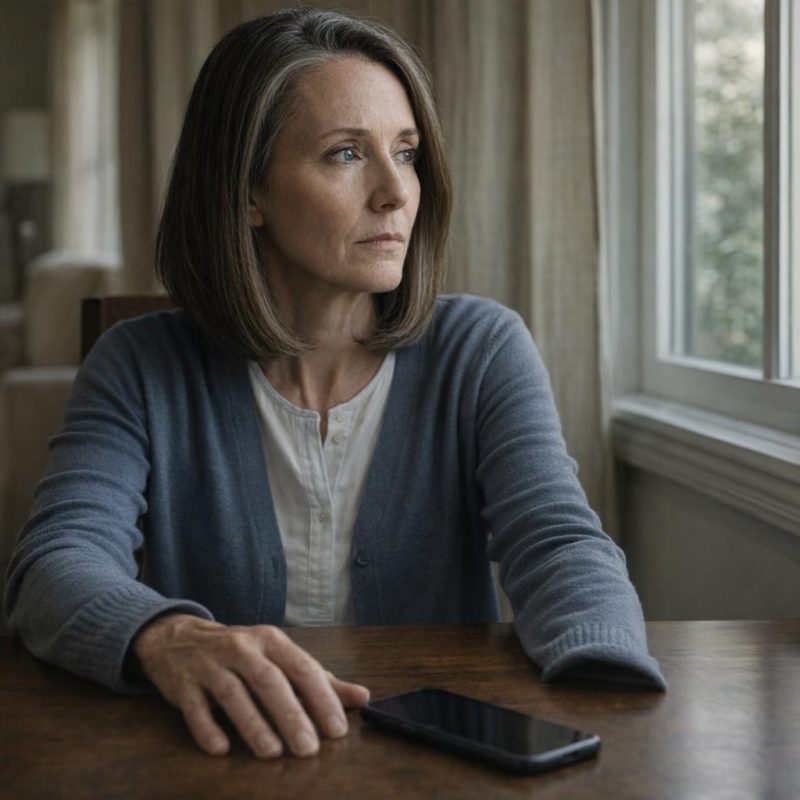 Image by RM AI
The Argument Against Telling
Attorney Hernandez sent me copies of the correspondence the following day. I printed everything and sat down at the kitchen table with a cup of coffee that went cold before I got through the first few pages. Most of the early messages were logistical — who was handling what, who had spoken to whom. But partway through the stack, I found the one that stopped me. It was a message from one of the relatives involved in the discussion, addressed to the others. The writer acknowledged that my father's passing meant his interest in the partnership would need to be addressed. Then they made an argument. They said that informing me would introduce complications into an ownership structure that was, in their words, already functioning smoothly. They said that bringing in someone unfamiliar with the partnership's history and operations could disrupt arrangements that had taken years to settle into place. The message was polite. It was even, in its way, reasonable-sounding — the kind of argument that might make sense if you didn't stop to think about whose interests were being weighed against whose. I read it twice. Then I set it face-down on the table and sat there. I didn't know yet who had written it. Attorney Hernandez had said he was still working to identify all the parties involved. But the argument itself — the idea that keeping me in the dark was the tidy, sensible choice — was the part that stayed with me, pressing down like something with real weight behind it.
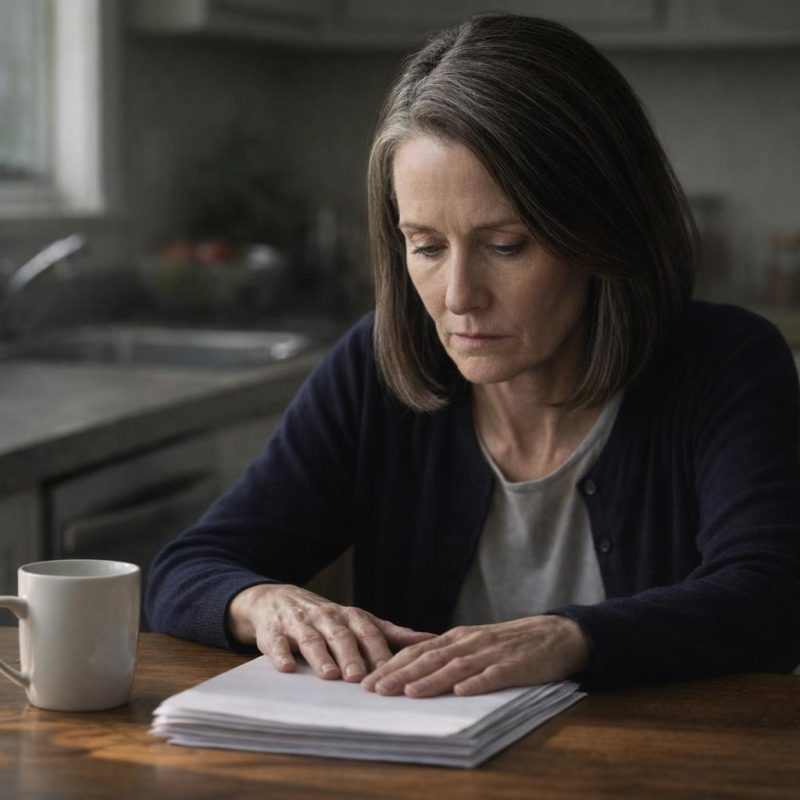 Image by RM AI
Years of Decisions
I'd assumed, somewhere in the back of my mind, that the discussion had been brief — a few messages exchanged in the weeks after my father died, and then silence. What I found when I kept reading was something else. The correspondence didn't stop. It continued for years. There were messages from the following year, and the year after that, and beyond. Each time a partnership matter came up that touched on my family's branch, there was a thread — sometimes short, sometimes longer — in which the same small group of relatives weighed in, made decisions, and moved on. My name appeared in some of those threads. Not as someone being consulted, but as a factor to be managed. Attorney Hernandez had organized the copies chronologically, and I worked through them in order, making notes on a legal pad. The pattern was consistent. Decisions were made. Notices were handled. And I was kept at a distance from all of it, year after year, without ever being asked. I got up at one point to refill my coffee and stood at the counter for a few minutes before going back to the table. I wasn't sure I wanted to keep reading, but I did. Near the bottom of the stack, I found a message dated five years after my father's death — a routine exchange about a partnership matter, handled without me, as though my absence from the conversation had long since stopped requiring any explanation.
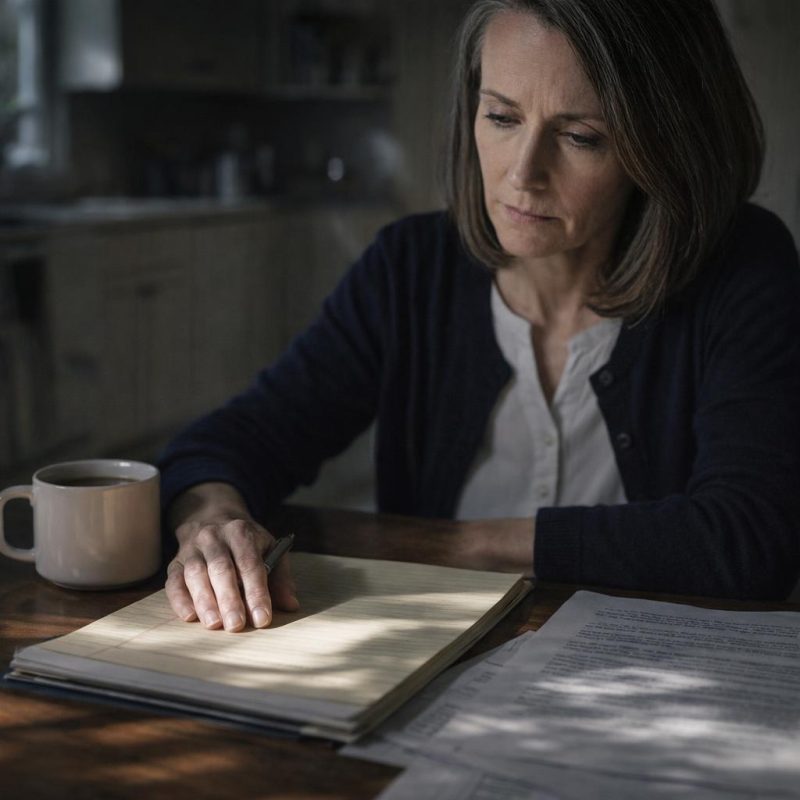 Image by RM AI
The Pattern of Exclusion
I called Attorney Hernandez that evening and told him I'd read everything he'd sent. He asked how I was doing, and I said I wasn't sure yet. That was honest. I'd spent most of the afternoon at the kitchen table, going back through the pages, and what I kept coming back to wasn't any single document — it was the accumulation of them. Taken one at a time, each piece might have had an explanation. A letter here, a signed form there, a message that could be read charitably if you tried hard enough. But laid out in order, spanning more than two decades, they told a story I couldn't talk myself out of. Decisions had been made about my legal interests — repeatedly, over many years — by people who had no authority to make them and who had not seen fit to include me. Multiple relatives had been part of it. The partnership had gone along with it. And I had gone about my life without any of it, not because I'd chosen to stay out, but because I'd never been given the chance to choose. Attorney Hernandez said he wanted to schedule a call early the following week to discuss next steps. I said that was fine. After we hung up, I sat in the quiet of the kitchen for a long time. The coffee had gone cold again. Outside, it was getting dark. I didn't move to turn on a light, and the room dimmed slowly around me while I sat with the full weight of what those pages contained.
 Image by RM AI
Decades of Silence
Attorney Hernandez and I spent most of that call doing something I hadn't expected — building a timeline. He walked me through each document in order, and I wrote the dates down on a legal pad while he talked. My father's death was near the top of the list. After that came the first letter that should have gone to me and didn't, then the first decision made without my knowledge, then another, and another. I kept writing. By the time we reached the end, I had filled nearly two pages. More than thirty years. That's what the timeline showed. Decisions about my legal interests had been made — quietly, consistently — across more than three decades of my adult life. Attorney Hernandez explained what that meant legally: missed distributions, decisions I had no voice in, a standing I'd never been told I had. I asked him to repeat the span of years once, because I wanted to make sure I'd heard it correctly. He repeated it. I didn't say anything after that for a moment. There was nothing particularly useful to say. I set the legal pad on the table when we hung up and looked at what I'd written. The dates ran down the page in my own handwriting — my father's death at the top, and then year after year after year below it, each one marking something that had happened without me.
 Image by RM AI
The Value Question
I asked Attorney Hernandez what the partnership was actually worth. It felt like a question I should have asked earlier, but I'd been so focused on the documents themselves that the financial picture had stayed blurry. He said he'd been pulling together estimates based on property records and past filings. The number he gave me was significant — not life-changing in the way lottery winners talk about, but substantial enough that I had to set my pen down for a second. He also told me about distributions that had gone out over the years to the other partners. Not enormous amounts individually, but they added up. None of them had come to me. I asked him to walk me through the math one more time, and he did. When he finished, I sat with it for a moment. The money itself wasn't what was bothering me most. What I kept turning over was the effort involved. Keeping me out of this for thirty-plus years wasn't something that happened by accident or neglect. It required attention. It required someone making choices, repeatedly, over a long stretch of time. I told Attorney Hernandez I didn't understand why anyone would go to that much trouble over an amount that wasn't, as he'd said, a fortune. He said that was a fair question, and that he'd been wondering the same thing. Then he told me he'd found something else in the documents — something that might explain it — and he wanted to send it over before our next call.
 Image by RM AI
The Real Asset
The file Attorney Hernandez sent over that evening included something I hadn't seen before — additional partnership documents, older ones, with a survey map attached. I opened the map on my laptop and had to zoom out twice before I understood what I was looking at. The parcel was large. Not a lot or a small plot — a substantial tract of undeveloped land that had been sitting inside the partnership for decades, held and never sold. Attorney Hernandez called the next morning and walked me through it. He said this was the partnership's primary asset, the thing that gave the whole arrangement its real weight. The other holdings were modest by comparison. This land was the reason the partnership had been worth maintaining all these years. I asked why it had never been developed or sold. He said he didn't have a clear answer yet, but that the land had simply been held — generation to generation, quiet and undisturbed. I pulled the survey map back up while he was talking and looked at the boundaries marked in faded ink. The parcel was bigger than I'd initially registered. I could see the scale notation in the corner, and I did the rough math in my head. It was a significant piece of ground, sitting there all this time, and I had never known it existed.
 Image by RM AI
The Developer Interest
Attorney Hernandez called two days later and said he'd found something in the more recent partnership correspondence that I needed to know about. His tone was measured, but there was a directness to it that made me sit up straighter. He said that within the past year, developers had approached the partnership about purchasing the undeveloped land. Not a casual inquiry — serious interest, with a major commercial development project behind it. He said the conversations had progressed further than a preliminary stage. I asked him how far, and he said far enough that there was paperwork. He offered to send it over, and I said yes. The email came through while we were still on the phone. I opened the attachment and started reading. The letter was formal, addressed to the partnership, and it laid out the developer's position clearly — the scope of what they wanted to build, the timeline they were working toward, and at the bottom of the first page, the number they were prepared to offer for the land.
 Image by RM AI
The Approval Requirement
I called Attorney Hernandez back within the hour. The offer figure was still sitting in my head, and I needed to understand what it actually meant for my position. He said that was exactly what he wanted to talk through. He'd gone back to the original partnership agreement — the founding documents — and found a clause he wanted to make sure I understood. Any sale of partnership property required approval from all ownership branches. Not a majority. Not a supermajority. All of them. He read the relevant language to me twice, slowly, and I wrote it down word for word. My branch of the family had equal standing with every other branch. That hadn't changed. It had never been dissolved or transferred, regardless of what the years of silence might have suggested. What that meant, Attorney Hernandez said carefully, was that no sale could be finalized without my consent. I sat with that for a moment. I asked him to confirm it one more time, and he did. I wasn't a bystander to this. I wasn't someone who could be observed from across a reception hall and quietly assessed. Whatever was being planned around that land and that offer, my signature was required — and no one had asked me for it.
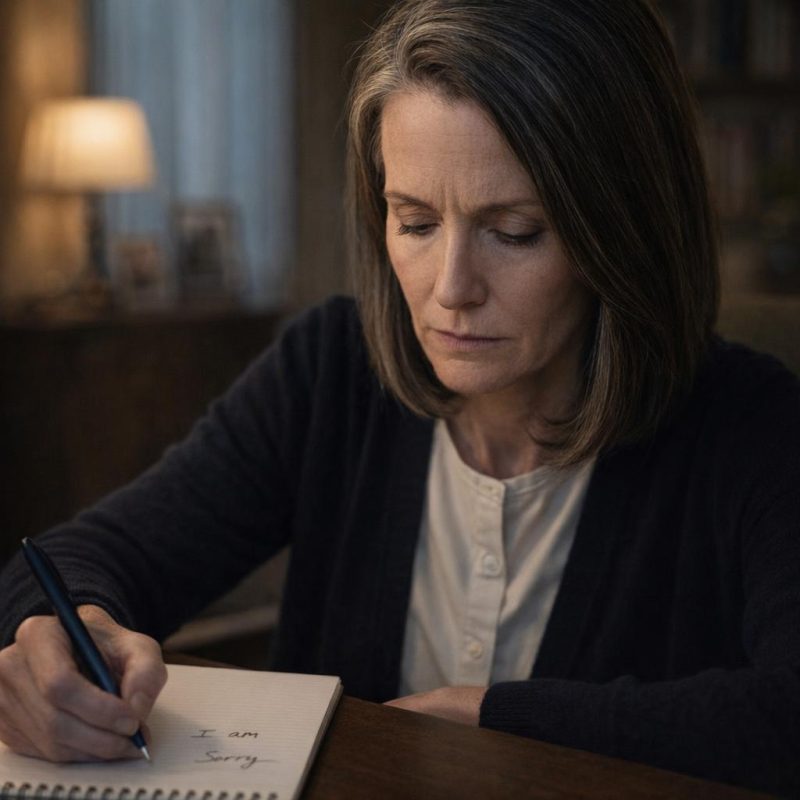 Image by RM AI
The Wedding Was a Test
Margaret called on a Tuesday afternoon, and I almost didn't pick up. I didn't recognize the number at first, and when she said her name I needed a second to place her — the elderly woman from the wedding reception, the one who had asked me that question in the middle of all those strangers. She said she'd been troubled since the wedding and had finally decided she needed to call. I told her I was listening. She said she'd overheard something at the reception — a conversation between two of the relatives, near the back of the room, while the toasts were still going on. They were talking about documents. About a sale. About getting things finalized before anything complicated the process. And then one of them said something about wanting to see whether I knew. Whether I had any idea what I was walking into. Margaret said she hadn't understood all of it at the time, but after I'd left and she'd had weeks to think it over, she'd put enough of it together to feel like she owed me a phone call. I asked her to tell me exactly what she'd heard, as precisely as she could remember it. She took a breath, and then she told me what the conversation had actually been about — that the wedding had given them a chance to watch me, to gauge what I knew, before they moved forward with the sale.
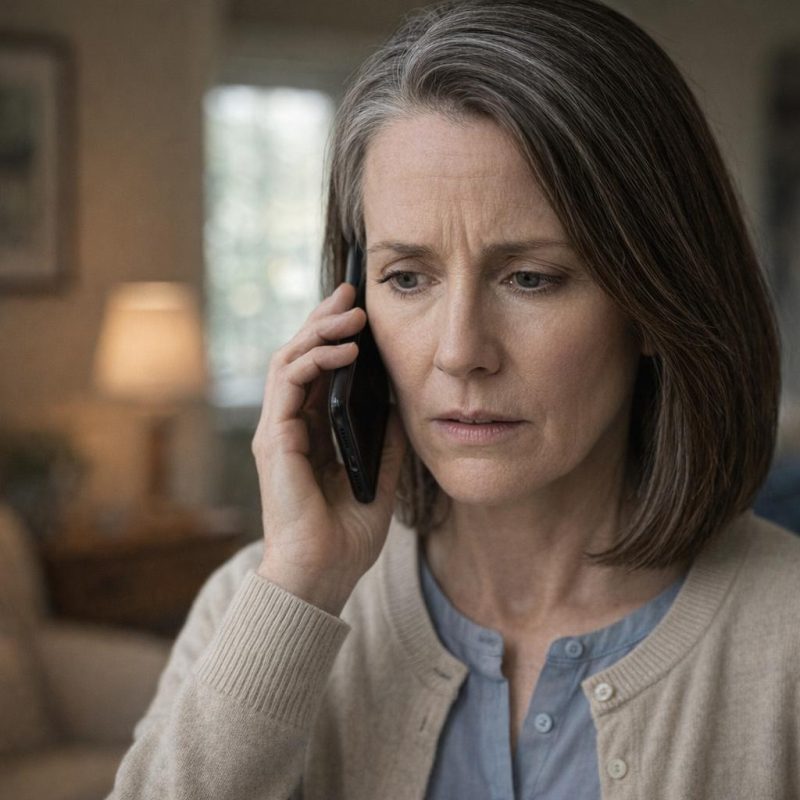 Image by RM AI
Steven's Role Becomes Clear
After I hung up with Margaret, I sat at the kitchen table and didn't move for a while. The pieces were there. I just needed to let them settle into the right order. Someone had to have known I'd be reluctant to attend that wedding. Someone had to have known that a general invitation, or even a polite nudge from a distant relative, wouldn't have been enough to get me there. I thought about Lisa — how insistent she'd been, how she'd kept coming back to it even after I'd said no the first time. She'd mentioned the family wanting good turnout. She'd made it sound like my presence would mean something to people. I hadn't questioned it at the time because it had come from her, and I trusted her. But Lisa didn't have strong ties to that side of the family. She wouldn't have known on her own that the wedding was happening, or that it mattered, or that I specifically needed to be there. Someone had told her. Someone who knew the family well enough to understand that Lisa was the one person who could actually change my mind. I didn't have a name attached to that certainty yet, but I didn't need one. There was only one person in that family who had managed correspondence, kept records, and understood exactly how the branches connected — and the quiet weight of that settled over me like something I'd been carrying without knowing it.
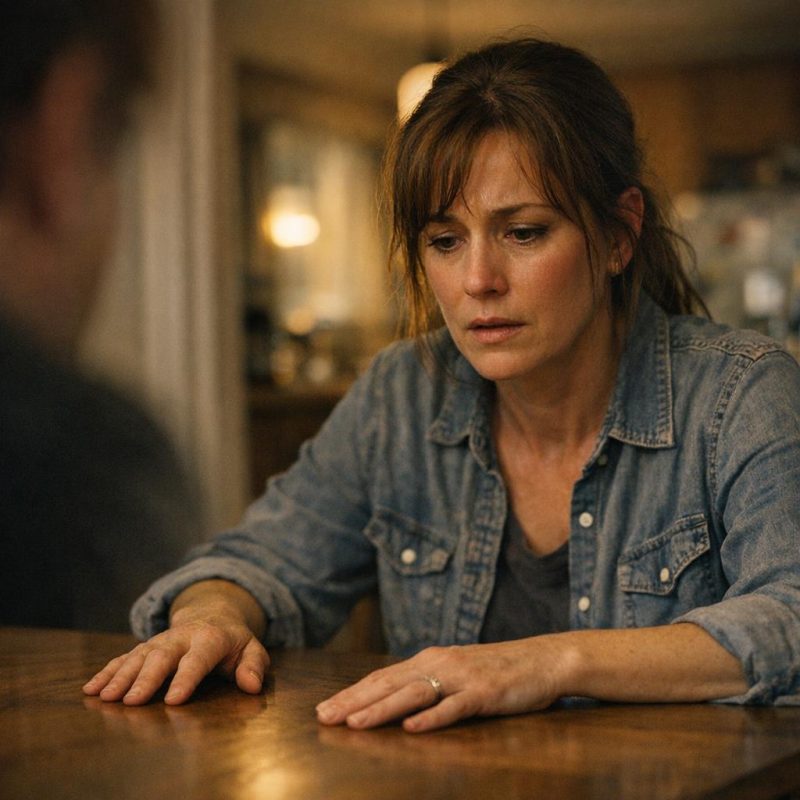 Image by RM AI
Lisa's Confession
I called Lisa that evening. She answered on the second ring, cheerful, asking how I was doing. I told her I was fine and that I had a question for her. She said of course. I asked her how she'd first heard about the wedding — who had told her it was happening, and why she'd been so certain I needed to go. There was a pause. Not long, but noticeable. She said she thought she'd just seen something about it, maybe online. I told her gently that I didn't think that was quite right, and that it was important. Another pause, longer this time. Then she said she was sorry, that she should have mentioned it sooner. A few months before the wedding, she'd gotten a call. The caller had told her the family was hoping to reconnect with me, that it would mean a great deal to everyone if I came, and that she was probably the best person to convince me. She'd believed it. She'd thought she was doing something good — helping mend something that had been broken for a long time. I asked her who had called. She said it quietly, like she already understood what it meant now that she was saying it out loud — that it had been Steven.
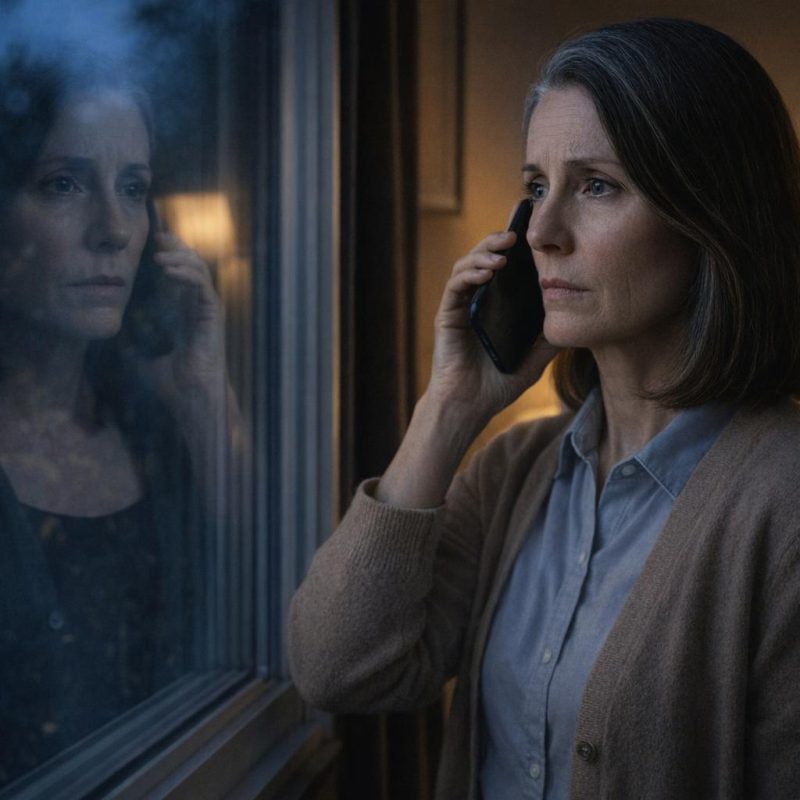 Image by RM AI
The Observation Plan
After I hung up with Lisa, I sat in my kitchen for a long time without turning on any lights. I kept going back over the wedding weekend in my head — every conversation, every sideways glance, every moment someone had steered the talk toward the property or the family business and then just as smoothly steered it away. I'd thought the nervousness I noticed in people was just ordinary family awkwardness. I'd thought the careful questions were small talk. They weren't. They were assessments. Someone wanted to know how much I knew, and the wedding was the perfect place to find out — casual, crowded, plausibly innocent. Nobody had to formally contact me. Nobody had to put anything in writing. They could just watch me move through a reception hall and listen to what I said and didn't say, and then go home with their answer. The relatives who'd gone quiet when certain topics came up, the ones who'd changed the subject a little too quickly — they weren't being awkward. They were being careful. And I'd walked right through the middle of it, smiling, eating wedding cake, completely unaware that I was being evaluated. The thing that sat heaviest with me wasn't the anger, though there was plenty of that. It was the sheer patience of it — the way something that complicated had been arranged to look like nothing at all.
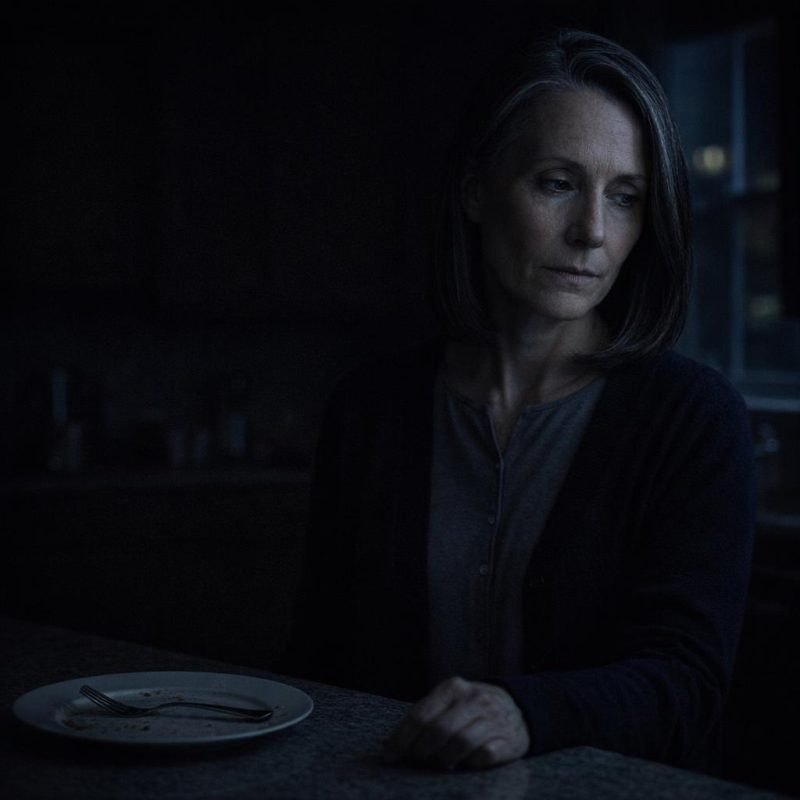 Image by RM AI
Margaret's Moral Choice
I called Margaret the next morning. She answered after a few rings, her voice careful and measured, like she'd been half-expecting to hear from me. I thanked her — told her that question she'd asked me at the reception had changed everything, and that I meant that literally. She was quiet for a moment, and then she said she was glad, but that she'd been carrying the weight of it for a while before she finally spoke up. She told me she hadn't planned to say anything. She'd come to the wedding to celebrate her great-niece and mind her own business. But the night before the reception, she'd overheard a conversation she wasn't meant to hear — two of the cousins talking in low voices near the back of the hotel lobby, going over what sounded like sale documents. She said they had papers spread out on a low table and were pointing at figures. She hadn't caught everything, but she'd caught enough to understand that something significant was being finalized, and that not everyone who should have been part of that conversation was in the room. She said she'd looked around that lobby and thought about me — someone she barely knew, someone who'd been brought there under the impression it was just a family reunion. She couldn't unknow what she'd seen. When I asked her to describe the papers more specifically, she said they had a property address printed across the top and a signature line at the bottom that was still blank.
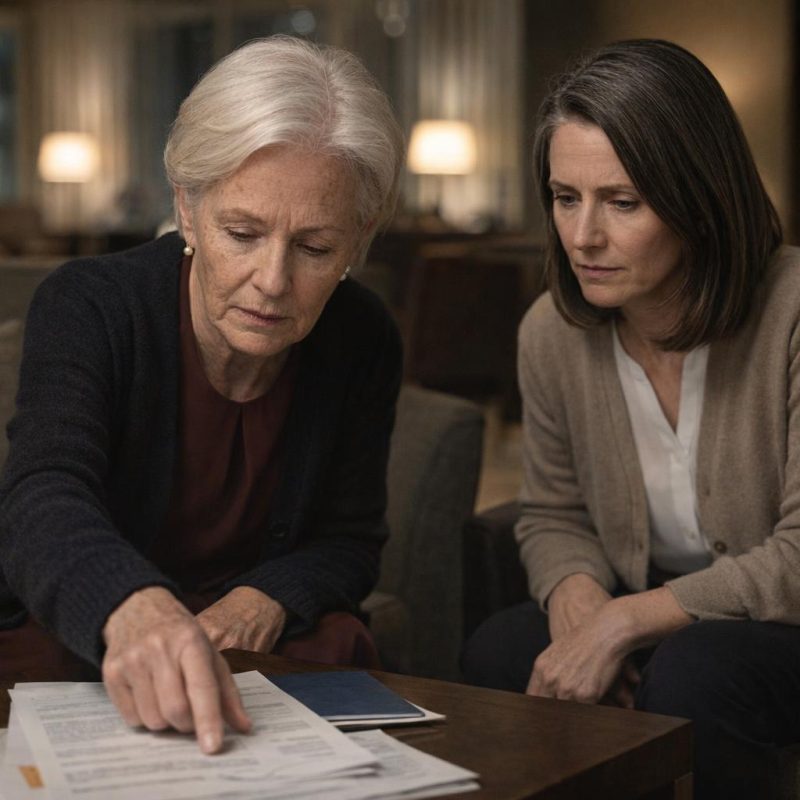 Image by RM AI
Demanding Full Disclosure
I called Attorney Hernandez that same afternoon and told him everything — Lisa's admission about Steven's call, Margaret's account of the lobby conversation, the documents with the blank signature line. He listened without interrupting, and when I finished he said, quietly but firmly, that it was time to move from gathering information to requiring it. He spent the next two days drafting a formal legal demand addressed to the family partnership. It required the production of every partnership document going back to the original formation — meeting minutes, financial statements, correspondence, any records related to the proposed property sale, and any communications that referenced me by name or by my interest in the partnership. He also requested a formal meeting with all active partners present. He told me the demand would make clear that I was aware of my standing, that I had legal representation, and that I was not going to be managed or redirected. I signed the authorization and he sent it. After I put the phone down, I walked to the window and stood there for a while. I wasn't afraid of what was coming. I'd been afraid for weeks — afraid of being wrong, afraid of making something out of nothing, afraid of the family fallout. That had all burned off somewhere along the way. What I felt now was something quieter and steadier, and I understood that whatever happened in that meeting room, I had already stopped being the person who didn't know she had a seat at the table.
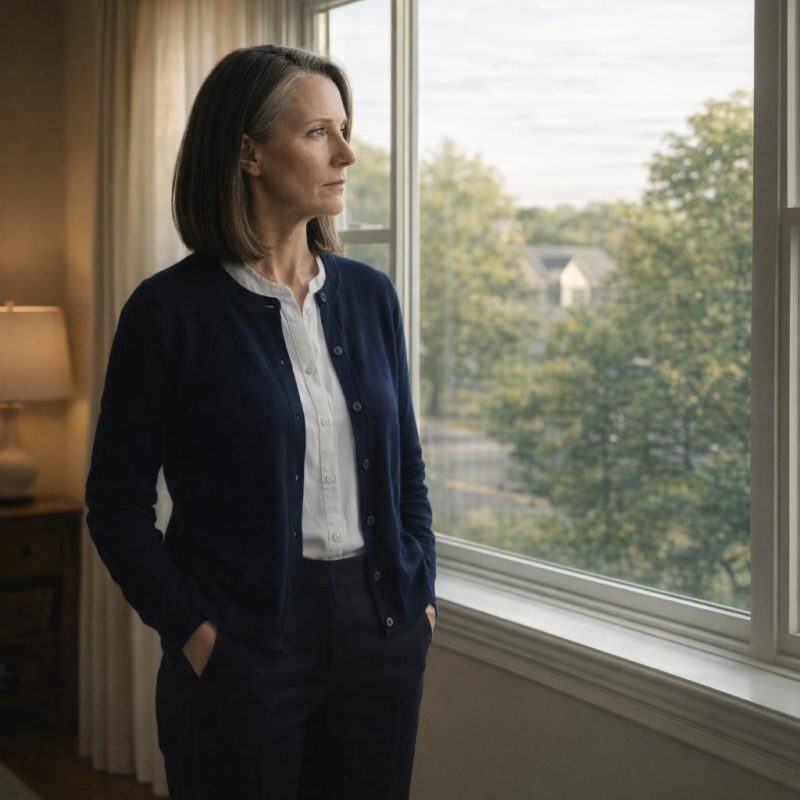 Image by RM AI
The Family Meeting
The meeting was held at a law office downtown, neutral ground that Attorney Hernandez had insisted on. I arrived early and sat in the conference room while the others filed in. Steven came in with two other cousins I recognized from the wedding — both of them dressed carefully, both of them carrying the particular stillness of people who had been briefed on what to expect and were trying not to show it. There were a few relatives I hadn't seen in years, older ones who settled into chairs along the wall and didn't make eye contact with anyone. Attorney Hernandez sat beside me with a folder thick enough that people noticed it when he set it on the table. The room filled up slowly. Someone poured water from a pitcher near the door. Someone else checked their phone and put it away. Steven sat at the far end of the table and folded his hands in front of him. The surface conversation, when it happened at all, was about parking and the drive over. Nobody mentioned why we were actually there. I think most of them still believed this was going to be a routine discussion about the property sale — a formality, a vote, something they could wrap up in an hour and go home from. The folder sat on the table between us, and the room settled into a careful, surface-level quiet that felt nothing like calm.
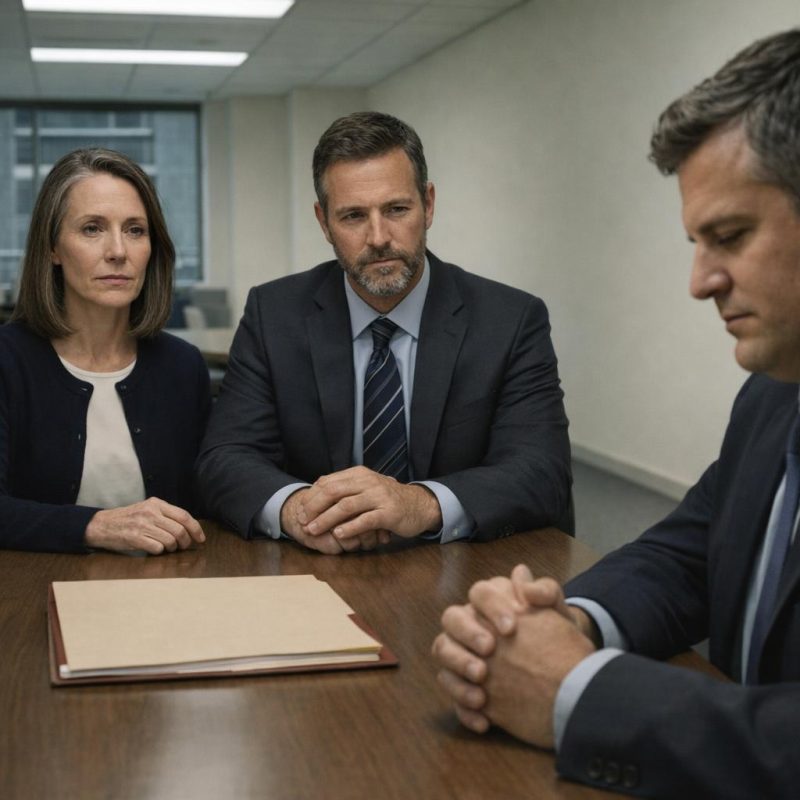 Image by RM AI
The Evidence Presented
Attorney Hernandez opened the folder without preamble. He didn't make a speech. He simply began placing documents on the table, one at a time, and naming what each one was. The first was the original partnership agreement, with my name listed as a partner. The second was a set of meeting minutes from eleven years ago — a meeting I had never been notified of, at which a significant financial decision had been made. Then came correspondence. Emails and letters in which my exclusion was discussed not as an oversight but as an arrangement. There were references to keeping things streamlined, to avoiding complications, to handling matters without involving all parties. Attorney Hernandez read select passages aloud in a level voice, without editorial comment, and let the language speak for itself. He laid out the timeline of the proposed property sale — when it had first been discussed, when outside parties had been contacted, when documents had been drafted — and showed that at no point had I been informed or consulted. He placed Margaret's account of the lobby conversation into the record as a witness statement. By the time he finished, there were eleven documents arranged across the table in a neat row. I kept my hands folded in my lap and watched the faces around the room shift — some going pale, some going rigid, one cousin near the window pressing her lips together so hard they went white.
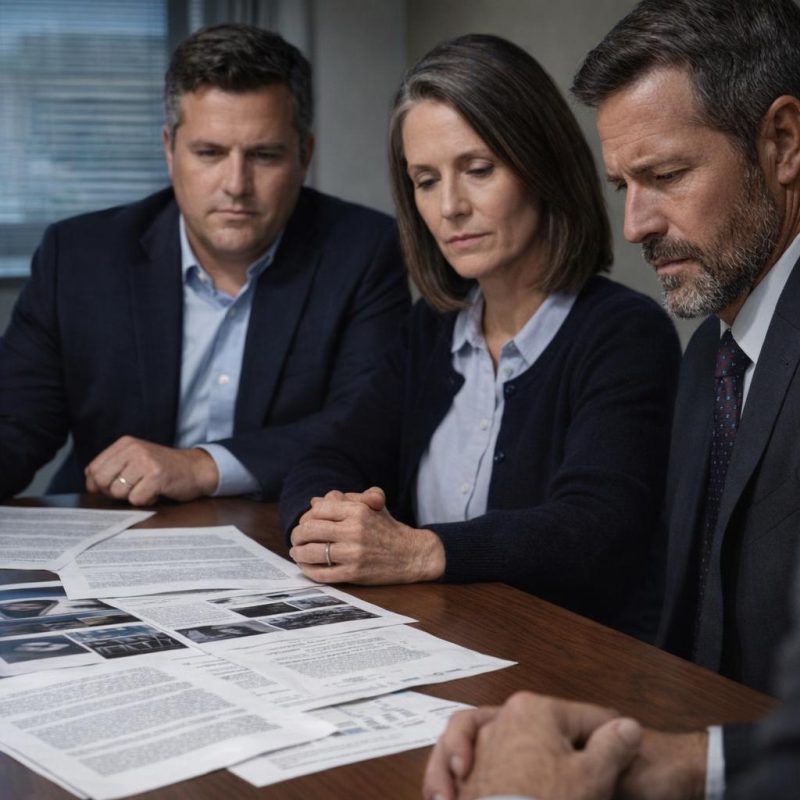 Image by RM AI
The Room Divides
The room held its silence for about ten seconds after Attorney Hernandez finished. Then it didn't. One of the cousins who'd come in with Steven said it had all been done for practical reasons — that managing a partnership with absent members was complicated, that decisions had to be made, that no one had meant any harm. Another voice across the table said that wasn't the point and that everyone in the room knew it. A woman I barely recognized from the wedding said she hadn't known the full extent of it, that she'd been told I simply wasn't interested in participating, and her voice had a sharpness in it that sounded like genuine anger directed at someone other than me. Two of the older relatives along the wall said nothing at all. Arguments started overlapping — who had known what, who had signed what, who had been told what version of events and when. The room was fracturing in real time, splitting along lines I couldn't have predicted, and I sat and watched it happen. Through all of it, Steven hadn't said a word. He sat at the far end of the table with his hands still folded, his expression unreadable behind his wire-rimmed glasses, while the room came apart around him. Then one of the cousins turned directly toward him and said his name, flat and demanding. Steven looked up. He set his jaw, unfolded his hands, and said he wanted to speak.
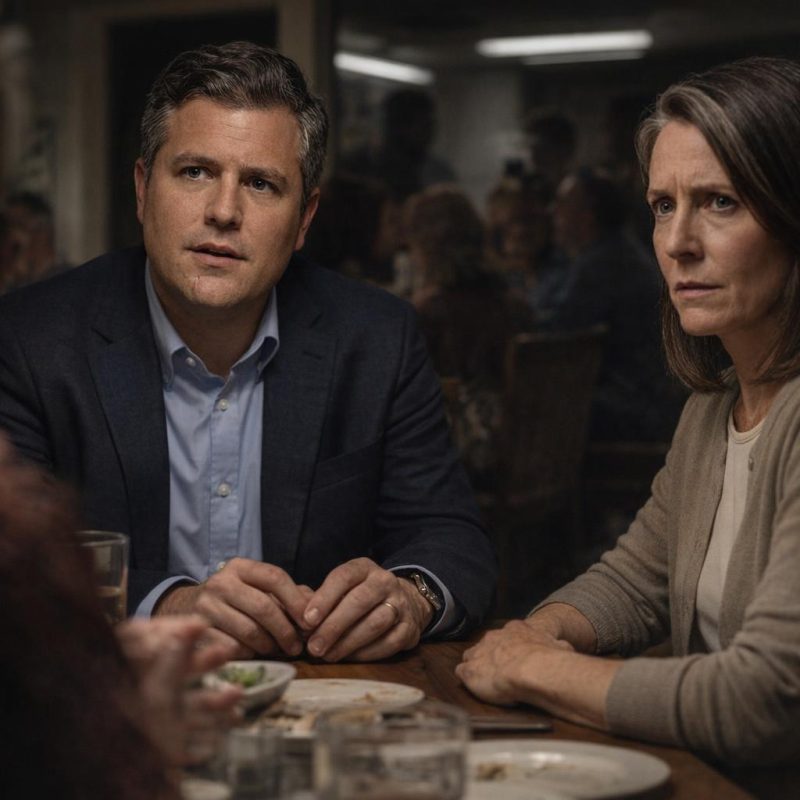 Image by RM AI
Steven's Confession
The room went quiet the moment Steven said he wanted to speak. Even the cousins who had been talking over each other stopped. He didn't look at Attorney Hernandez. He looked at me. He said he owed me an explanation, and that he understood if it didn't change anything. He said he had made decisions over the years that he couldn't fully defend, and that he knew that. But he wanted me to understand that it hadn't started with him. He said the original arrangement — keeping me at a distance from the partnership, handling correspondence on my behalf without my knowledge — had not been his idea. He said someone had come to him before any of it began and asked him to manage things quietly. He said that person had been worried about what the partnership would do to the family, about the arguments it would cause, about what it would cost people in ways that had nothing to do with money. He said he had agreed because he respected that person and believed, at the time, that he was honoring a reasonable request. The room was completely still. I was watching Steven's face, trying to follow what he was saying, trying to understand who he meant. And then he said the name — said it plainly, without softening it — and told the room that the person who had first asked him to keep me out of it had been my father.
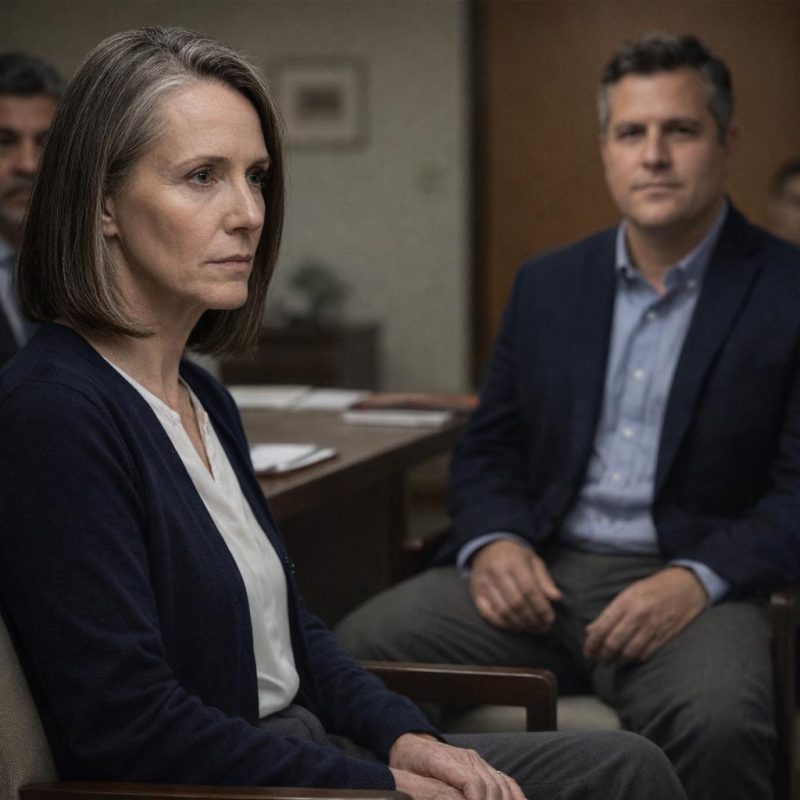 Image by RM AI
Her Father's Fear
Nobody spoke after Steven said my father's name. I don't think anyone knew what to say. Steven kept his eyes on me and continued, his voice steady and low. He said my father had come to him not long before he died — maybe six months before, maybe a little less. He said my father had watched the partnership cause friction between other branches of the family for years, had seen what the arguments over money and property did to people who had once been close, and had decided he didn't want that for me. Steven said my father had told him he thought the partnership would become a source of endless dispute, that it would pull me into conflicts I hadn't asked for and couldn't win, and that he wanted me left out of it. He said my father had used the word protect. Steven said he had agreed to handle the correspondence, to keep my father informed, and to keep me at a remove from the whole thing. He said my father had believed, genuinely, that he was doing me a kindness. I sat with that for a long moment. I knew my father. I knew how much he hated conflict, how far he would go to steer around it, how deeply he believed that some things were better left undisturbed. I could hear him in what Steven was describing. And that was the hardest part — that the thing that had cost me so much had come, at its beginning, from someone who had only ever wanted to keep me safe.
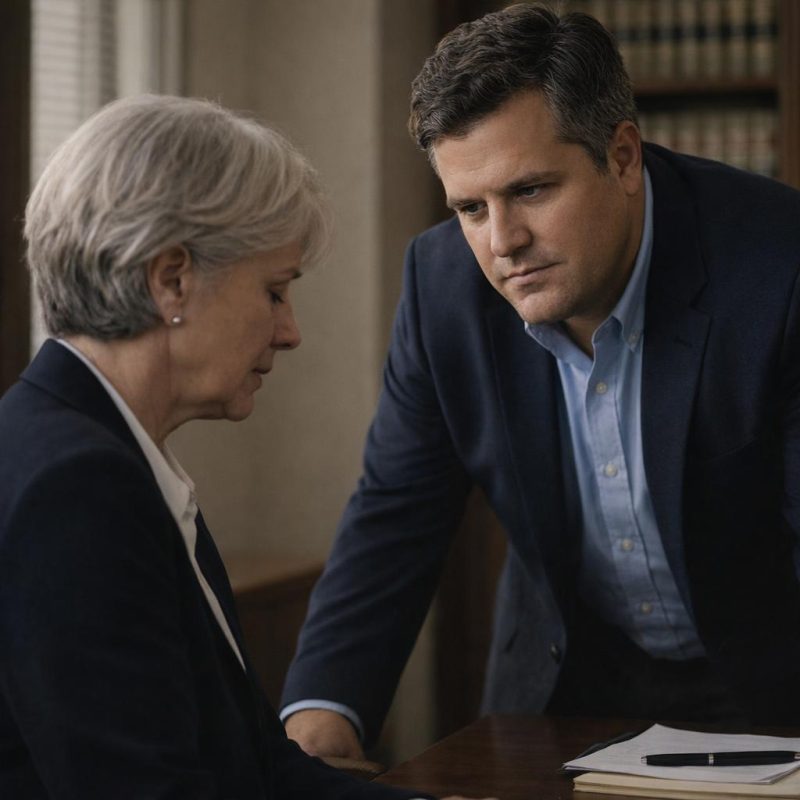 Image by RM AI
From Favor to Deception
Steven didn't stop there. He said that after my father died, he told himself he was simply honoring a dead man's wishes — that continuing the arrangement was a form of respect, a way of keeping a promise. He said it felt clean at first. Straightforward. My father had asked him to handle things, and so he handled them. But then the years passed, and the property changed hands within the partnership, and new decisions came up, and each time he made the call to keep me out of it, it got a little easier to justify. He said he became the default contact for my branch of the family without anyone formally deciding that — it just happened, and he let it happen. Attorney Hernandez was writing steadily the whole time Steven spoke, not looking up. Steven said the wedding had been his idea — that when the sale negotiations started moving seriously, he thought having me there, nearby, might make things easier if questions came up. He said he hadn't thought it through beyond that. He paused then, and for the first time he looked like he wasn't sure what to say next. He said he knew the difference between honoring a request and making himself the gatekeeper of something that was never his to control. He said those were two different things, and that somewhere along the way, he had crossed from one into the other.
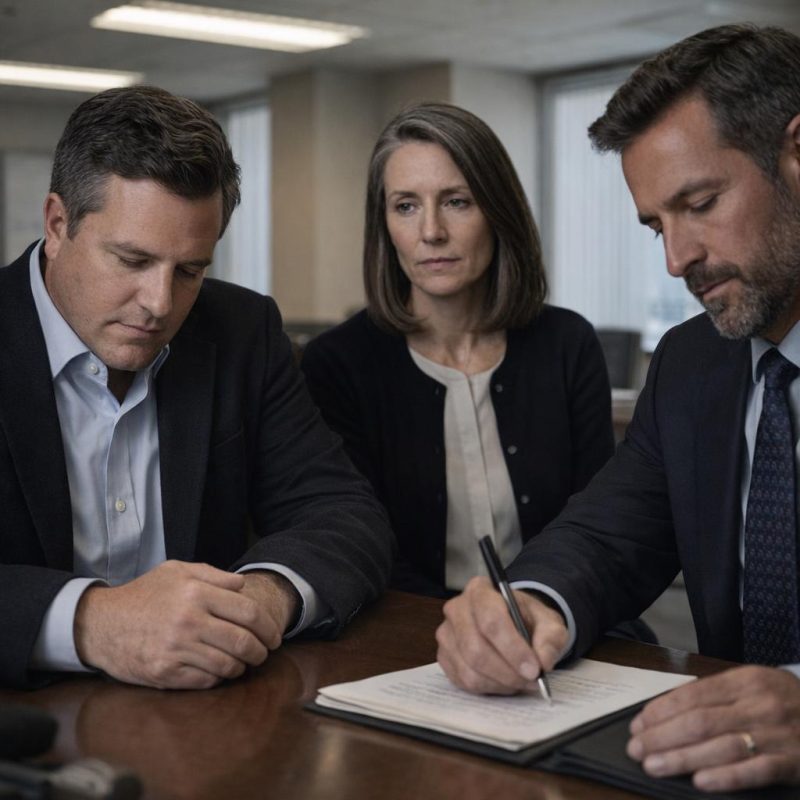 Image by RM AI
Terms of Resolution
Attorney Hernandez took over from there in a way that felt almost merciful. He laid out the terms methodically — every ownership branch would receive complete documentation of the sale, the developer's offer, and the distribution formula. My interest was formally recognized in writing before any signatures moved forward. Steven didn't object to any of it. He sat across the table with his hands folded and answered every question Attorney Hernandez put to him, and I noticed he answered them fully, without hedging. The other branches were contacted directly, not through Steven, and each of them received the same packet of information at the same time. There were a few weeks of back-and-forth — one branch had questions about the acreage valuation, another wanted a second appraisal — and Attorney Hernandez handled all of it without drama. When the unanimous consent came through, it came quietly, the way things do when everyone finally has the same information in front of them. I signed my portion of the paperwork at Attorney Hernandez's office on a Tuesday afternoon in October, and he walked me through every page before I put pen to paper. It wasn't a dramatic moment. There was no ceremony to it. But sitting there with the documents laid out in front of me, each one bearing my name as a recognized owner, felt like something that had been out of alignment for a very long time had finally been set straight.
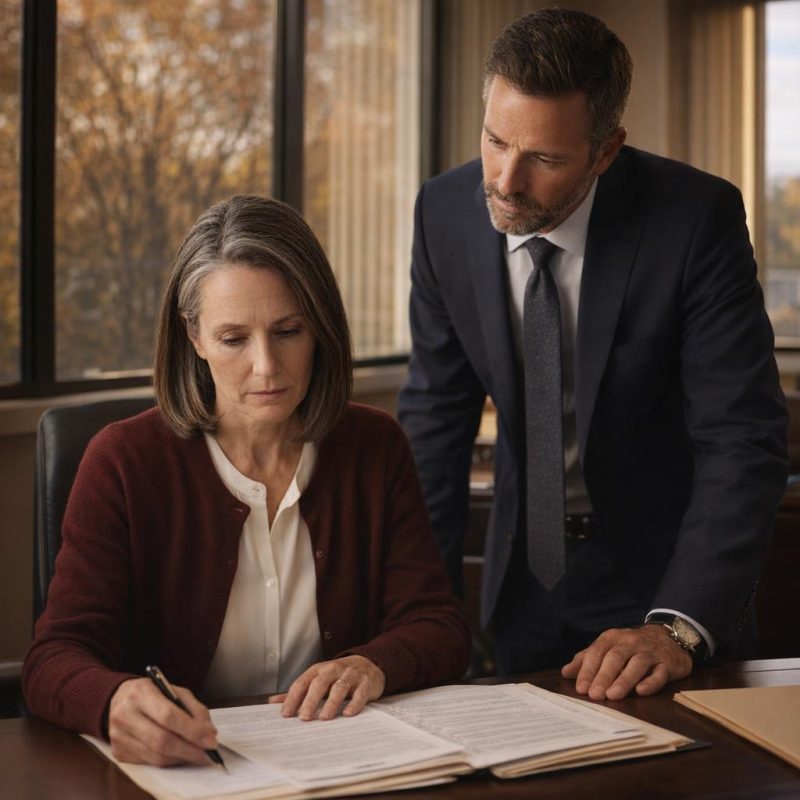 Image by RM AI
The Proceeds
The sale closed about three weeks after I signed. Attorney Hernandez called me on a Thursday morning to let me know the funds had been distributed, and he told me the figure before I had a chance to brace for it. I sat down after I hung up the phone. It was more than I had expected — significantly more — and I won't pretend that didn't matter, because it did. It meant things I had been quietly worrying about for years were no longer things I needed to worry about. I paid Attorney Hernandez what I owed him, which was fair and which he had earned, and I still came out with more financial security than I'd had at any point in my adult life. But I kept coming back to something that had nothing to do with the money. What I had spent the better part of a year chasing wasn't the proceeds — it was the answer. It was knowing that the thing had existed, that my name had belonged on those documents all along, that the confusion I'd felt at that reception hadn't been foolishness or paranoia. The money was real and I was grateful for it. But what settled into me in the days after the closing was quieter than gratitude and harder to name — something closer to the feeling of finally understanding a sentence you'd been reading wrong for years.
 Image by RM AI
What a Wedding Revealed
I think about the wedding sometimes. I almost didn't go. Lisa had to work on me for weeks before I agreed, and even then I drove to the venue telling myself I'd stay two hours and leave early. I didn't know anyone well enough to feel comfortable, and I spent the first part of the reception standing near the edge of things, holding a glass of something cold and wishing I were home. And then Margaret appeared beside me — this small, careful woman with sharp eyes and white hair — and asked me, in the most matter-of-fact way imaginable, whether I'd finally decided to claim my share. She said it the way you'd ask someone if they'd gotten around to fixing a leaky faucet. Like it was a thing everyone already knew about. I've thought about what would have happened if I'd brushed it off, if I'd smiled and changed the subject the way I might have on a different day. I didn't, and I'm still not entirely sure why. Maybe I was tired of not asking questions. The months that followed were not easy — there were lawyers and documents and a conversation with Steven that I will carry with me for a long time. I learned things about my father that complicated the way I remembered him, and I learned things about my family that I couldn't unknow. But I also learned that I had belonged to something all along, and that knowing it — even late, even imperfectly — was better than never knowing at all.
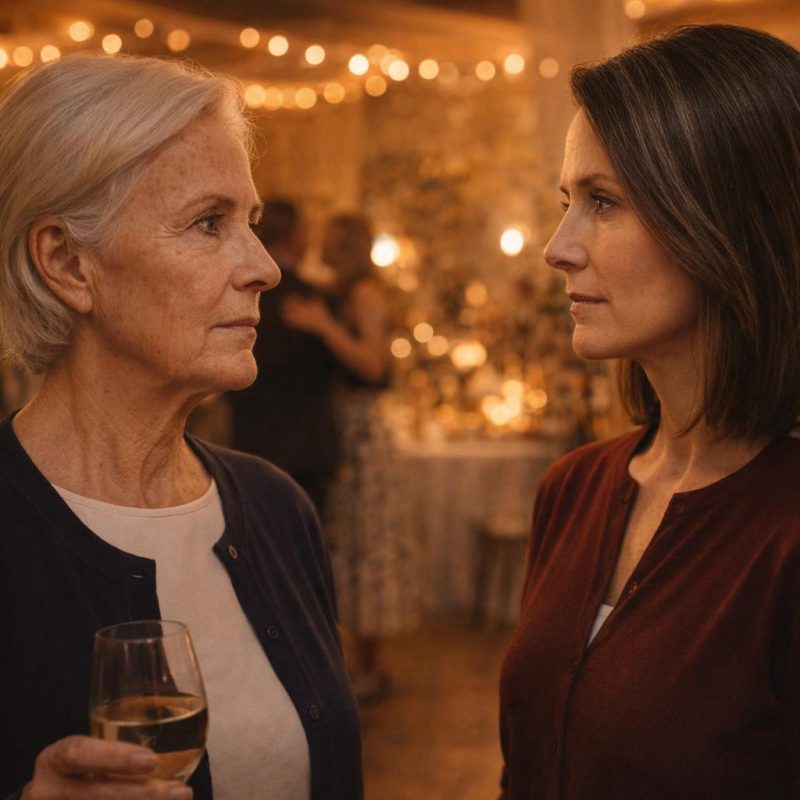 Image by RM AI